Boots with a wool lining are boots whose inside is sheepskin or a wool pile, so real wool, not synthetic fleece, sits against the skin. For sensitive or diabetic feet that matters, because wool cushions the foot, takes up moisture vapor from the skin and keeps feet warm without a heat source. Down-Under Wool has worked with Australian sheepskin and Merino wool since 1988, and this guide explains what wool does against the foot, what the evidence says about itch, and what a person with diabetes should look for. Fine Merino wool fibers measure from under 17.5 to about 24 microns, which is part of why Merino feels soft rather than scratchy.
What is a wool-lined boot?
A wool-lined boot is any boot or slipper with wool on the inside, and the lining can be one of three things:
| Lining | What it is | What to know |
|---|---|---|
| Sheepskin (shearling) | A tanned hide with the wool still attached, wool side in | Deep, springy pile; washable only if tanned to be washable |
| Medical sheepskin | Dense sheepskin tanned to be washed hot, such as HiTemp UR | Made for pressure care; used in our Shear Comfort boots |
| Wool pile or lambswool fleece | Shorn wool knitted or woven into a cotton or synthetic backing | Lighter and often machine washable; real wool but not a hide |
| "Fleece", "sherpa" or faux shearling | Synthetic polyester pile | Looks similar; does not absorb moisture vapor the way wool does |
To tell real sheepskin from imitation, see what sheepskin is and the types of sheepskin.
Why is wool good against sensitive feet?
Wool is good against sensitive feet because it does four jobs at once: it cushions, it manages moisture, it holds warmth and it resists odor.
- Cushioning. Wool fibers are crimped and springy, so a deep pile softens the load under the heel and the ball of the foot and the rubbing at the ankle bones.
- Moisture. Woolmark explains that wool's internal structure absorbs water vapor while letting excess heat escape. Feet sweat inside footwear, and skin that stays damp is easier to damage.
- Warmth. The crimp traps insulating air, so wool keeps feet warm in the cold without electric heat, and it releases heat and moisture when it is warm.
- Odor. Merino wool absorbs odor molecules before they become noticeable, according to Woolmark, which helps boots that are worn for hours.
The medical sheepskin in our Shear Comfort boots is made for exactly this: the wool reduces pressure and absorbs moisture, and some models add an AirTec treatment that the maker says improves air circulation. For small sore spots between or around the toes, loose lambs wool for feet does the same job on a smaller scale.
Is wool good for diabetic feet?
Wool can be a good lining for diabetic feet, as long as the boot fits well and the feet are checked every day. Diabetes can damage the nerves and lower blood flow in the feet, so, as the NIDDK (part of the US National Institutes of Health) explains, a person may not feel a pebble in a sock or a blister, and a sore can be slow to heal. A soft, dry, cushioned lining reduces some of the everyday rubbing and dampness that can start that kind of problem.
What wool can't do is replace foot care. Between them, the NIDDK and the CDC both advise people with diabetes to:
- check their feet every day, for example each evening when the shoes come off;
- wear shoes and socks at all times and never walk barefoot, even indoors;
- check the inside of footwear before putting it on;
- keep feet away from hot water bottles, heating pads, heaters and open fires, because a foot with nerve damage can burn without feeling it;
- see a podiatrist at least once a year, and straight away for a sore, blister or red, warm or painful skin.
Wool fits well with that last warmth rule: socks in bed and a wool-lined boot or foot warmers warm cold feet without heat. If you have diabetes, especially with neuropathy or a past foot ulcer, check with your podiatrist or doctor before choosing footwear; they can tell you whether you need specially made shoes.
Does wool make your feet itch?
Fine wool does not usually itch; prickle comes from coarse fibers. A 2017 review in Acta Dermato-Venereologica found that wool fiber has not been shown to be an allergen, and that the itch some people feel is caused by coarse fibers of about 30 microns and above. Woolmark makes the same point: prickle comes from the coarseness of a fiber, not the type of fiber. Merino is much finer, and our Footcare Lambswool, for example, is 23.5-micron Merino. If your skin reacts to anything, try the boot for a short time first. More detail is on our sheepskin vs wool page.
What to look for in a wool-lined boot for sensitive feet
Look for a boot that goes on without pushing the foot in and that keeps the wool in contact with the skin. A checklist:
- Full opening and Velcro straps, so the foot is placed on the insole and the boot is closed around it.
- Room for swelling and dressings, without being so loose that the foot slides.
- No hard seams over the heel, ankle bones or toes. The NIDDK says socks with no seams are best, and the same thinking applies to linings.
- A sole that matches the use: soft for bed and chair, rubber with grip for walking.
- An open toe if the toes need daily checks or dressings.
- A lining you can wash, because a wool lining worn every day needs regular cleaning.
Our guide on how to choose a medical boot for swollen feet covers sizing, soles and closures step by step.
Wool-lined boots and booties from Down-Under Wool
The boots and booties in our boots for pressure sores range are lined with wool in one of two ways, medical sheepskin or Merino lambswool:
| Product | Wool lining | Sole | Made for |
|---|---|---|---|
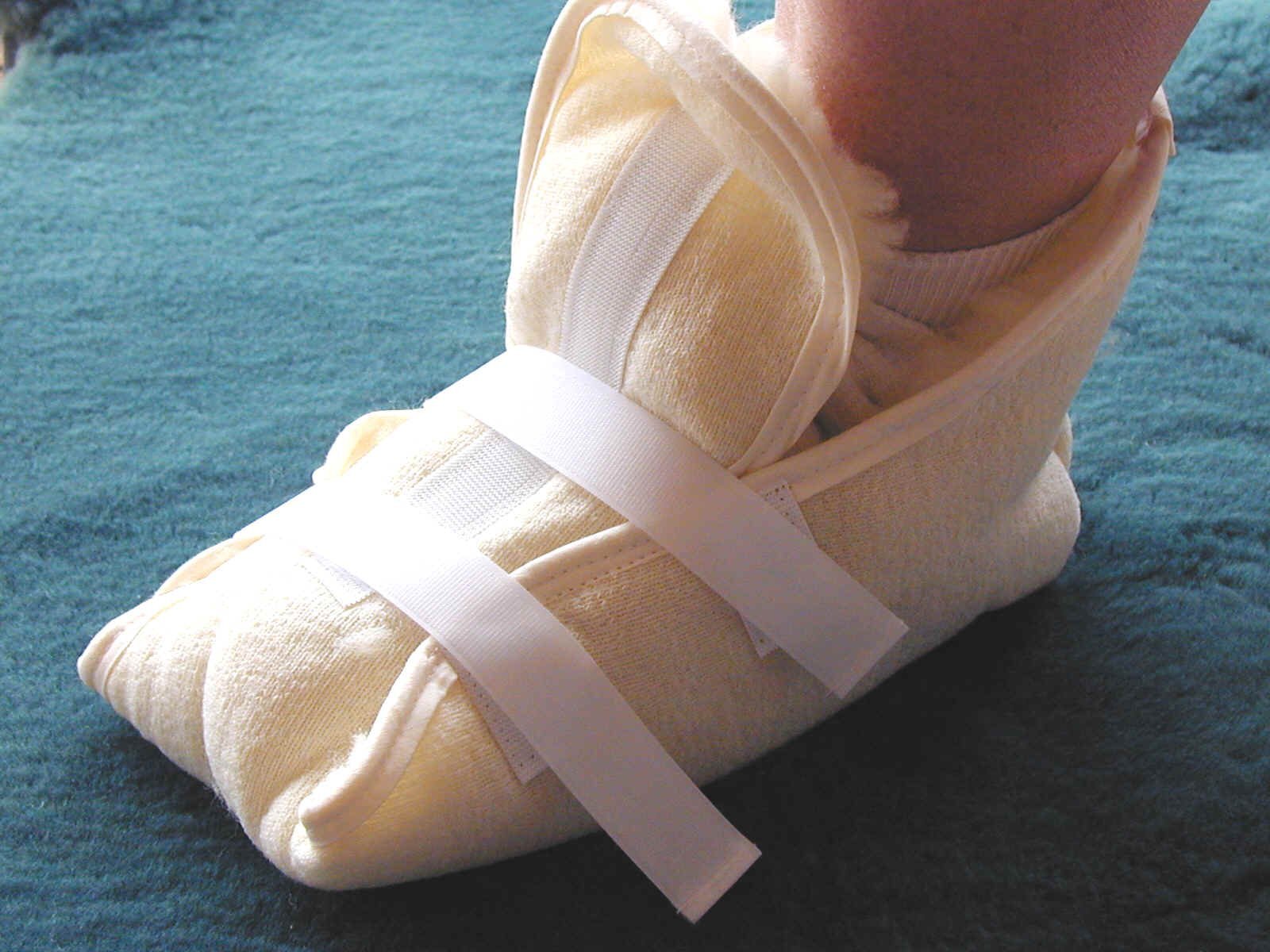
| Merino Lambswool Wrap Booties (M161) | Merino lambswool; machine wash and dry | None (bed or chair) | Foot abrasion in bed, after foot surgery; one size |
| Shear Comfort Wrap Around Boot (SC203) | HiTemp UR medical sheepskin | Low-profile rubber | Diabetes with foot swelling; indoors and out |
| Shear Comfort Pressure Care Boot (SC201) | HiTemp UR medical sheepskin | Low-profile rubber | Open toe for toe checks; skin abrasions and ulcers |
| Shear Comfort Slipper Boot (SC202) | HiTemp UR medical sheepskin with AirTec | Soft | Bed or feet up; very roomy for swelling |
| Shear Comfort Tall Slipper Boot (SC204) | HiTemp UR medical sheepskin with AirTec | Soft suede | Leg vein problems, compression bandages |
| Sheepskin Medical Boot, Soft Sole (M170S) | Washable medical sheepskin | Soft | Indoor slipper boot; limited sizes |
The Wrap Booties were designed by Down-Under Wool and are made in Australia; they mold to the foot after the first wash. Stock of some boots and sizes changes, so check each product page. If you want something for cold feet rather than protection, see our medical slippers and foot warmers.

How do you keep a wool lining clean?
Wash wool-lined boots by hand in a sheepskin wash such as Woolskin, which cleans, conditions and disinfects the wool; household detergents damage sheepskin leather. Pack the boots with a towel and dry them away from heaters and direct sun. The Merino Wrap Booties are the exception: they can be machine washed and tumble dried, but take them out before they are bone dry, because wool does best with about 15% moisture left in it. Full steps are in how to clean sheepskin slippers.
Wool-lined boots FAQs
Are wool socks good for diabetics?
Wool socks can be a good choice for diabetics if they fit well, are lightly padded and have no seams that rub. The NIDDK recommends clean, lightly padded, well-fitting socks, and says socks with no seams are best.
Should diabetics keep their feet warm?
Yes, but with socks or wool rather than direct heat. The NIDDK advises wearing socks in bed if your feet get cold and never putting a hot water bottle or heating pad on your feet.
Are sheepskin slippers good for diabetics?
Sheepskin slippers can suit diabetic feet when they open wide, fit without pressure and have a sole with grip. Check your feet daily and ask your podiatrist whether you need prescribed footwear instead.
Can you wear wool-lined boots without socks?
Many people do, because the wool sits against the skin. If you have diabetes, though, the NIDDK advice is to wear shoes and socks at all times, so ask your podiatrist what suits your feet.
Do wool-lined boots make your feet sweat?
A wool lining handles sweat well, because wool absorbs moisture vapor and lets excess heat escape. Wash and air the boots regularly if they are worn all day.
Is shearling the same as a wool lining?
Shearling is one kind of wool lining: a sheepskin with a short, even wool layer. Wool pile and lambswool fleece are wool linings too, but they are shorn wool on a backing rather than a hide.
What are diabetic slippers?
Diabetic slippers are soft, wide house shoes with adjustable closures, no hard inside seams and room for swelling. A sheepskin or wool lining adds cushioning and moisture control.
The short version
A wool lining cushions the foot, handles moisture, keeps feet warm without heat and, when the wool is fine, does not itch. For diabetic or sensitive feet, pair it with a boot that opens fully, closes with Velcro and has the right sole, and keep checking your feet every day. Browse our wool-lined boots for pressure sores, or contact us; we've been helping people choose since 1988.