Bed sores after hip surgery are pressure injuries to the skin, most often on the heels, tailbone and buttocks, that form when someone recovering from a hip replacement or hip fracture repair spends long hours in bed or a chair without changing position. They are common after a broken hip: in a US study of 658 hip fracture patients aged 65 and over, 36.1% developed a new pressure ulcer (stage 2 or worse) within 32 days of admission. Down-Under Wool has supplied medical sheepskin since 1988. Below: moving, sitting, skin checks and heel padding such as our Shear Comfort heel protectors. Your surgeon's and physical therapist's instructions always come first.
Why are bed sores more likely after hip surgery?
Bed sores are more likely because surgery cuts down movement. The NHS lists recent surgery and difficulty moving among the risk factors, and NICE guideline CG179 asks clinicians to reassess pressure ulcer risk after surgery. After a hip operation, several things stack up:
- Age. AAOS OrthoInfo says most hip fractures happen in adults 65 or older, and a US hospital database study linked age 75 and over with more pressure ulcers after hip replacement.
- Pain medicine. MedlinePlus says drowsiness often occurs with opioid pain medicines. A drowsy person shifts less.
- Long spells in bed or a chair. MedlinePlus warns hip fracture patients about pressure sores from staying in bed or a chair for long periods.
- Fewer allowed positions. Hip precautions rule out lying on the operated side or the stomach, so the same spots carry weight for longer.
A fracture carries more risk than a planned replacement. That database recorded pressure ulcers in only 0.05% of hip replacement stays. Close skin checks find more: a small Portuguese study of 40 older adults after planned hip replacement found early pressure injuries in 24.3% by discharge, mostly on the tailbone or seat bones. See pressure points for where to look.
Why are the heels the spot to watch?
The heels are the spot to watch because a person recovering from hip surgery often lies on their back, with the weight of each leg resting on a small, thinly padded heel. In a study at a Canadian hospital, 16% of hip fracture patients developed a heel pressure ulcer, and those whose heels were relieved with pillows or rolled sheets had fewer.
Lifting the heels clear of the mattress works best. In a Belfast trial of 239 hip fracture patients over 65, 26% on a pressure-redistributing mattress alone developed a pressure ulcer, against 7% who also had a heel elevation device; none in the device group had one on the heels, ankles or feet. The international pressure injury guideline (NPIAP, EPUAP and PPPIA) calls lifting the heels good practice, using pillows under the lower legs with the knee slightly bent and no pressure on the Achilles tendon. Ask the physical therapist where pillows may go.
How can you move and change position within hip precautions?
Walk and do the exercises the physical therapist sets; getting up is the best pressure relief. AAOS says people walk with a cane, crutches or a walker soon after hip replacement, and that getting out of bed after a hip fracture helps prevent bed sores, blood clots and pneumonia. NICE's hip fracture guideline CG124 calls for mobilization on the day after surgery unless there is a medical reason not to.
In bed, your precautions decide how you move. Common ones from the NHS and MedlinePlus:
- Don't sleep on the side of the new hip or on your stomach.
- Don't cross your legs or ankles, sitting or lying down.
- Don't bend the hip past 90 degrees; keep feet and knees pointing straight ahead.
Inside those limits, change position regularly. MedlinePlus advises people at risk of bed sores to change position every 1 to 2 hours in bed and not to raise the head of the bed past 30 degrees. Ask the therapist to show you and your helper how to turn without twisting the hip; our guide on how often to turn a bedridden patient has a printable schedule. Taking pain medicine about 30 minutes before activity can make moving easier (MedlinePlus).
How long should you sit in a chair or recliner after hip surgery?
Try not to sit for more than 45 minutes at a time without getting up and moving around, the MedlinePlus advice after both hip replacement and hip fracture; its hip care page suggests 30 to 40 minutes in one position. Choose a firm chair with armrests, hips higher than knees; avoid low chairs and soft sofas. The NHS suggests sitting in a reclining position but not sitting still for long.
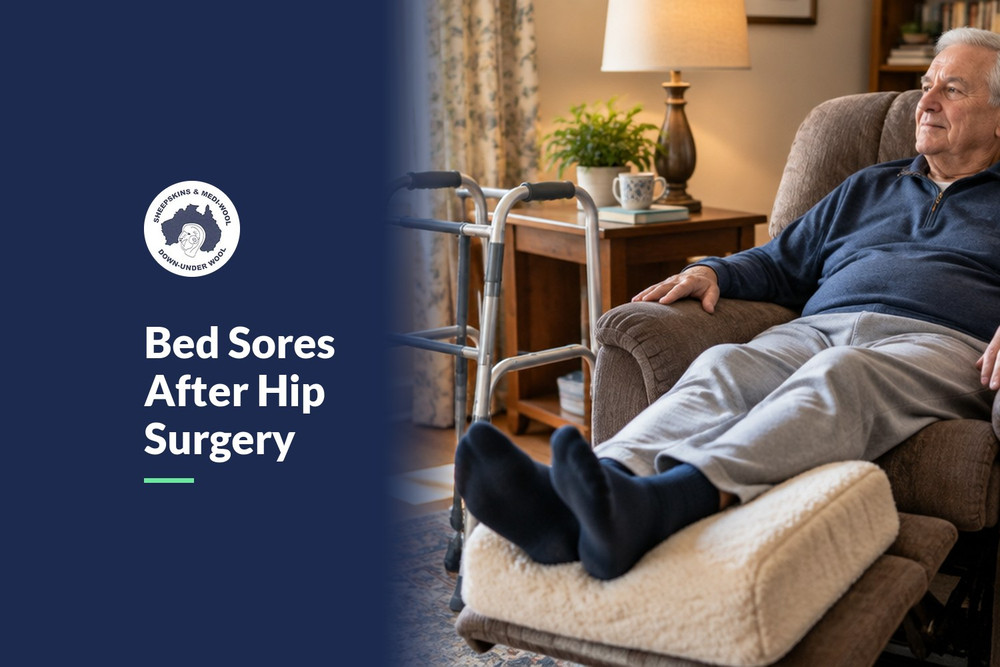
Sleeping in a recliner keeps pressure on the tailbone and heels for hours. Leaning far forward to shift weight can break the 90-degree rule, so ask the therapist which small shifts are safe. Our guide to medical sheepskin for a recliner chair covers pads and a recliner routine.
Which pads and heel protectors help at home?
A wool surface adds comfort and keeps skin drier, but it does not replace moving, lifting the heels or the mattress the care team recommends. The best sheepskin evidence is a 2004 trial of 441 patients at a Melbourne teaching hospital: 9.6% on an Australian Medical Sheepskin developed a pressure ulcer, against 16.6% on standard care. We found no trial of sheepskin heel cups after hip surgery.
| Where | Option | What it does | What it doesn't do |
|---|---|---|---|
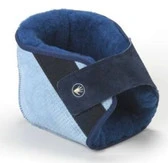
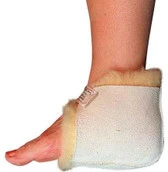
| Heels, long term | Shear Comfort Heel Protectors (SC112) | Sheepskin cup with a Velcro strap; sold in pairs, 3 sizes | Doesn't lift the heel off the mattress |
| Heels, short term | Medical Sheepskin Heel Pad (M112) | Merino wool cup; one size, either foot, sold singly | Same; the maker suggests SC112 if feet move a lot |
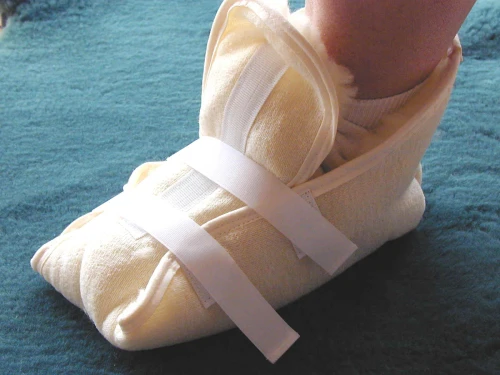
| Whole foot | Merino lambswool wrap booties (M161) | Wraps the foot in lambswool, closed with Velcro; one size, pairs | Doesn't offload the heel |
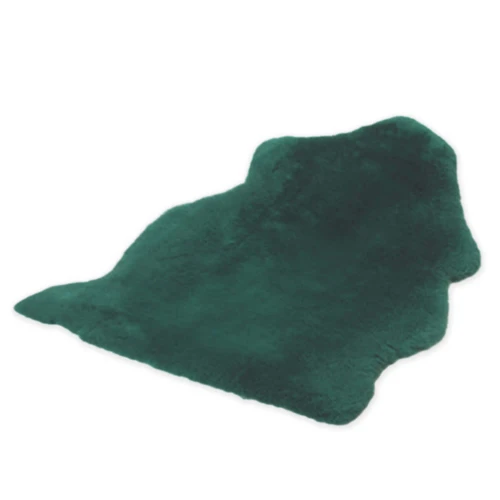
| Back, tailbone, buttocks | Australian Medical Sheepskin overlay (M102) or the larger M102C | AS4480.1 sheepskin, about 38" x 24-26" (M102C reaches shoulders to below the buttocks); HiTemp washable, urine resistant | Not a pressure-redistributing mattress |
The SC112, M161 and M102 machine wash in Woolskin; see how to wash sheepskin. Our guide to heel protectors for bed sores compares heel cups with offloading boots and pillows.

How do you check the skin for early signs?
Check the whole body daily, head to toe, especially the heels, ankles, hips and tailbone, as MedlinePlus advises. The NHS lists these early signs:
- A discolored patch that stays discolored when pressed: usually red on white skin, purple or blue on black or brown skin.
- Skin that feels warm, spongy or hard.
- Pain or itching in the area.
Don't rub or massage a red area (NICE advises against it); keep weight off it and tell the nurse. Our how to prevent bed sores at home checklist makes this a routine.
What should you eat and drink to protect the skin?
Eat a balanced diet with enough calories and protein, and drink plenty of fluids. AAOS says a balanced diet promotes tissue healing and restores muscle strength after hip replacement, and that some loss of appetite is common for several weeks. MedlinePlus advises plenty of water every day, and more fluids, fiber and activity for the constipation opioids can cause.
When should you call the surgeon or nurse?
Call the nurse or doctor if redness or another skin change lasts more than a few days, or the area becomes painful, warm or starts to drain (MedlinePlus). Get help the same day for hot, swollen or red skin, pus, a high temperature, or severe or worsening pain (NHS). Don't treat a sore yourself.
After hip surgery, MedlinePlus says to call the surgeon for redness, increasing pain or drainage at the incision; swelling in one leg or calf pain; fever over 101°F; shortness of breath or chest pain; or pain the medicine doesn't control. AAOS lists sudden breathlessness or chest pain as signs of a blood clot in the lungs; treat those as an emergency.
Bed sores after hip surgery FAQs
Can you get bed sores after a hip replacement?
Yes, though the risk is lower than after a hip fracture, so check the skin daily.
How do you avoid bed sores after surgery?
Walk as your therapist allows, change position regularly, keep the heels off the mattress, sit no more than 30 to 45 minutes at a time and check the skin daily.
Can you sleep in a recliner after a hip replacement?
Ask your surgeon first. A whole night in a recliner keeps pressure on the tailbone and heels, so change position during the night and pad the chair.
Should you sleep on your side or back after a hip replacement?
On your back, or on the other side if your surgeon allows it, with a pillow between your thighs. MedlinePlus says not to sleep on the operated side or your stomach.
Why does my heel hurt after hip surgery?
A sore heel can be an early pressure injury from lying on your back, though heel pain has other causes too. Check it for discoloration or warmth and tell the nurse.
How long can you sit after a hip replacement?
About 30 to 45 minutes at a time, then stand and move around, according to MedlinePlus, unless your therapist sets a different limit.
The short version
Move within your precautions, lift the heels and check the skin daily; wool pads add comfort but don't replace that. Browse our bedsore prevention packages or contact us for help choosing.