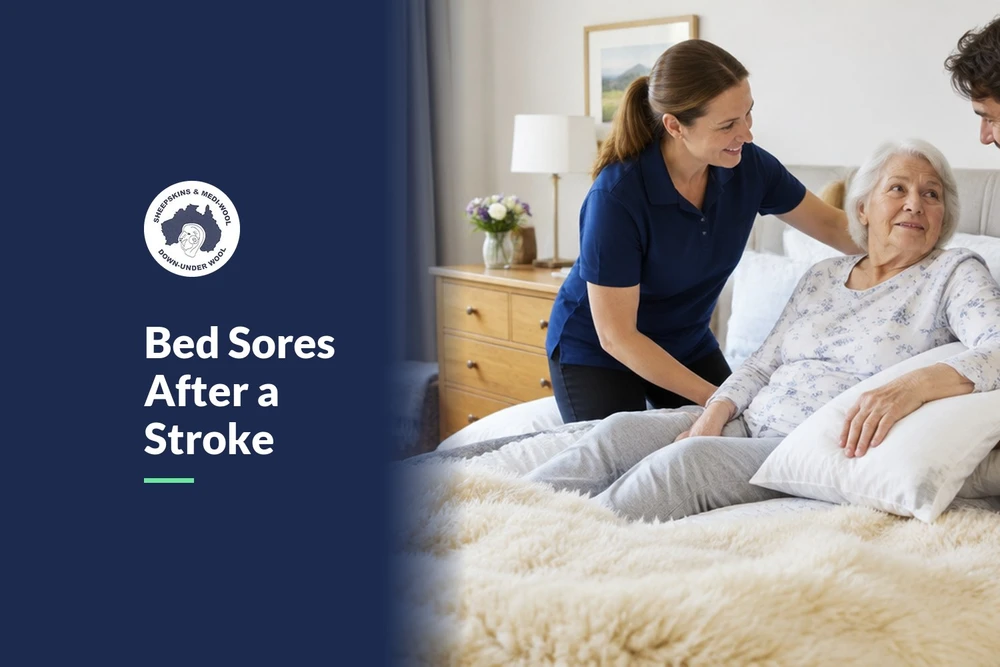
Bed sores after a stroke are pressure injuries that form when weakness on one side of the body keeps the person in the same position for too long, often on skin they can no longer feel properly. They are common: in a 2008 study of 122 survivors of a severely disabling stroke, 22% had a pressure sore within the first year. Down-Under Wool has supplied medical sheepskin since 1988, and an overlay such as our Australian Medical Sheepskin Overlay (M102) can be one layer of protection, but positioning, turning and daily skin checks do most of the work.
Why are stroke patients at risk of bed sores?
Stroke patients are at risk because a stroke can affect movement, feeling, continence, eating and speech at once. MedlinePlus lists the main risks for bed sores: spending most of the day in a bed or chair, leaking urine or stool, decreased feeling in part of the body, and being under- or overweight. In a study of 311 stroke patients admitted to hospital, 21% developed a pressure sore during their stay.
| Effect of stroke | Why it matters for the skin | What helps |
|---|---|---|
| Weakness or paralysis on one side | The same spots carry the load | Regular turns and weight shifts |
| Reduced sensation | They may not feel pressure or rubbing | Check the weak side daily |
| Incontinence | Damp skin breaks down more easily | Clean and dry skin promptly |
| Spasticity and contractures | Bent limbs press skin on skin | Pillow support as advised by the therapist |
| Long hours in bed or a wheelchair | Prolonged pressure over bony points | A positioning timetable; a fitted cushion |
| Aphasia or other communication problems | They may not be able to tell you something hurts | Check the skin rather than asking |
The Stroke Association notes that numbness can let tight clothes or shoes damage skin unnoticed, and that around one in three people in the UK have aphasia after a stroke.
How should you position the weak side in bed?
Support every part of the weak side with pillows and vary the position between the back and both sides. The NHS Fife occupational therapy leaflet describes three positions:
- On the back: three pillows supporting the head and both shoulders, the weak arm resting on a pillow, an optional pillow under the weak hip.
- On the weak side: one or two pillows for the head, the weak shoulder positioned comfortably, the top (strong) leg forward on one or two pillows, pillows in front and behind.
- On the strong side: the weak shoulder brought forward with the arm on a pillow, the weak leg back on one or two pillows, a pillow behind the back.
The Royal Wolverhampton NHS postural care guide adds that side-lying needs the most pillow support, the body shouldn't be twisted, and filling gaps between the person and the bed spreads pressure more evenly. MedlinePlus advises a pillow between the knees and ankles on the side, a pillow under the calves so the heels float, and keeping the head of the bed no higher than 30 degrees so the person doesn't slide down. Our guide to pressure points by position shows the bony spots at risk.
How do you move the weak arm without hurting the shoulder?
Move it slowly and support it at the elbow and wrist; never pull on it. The North Tees and Hartlepool NHS arm leaflet says never to pull the arm across the body, never to lift it by the hand alone, and never to lift or move the person from under the weak shoulder. NHS Fife explains that the weight of a weak arm can pull the arm bone away from the shoulder socket (subluxation), so helpers should support the person from their strong side when walking. In a chair, rest the weak arm on a pillow; it should never hang over the side.
How often should a stroke patient be turned?
In bed, MedlinePlus advises changing position every 1 to 2 hours; in a wheelchair, shifting weight every 15 to 20 minutes. The Royal Wolverhampton guide recommends an individual positioning plan with a timetable for sitting out and lying, so ask the stroke team to write one. Our guide on how often to turn a bedridden patient has a printable schedule. Never drag the person up the bed: MedlinePlus warns that dragging can break the skin.
In a chair, Royal Wolverhampton suggests hips and knees at 90 degrees and weight through both buttocks, with trunk support if the person leans. Choose pressure relief with a nurse or therapist; see our best wheelchair cushion for pressure sores guide.
How do you check the skin on the weak side?
Look at the skin from head to toe every day, and look hardest at the weak side because the person may not feel a problem there. MedlinePlus stroke discharge advice lists the heels, ankles, knees, hips, tailbone and elbows. The NHS describes early signs as a discolored patch that doesn't change color when pressed, red on white skin and purple or blue on black or brown skin, or skin that feels warm, spongy or hard.
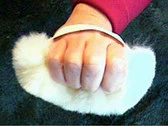
Check the weak hand too. North Tees advises drying the palm and between the fingers and keeping nails short so they don't dig in. If the fingers have curled into a fist, our hand contracture care guide explains cleaning, and sheepskin hand posies made from HiTemp medical sheepskin sit in the palm under an elastic strap.
How do you manage moisture and incontinence?
Clean and dry the skin as soon as possible after any leak. The Stroke Association says bladder and bowel problems are common after a stroke; they often improve in the early weeks, but up to a third of survivors have longer-term difficulties, so tell the doctor or nurse. MedlinePlus advises drying well after each episode, asking the provider about protective creams, using pads that absorb wetness and keeping sheets dry and wrinkle-free. See also incontinence and pressure ulcers.
Does nutrition affect bed sores after a stroke?
Yes. The NHS lists being underweight as a risk, and MedlinePlus advises enough calories and protein. Swallowing problems are very common after a stroke, and the Stroke Association warns they can lead to weight loss; if clothes get looser, tell the dietitian or doctor. Sitting upright for meals also helps swallowing and digestion.
Where does a medical sheepskin fit?
A medical sheepskin is an extra layer on top of a suitable mattress, not a substitute for turning. In a 2004 trial of 441 patients at a Melbourne teaching hospital, 9.6% on an Australian Medical Sheepskin developed a pressure ulcer, against 16.6% on standard care. That trial was not limited to stroke patients.

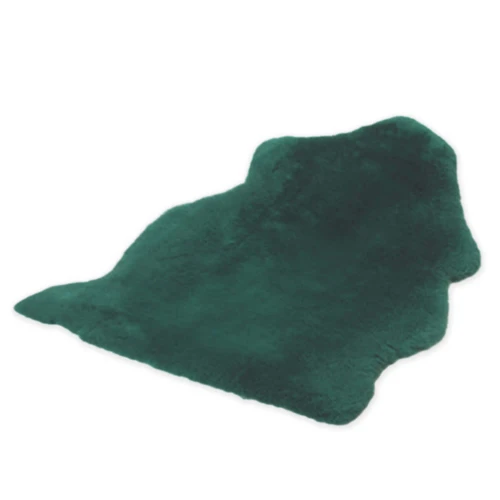
- Bed: the M102 is about 38" x 24-26", urine resistant and hot-washable, and can move with the person from bed to chair. The M102C medical sheepskin (24" x 36", 30 mm pile) reaches from the shoulders to below the buttocks.
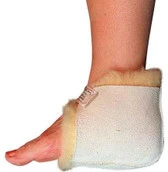
- Heels: a medical sheepskin heel pad is a cup of Merino wool closed with a strap; it doesn't lift the heel, so float the heels on a pillow as well. See heel protectors for bed sores.
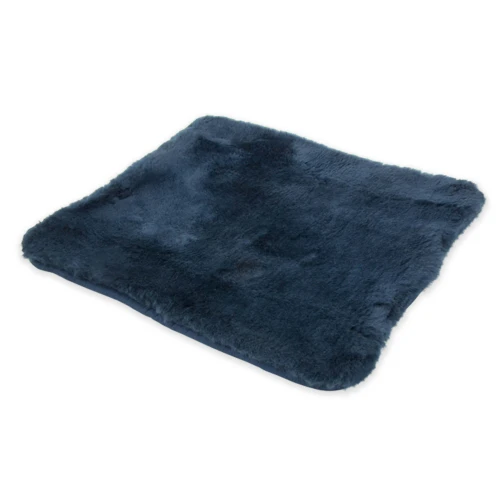
- Wheelchair: the Pressure Smart XD1900 Cushion-It is an 18" x 22" wool pad with straps that can go over a pressure care cushion; ask the therapist before adding any layer to a prescribed cushion.
When should you involve a nurse, PT or OT?
Involve them from the start. NICE guideline NG236 on stroke rehabilitation says that when someone is admitted to hospital after a stroke, their positioning, pressure area risk, continence, communication and nutrition should be screened, and that people with rehabilitation needs should be followed up by the specialist stroke rehabilitation team within 72 hours of leaving hospital. The Stroke Association says the physical therapist will give advice and pictures for positioning the arms and legs in bed and sitting, and an occupational therapist may provide a splint. NICE also says families should be taught to check for redness and skin breakdown under any splint.
Call a nurse or doctor if a discolored patch doesn't fade, the skin blisters or breaks, or there is pus, heat or swelling. Keep weight off the area and don't treat broken skin yourself. Our daily checklist to prevent bed sores at home covers the rest of the routine.
Bed sores after stroke FAQs
Why do stroke patients get bed sores?
Because weakness, reduced sensation, incontinence and long hours in bed or a chair keep pressure and moisture on the same skin.
Can a stroke patient lie on the affected side?
Yes, with support: NHS Fife shows lying on the weak side with the shoulder comfortable and pillows in front and behind. Follow the therapist's advice and check that side's skin after each turn.
Is incontinence common after a stroke?
Yes, the Stroke Association calls it common; it often improves in the early weeks, but up to a third have longer-term problems.
Can you recover from bed sores?
Early ones often heal with careful care, MedlinePlus says, but deeper ones can take a long time. Ask a nurse or doctor to assess any sore.
What are the complications of bed sores?
Untreated, they can reach muscle and bone, the NHS says, and can become infected; see a doctor for pus, heat or swelling.
The short version
Support the weak side with pillows, never pull on the weak arm, turn every 1 to 2 hours in bed, shift weight in the chair, check the weak side daily and keep skin clean and dry. Ask the stroke team for a positioning plan, or contact us for help choosing a sheepskin.