
Heels are one of the most common places for a pressure sore to start when someone spends long hours in bed. There is very little padding between the heel bone and the skin, and the whole weight of the leg rests on a spot about the size of a coin. A heel sore can begin within hours and take months to heal.
The good news is that heels are also one of the easiest places to protect, if you choose the right kind of protection for the person and the situation. This guide compares the main options (from a simple pillow to sheepskin heel protectors and pressure care boots), explains who each one suits, and helps you pick the right one before you buy.
This guide is about prevention and comfort. If the skin on a heel is already broken, blistered, purple or black, ask a nurse or doctor what to use before buying anything.
Quick answer: which heel protector should you buy?
- Short-term bed rest, person lies still: float the heels on a pillow under the calves. Free, and recommended by the international guidelines for temporary bed rest.
- Long hours in bed, wants something soft on the heel: Shear Comfort Heel Protectors (SC112), a pair of sheepskin heel cups that stay on even if the feet move.
- Light or occasional use, tighter budget: Medical Sheepskin Heel Pad (M112), sold singly.
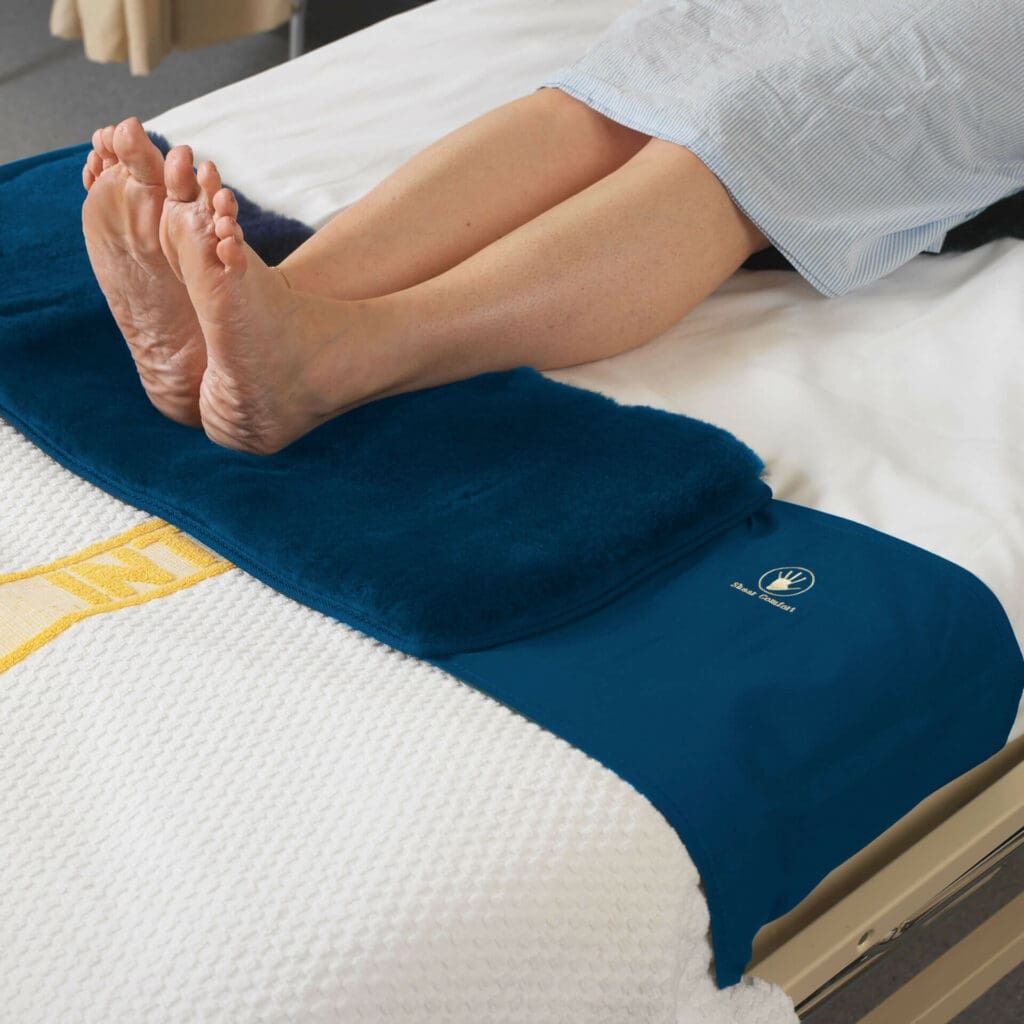
- Hates wearing anything on the feet, or kicks things off at night: Pressure Care Assistant (M103XD), a wool pad that sits across the foot of the bed instead of on the foot.
- Whole foot needs protecting in bed (toes, ankles, sides): Merino Lambswool Wrap Booties (M161).
- Gets up, transfers or walks a little, or has swollen feet: a sheepskin boot with a sole, such as the Pressure Care Boot (SC201) or Wrap Around Boot (SC203).
- A heel sore has already started: ask the nurse about a heel offloading (suspension) boot, which lifts the heel completely off the mattress.
Why heels get pressure sores so easily
Three things cause pressure sores, and heels get all three:
- Pressure. The heel carries the weight of the lower leg on a very small area, so the pressure on the skin is high.
- Shear and friction. When someone slides down the bed or is pulled up it, the heel drags across the sheet. The skin stays put while the tissue underneath moves, which damages small blood vessels.
- Moisture and heat. Warm, damp skin breaks down faster. Socks and synthetic padding can trap sweat against the heel.
People most at risk are those who cannot easily move their legs: after hip or knee surgery, after a stroke, with diabetes or poor circulation, with dementia, or with reduced feeling in the feet. For a fuller picture of where pressure sores form, see our guide to high-risk pressure points.
The main types of heel protection, compared
1. Floating the heels on a pillow
A pillow placed lengthwise under the calves, so the heels hang just clear of the mattress, removes pressure from the heel completely. The international pressure injury guideline (NPUAP/EPUAP/PPPIA) recommends floating the heels this way for people on temporary bed rest.
Good for: short periods, people who lie still. Not ideal for: restless people, long-term use or overnight. The pillow shifts, and the heels end up back on the mattress. The same guideline suggests a dedicated device for long-term use or for restless or agitated patients.
2. Heel offloading (suspension) boots
These are rigid or foam boots that hold the heel in mid-air. They are the strongest option when a heel sore has already started or the person is at very high risk, and they are usually chosen with a nurse. They can be bulky and warm, are not made for walking, and need to be removed regularly to check the skin. We don't sell suspension boots, so ask your nurse or medical supplier if this is what you need.
3. Sheepskin heel protectors (heel cups or "heel posies")
A heel protector is a soft cup of medical sheepskin that the heel sits in, held on by a velcro strap. Instead of lifting the heel, it spreads the pressure over the deep, springy wool pile, reduces the friction and shear when the leg moves, and wicks moisture away from the skin. Because wool breathes, the heel stays drier and cooler than in foam or synthetic padding, which is why many people find them comfortable enough to wear all night.

There are two in our range:
- Shear Comfort Heel Protectors (SC112): sold in pairs, made from dense Australian Medical Sheepskin, bound at the edges, with seams placed away from pressure points and a large velcro area so they stay on. Guaranteed for 50 washes in Woolskin. The better choice for long-term use or for someone who moves their feet a lot.
- Medical Sheepskin Heel Pad (M112): a simpler sheepskin heel cup sold singly, one size fits either foot. Fine for lighter or shorter-term use.
Good for: people at risk who spend long hours in bed or a recliner, and comfort for sensitive heels. Not ideal for: walking (there is no sole), or as the only protection for a heel that is already broken down.
4. Wool wrap booties
Merino Lambswool Wrap Booties (M161) wrap the whole foot in soft lambswool and close with velcro flaps, so the heel, ankle bones, sides and toes are all covered. They suit people with foot abrasions in bed or after foot surgery, and people with cold feet. They are one size, sold in pairs, and machine washable.
5. Sheepskin pressure care boots with a sole
For someone who gets out of bed, transfers to a chair or walks short distances, a heel cup isn't practical. Sheepskin boots with a low rubber sole protect the heel and foot both in bed and on the floor:
- Shear Comfort Pressure Care Boot (SC201): opens out flat and wraps around the foot, with an open toe so toes can be checked without taking the boot off. Velcro adjusts for swelling during the day.
- Shear Comfort Wrap Around Boot (SC203): closed toe for full protection and warmth, two velcro straps, easy to put on over swollen feet. Six sizes.
Both are made from HiTemp UR Australian Medical Sheepskin and are sold in pairs. For the full range of footwear, see our medical boots for foot care.
6. A wool pad across the foot of the bed
Some people simply won't keep anything on their feet. The Pressure Care Assistant (M103XD) is a 12" x 26" pad of dense Merino wool (Pressure Smart XD1900) that lies across the bottom of the bed, held in place by flaps tucked under the mattress. The heels and ankles rest on soft wool wherever they move, with nothing strapped on, and it is designed to stop the "burning" feeling of heels on the sheet.
Side-by-side comparison
| Option | Best for | Not ideal for | Price |
|---|---|---|---|
| Pillow under the calves | Short bed rest, person lies still | Restless sleepers, long-term use | Free |
| Heel suspension boot | Heel sore already started, very high risk | Walking, all-day comfort | Ask your supplier |
| Sheepskin Heel Pad (M112) | Light or short-term use | Feet that move a lot | $36 each |
| Shear Comfort Heel Protectors (SC112) | Long hours in bed, restless feet, long-term use | Walking | $120 a pair |
| Lambswool Wrap Booties (M161) | Whole-foot protection in bed, cold feet | Walking | $44 a pair |
| Pressure Care Boot (SC201) / Wrap Around Boot (SC203) | People who get up, transfer or have swollen feet | People who can't tolerate a boot | $145 a pair |
| Pressure Care Assistant (M103XD) | People who kick off anything on their feet | Protection when out of bed | $130 |
Prices in USD at the time of writing; see each product page for the current price.
How to choose: five questions to ask
- Is the skin on the heel already damaged? If there is a red area that doesn't fade when you press it, a blister, or dark or broken skin, talk to a nurse first. Offloading the heel completely usually comes first; sheepskin can then add comfort around it.
- Does the person move their feet in bed? If yes, choose something that stays on (SC112) or something that doesn't need to stay on (M103XD). A pillow or a single heel pad tends to end up in the wrong place by morning.
- Will they stand, transfer or walk? Then they need a sole: SC201 or SC203. Heel cups and booties are for bed and chair only.
- Do their feet swell? Pick something with velcro that adjusts during the day: SC201, SC203 or M161.
- How long will it be used? For weeks or months, the more durable SC112 costs more at first but lasts longer with repeated washing than the lighter M112.
Getting the size right
Shear Comfort Heel Protectors (SC112) come in three sizes, measured by the length of the sheepskin cup:
- Small: 14 cm (5 1/2") cup, for small feet up to about US size 7
- Medium: 16 cm (6 1/4") cup
- Large: 17 cm (6 3/4") cup, for US size 10 and above
The heel should sit in the cup with the strap closed snugly but not tightly. The M112 heel pad and M161 booties are one size. For the boots, measure the foot from heel to longest toe and use the size chart on each boot's page.
Tips for using heel protectors safely
- Check the heels every day. Take the protector off at least once a day and look at the skin, especially the back and sides of the heel and the ankle bones.
- Don't strap too tightly. You should be able to slide a finger under the velcro. A tight strap can create a new pressure point.
- Keep the wool clean and dry. Wash in Woolskin, which cleans, disinfects and conditions the wool. Air dry on a flat surface away from direct heat, or tumble dry gently without over-drying.
- Keep turning and repositioning. No heel protector replaces regular changes of position, good nutrition and fluids, and keeping skin clean and dry.
- Mind the sheets. Slippery or tight sheets increase sliding and shear. A medical sheepskin overlay under the body helps protect the hips, base of the spine and shoulders too. See our comparison of the best mattress toppers for bed sores.
Frequently asked questions
How do heel protectors work?
There are two approaches. Offloading (suspension) boots lift the heel so it doesn't touch the mattress at all. Sheepskin heel protectors keep the heel on the bed but cushion it in a deep wool pile that spreads the pressure, lets the skin glide instead of rubbing, and wicks away sweat. Both aim to stop the three causes of pressure sores: pressure, shear and moisture.
What are heel protectors used for?
They protect the heels and ankle bones of people who spend long hours in bed or a recliner: after surgery, after a stroke, with diabetes or poor circulation, or with limited movement. They are also used for comfort when heels feel sore or "burn" against the sheet.
Should I buy a heel protector or a heel offloading boot?
For prevention and comfort in someone at risk, a sheepskin heel protector or wool foot pad is often enough, together with regular repositioning. If a heel sore has already started, or the person is at very high risk, an offloading boot chosen with a nurse usually comes first.
Can heel protectors be worn while walking?
No. Heel cups, heel pads and wrap booties are for bed and chair only, and offloading boots are generally not made for walking either. For someone who stands or walks, choose a sheepskin boot with a sole, such as the Pressure Care Boot (SC201) or Wrap Around Boot (SC203).
When to call a nurse or doctor
Contact a health professional if you notice any of these on a heel:
- A red, purple or darker patch that doesn't fade when pressed for a few seconds
- A blister, or skin that feels hot, hard, boggy or painful
- Any open skin, or a dark or black area
Heel sores can get worse quickly, especially for people with diabetes or poor circulation, so it's better to ask early.
Shop heel and foot protection
All of these products are washable and made from Australian Merino wool or medical sheepskin. Free shipping on orders over $180 to the USA & Canada.
- Shear Comfort Heel Protectors (SC112), pair, 3 sizes
- Medical Sheepskin Heel Pad (M112), single, one size
- Pressure Care Assistant (M103XD), foot-of-bed pad
- Merino Lambswool Wrap Booties (M161), pair, one size
- Shear Comfort Pressure Care Boot (SC201) and Wrap Around Boot (SC203), pairs, several sizes
Not sure which one is right? Contact us and tell us about the person you're caring for; we're happy to help you choose.


