
The best wheelchair cushion for pressure sores is a pressure-redistributing cushion (foam, gel, air-cell or a mix) that fits the person and the chair, ideally chosen at a seating assessment; no single type or brand wins for everyone. In a 2010 trial of 232 nursing home residents, 0.9% of those on air- or gel-based cushions developed a pressure ulcer over the seat bones, compared with 6.7% on plain crosscut foam. Down-Under Wool has supplied medical sheepskin since 1988, and a wool pad such as our Pressure Smart XD1900 Cushion-It belongs on top of that cushion, for comfort and moisture, not in place of it.
What makes a wheelchair cushion good for pressure sores?
A good cushion spreads the person's weight away from the bony points, fits the chair, keeps them stable and lets heat and moisture escape. The international pressure injury guideline (NPIAP, EPUAP and PPPIA, 2026) makes this a strong recommendation: anyone with or at risk of pressure injuries should sit on a cushion with pressure redistribution properties, and should not sit directly on a seat without one. NICE guideline CG179 suggests a high-specification foam or equivalent cushion for adults who use a wheelchair or sit for long periods.
Most cushion evidence comes from care homes. In the Brienza trial (2010), residents who sat 6 or more hours a day were given a fitted wheelchair and either a "skin protection" cushion (air, gel and foam, or fluid and foam) or a 3-inch crosscut foam cushion. Ulcers over the seat bones fell from 6.7% to 0.9%; ulcers over the seat bones and tailbone combined were 10.6% versus 17.6%, a difference that was not statistically significant.
Foam vs gel vs air-cell vs wool: the comparison
Each type trades off pressure spread, stability, heat, weight and upkeep; as the Spinal Cord Injury Model Systems note, trade-offs are often necessary.
| Type | How it works | Pros | Cons | Who it suits | Washing |
|---|---|---|---|---|---|
| Foam (high-specification or contoured) | Shaped foam spreads weight across the buttocks and thighs | Light, simple, nothing to inflate or leak | Compresses and wears; check it hasn't flattened | Lower to moderate risk, if fitted | Follow the maker's label for cover and foam |
| Gel (usually gel on a foam base) | Gel moves to spread load under the seat bones | Conforms under bony points | Gel can drift away from the seat bones or stiffen in cold | Moderate risk; people who need a stable base | Follow the maker's label |
| Air-cell | Linked air cells let the body sink in and share load | High immersion, adjustable | Must stay inflated to the maker's setting; can feel less stable for transfers | Higher risk, chosen and set up with a therapist | Follow the maker's label |
| Alternating air (powered) | Cells inflate and deflate in turn | Moves pressure without the person moving | Needs power | High risk, unable to do weight shifts | Follow the maker's label |
| Sheepskin or wool pad | Dense wool pile cushions the surface and absorbs sweat | Soft, absorbs moisture, machine washable | Not a pressure-redistributing cushion on its own; no wheelchair trial | A comfort and moisture layer; lower-risk sitting | Our pads: machine wash in Woolskin, low-heat dryer |
Gel vs foam wheelchair cushion: which is better?
Neither is better for everyone: a fitted high-specification foam cushion and a gel-and-foam cushion can both be good choices. NICE names foam "or equivalent", and the Brienza trial counted gel-and-foam as a skin protection cushion. The difference is upkeep and feel. The international guideline asks you to check a gel cushion that the gel hasn't moved, frozen or stopped flowing, and a foam cushion for excessive compression or wear. For any cushion, check for "bottoming out", which means the seat bones pressing through to the base, while the person is seated and moving.
When is an air-cell cushion the right choice?
Air-cell and alternating air cushions are usually considered for people at high risk. The guideline suggests assessing the benefits of an alternating pressure air cushion for someone who sits for long periods and can't do pressure-relief movements. Air cushions must be inflated to the pressure the maker specifies. Sinking in can reduce stability, so the guideline asks clinicians to weigh immersion against instability, which matters for anyone who transfers alone or leans to reach.

Can a sheepskin or wool pad replace a pressure cushion?
No, not for someone at risk who sits for hours: the sources support wool as a layer, not a substitute. MedlinePlus advises a foam or gel cushion that fits the wheelchair and adds that natural sheepskin pads also help reduce pressure on the skin. The strongest sheepskin evidence is from beds: in a 2004 trial of 441 patients at a Melbourne teaching hospital, 9.6% on an Australian Medical Sheepskin developed a pressure ulcer, against 16.6% on standard care. We found no trial of wool pads on wheelchair cushions.
What wool adds is moisture control: the maker says the XD1900 wool absorbs up to 33% of its own weight without feeling wet. That matches the guideline's advice to choose a cushion and cover that let air through to limit heat and moisture. The same guideline also advises against sitting on covers or pads not made for the cushion, so if the person has a prescribed cushion, especially air-cell, ask the therapist before adding any layer, including ours.
Where a wool pad fits well:
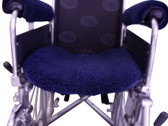
- On a canvas seat or an existing cushion. The Cushion-It is 18" x 22", made of Pressure Smart XD1900 wool at 1,900 grams per square meter, and its straps fasten under the seat or stay loose to move between chairs. The maker says it is not harmed by urine.
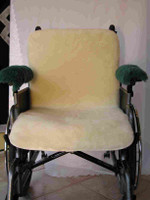
- Seat and back in one piece. For a sheepskin wheelchair cushion alternative, the Hospital Wool Fleece cover (F103B) is an 18" x 36" Merino lambswool pad at 1,050 GSM that looks and feels like medical sheepskin, held by an elastic strap; the 18" x 20" seat pad (F103A) covers the seat of most wheelchairs.
- The whole chair. The wheelchair pressure sore prevention package (M120XD) has two Cushion-Its, a pair of XD1900 armrest supports and a bottle of Woolskin, and ships free in Canada and the lower 48 states.
Our guide to the medical sheepskin chair pad range compares sizes, and wheelchair accessories covers arm pads and other add-ons.
How to choose: risk, sitting hours, incontinence, transfers, heat and washing
Start with risk. The guideline also lists mobility, body shape, sensation, comfort and the ability to transfer and shift weight.
- Risk level. NICE counts someone as high risk if they have several risk factors, such as very limited mobility, poor nutrition, being unable to reposition themselves or significant cognitive impairment, or if they have had a pressure ulcer before. High risk points toward air-cell or alternating air, chosen with a therapist.
- Sitting hours. For people who can't reposition themselves while seated, the guideline suggests limiting time out of bed as much as possible.
- Incontinence. The Model Systems skin guide says to wash and dry the skin and change clothing right after any leak; the guideline advises against sitting on incontinence liners not made for the cushion. A washable wool layer can help; see urine resistant vs non-UR sheepskin.
- Transfers. Someone who slides across on their own may need a firmer, more stable cushion than one they sink deep into. Lift, don't drag (MedlinePlus).
- Heat and sweat. Materials vary in airflow and heat, so look at the cover as well as the core.
- Weight and washing. Weight matters if you lift a manual chair into a car. Inspect the cushion and wash covers as the maker says.
Why should you never use a donut cushion?
Because the ring concentrates pressure around the hole. MedlinePlus says not to sit on donut-shaped cushions, and the international guideline says their edges create areas of high pressure that can damage tissue, impair circulation and cause swelling. That includes ring cushions sold for tailbone pain.
How often should you shift your weight?
Every 15 to 20 minutes, even on the best cushion. MedlinePlus advises leaning forward, left and right at that interval; the Model Systems guide says every 15 to 30 minutes for at least 30 to 90 seconds. The guideline notes that reduced blood flow can begin after about 10 minutes of sitting, even on a pressure-redistributing cushion. Techniques, timers and daily skin checks are in our guide on how to prevent pressure sores in a wheelchair.
When should you get a seating assessment from an OT or PT?
Get one before buying a cushion for anyone who uses a wheelchair full time or is at high risk. The guideline recommends involving a clinician with seating expertise, such as an occupational therapist, physical therapist or seating specialist. The Model Systems guide suggests an assessment at least every two years, or sooner if health or skin changes, ideally with a pressure map under the buttocks. MedlinePlus advises a fit check once or twice a year.
Call a nurse or doctor if you see a discolored patch that doesn't change color when pressed, or skin that feels warm, spongy or hard (NHS); these are early signs of bed sores. Keep weight off the area and don't treat broken skin yourself.
Wheelchair cushion for pressure sores FAQs
What is the best seat cushion for bed sores?
A pressure-redistributing cushion fitted to the person, such as high-specification foam, gel-and-foam or air-cell, chosen by risk level. For beds, see our guide to the best mattress topper for bed sores.
Are gel cushions good for pressure sores?
Yes, gel-and-foam cushions were among the skin protection cushions that lowered ulcers over the seat bones in the 2010 trial. Check the gel hasn't moved away from the seat bones.
Is memory foam good for pressure sores?
Only if it is a high-specification cushion that doesn't bottom out. A thin, soft seat cushion that lets the seat bones touch the base is not enough.
Should a cushion always be used in a wheelchair?
Yes, for anyone at risk: the international guideline advises against sitting directly on a seat without a cushion.
Can you put a sheepskin cover over an air cushion?
Ask the therapist first. The guideline favors loose, stretchy, breathable covers made for the cushion, and an extra layer can change how an air cushion works.
How often should a wheelchair cushion be replaced?
Follow the maker's timeframe, sooner if it no longer redistributes pressure; inspect it regularly for flattening, leaks or moved gel.
The short version
Get a seating assessment, choose a fitted foam, gel or air-cell cushion for the person's risk, shift weight every 15 to 20 minutes and never use a donut ring. A wool pad on top adds comfort and keeps skin drier. To compare every seat and arm pad, see our wheelchair products comparison, or contact us for help choosing.