
A medical sheepskin chair pad is a dense wool pad that sits between a person and the seat of a wheelchair, recliner or armchair, to spread pressure, soak up sweat and reduce the rubbing that damages fragile skin. Some are cut from tanned sheepskin; others are Merino lambswool woven into a backing, at up to 1,900 grams of wool per square meter. Down-Under Wool has supplied sheepskin and wool pressure care products since 1988, and this guide compares the seat pads we sell, explains which suits which chair, and covers sizes, washing and what a seat pad can and can't do.
What is a medical sheepskin chair pad?
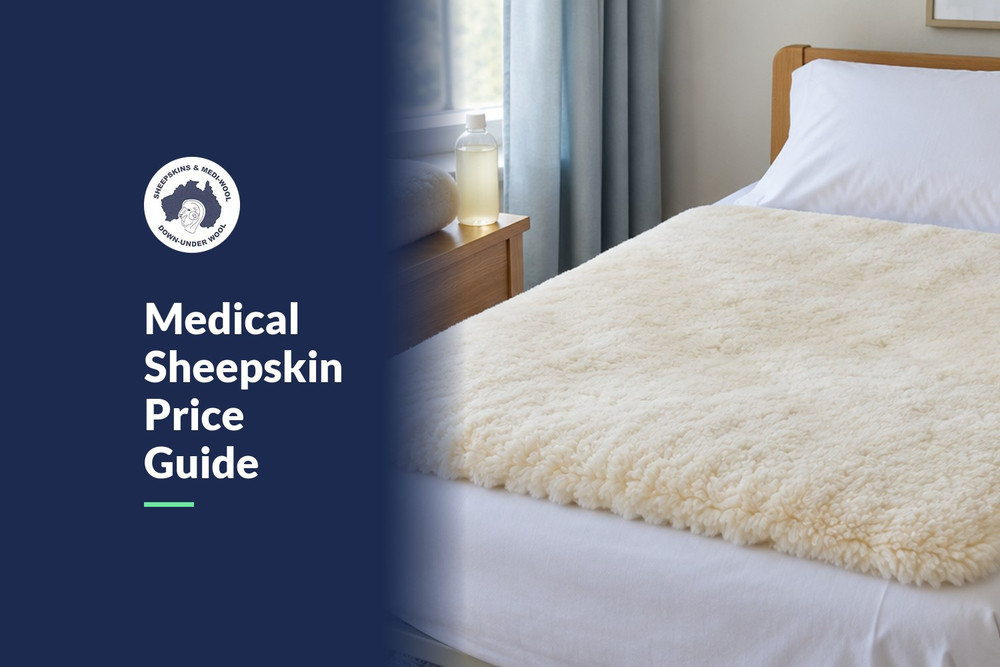
A medical sheepskin chair pad is a seat pad made from wool dense enough for pressure care, rather than a decorative sheepskin throw. There are two kinds:
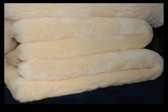
- Sheepskin seat pads are cut from a tanned hide with the wool left on. Our Healthcare Lambskin has a very dense 30 mm (1.2 inch) Merino pile on a double chrome tanned hide, large enough for a chair or recliner.
- Lambswool seat pads are made by weaving pure Merino wool into a fabric backing. They look and feel much like a medical sheepskin, but they are cut to seat sizes, have straps, and can go in the washing machine and dryer.
Wool density is measured in grams per square meter (GSM): the more wool in each square meter, the more cushioning the pad gives. Our guide to what makes a high-quality wool pad explains density, pile height and backing in more detail.
How does a sheepskin seat pad help?
A sheepskin or lambswool seat pad helps by reducing three things that harm skin in a chair: pressure, moisture and shear. Bedsores are injuries to the skin and the tissue below it caused by pressure over a long time, and that pressure can come from a wheelchair as well as a bed. Mayo Clinic lists the areas most at risk for people who use wheelchairs:
- the tailbone or buttocks;
- the shoulder blades and spine;
- the backs of the arms and legs where they rest against the chair.
Mayo Clinic also describes friction (skin rubbing against fabric, worse when the skin is moist) and shear (the skin staying put while the bone beneath slides) as contributing causes. A dense wool pile helps on each count: the springy fibers cushion bony points, the wool can absorb up to about a third of its own weight in moisture without feeling wet, and the pile moves with the skin instead of dragging on it. Synthetic and memory foam seats, by contrast, can make people sweat. For the full picture of causes and stages, see our bed sores guide.
Sheepskin and lambswool seat pads compared
These are the seat and chair pads we currently stock. All are pure Merino wool and all wash in Woolskin.
| Pad | Size | Wool | Best for | Care |
|---|---|---|---|---|
| Pressure Smart XD1900 Cushion-It (M105XD) | 18" x 22" | Merino pile, 1,900 GSM | wheelchair seat or back, office chair, car seat; Velcro straps | machine wash; dryer on low heat; not harmed by urine |
| Hospital Wool Fleece Seat Pad (F103A) | 18" x 20" | Merino lambswool, 1,050 GSM | covering the seat of most wheelchairs | machine wash; dryer on low heat |
| Hospital Wool Fleece Seat Cover (F103B) | 18" x 36" | Merino lambswool, 1,050 GSM | seat and back of a wheelchair in one piece; elastic strap | machine wash and dry |
| Lambswool Dialysis Chair Pad (M118) | 30" x 60" | Merino pile, 1,900 GSM | dialysis chairs and recliners, full length; elastic strap | machine wash; dryer on low heat |
| Healthcare Lambskin (M101) | approx. 30" x 40" | sheepskin, 30 mm pile | armchair, recliner, sofa, car or airplane seat | machine wash cool to warm, low agitation; air dry; not for incontinence |
For a side-by-side look at the wheelchair range, including arm pads, see compare wheelchair and walker products.
Which seat pad suits which chair?
Wheelchairs
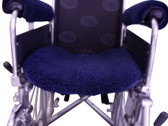
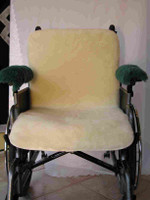
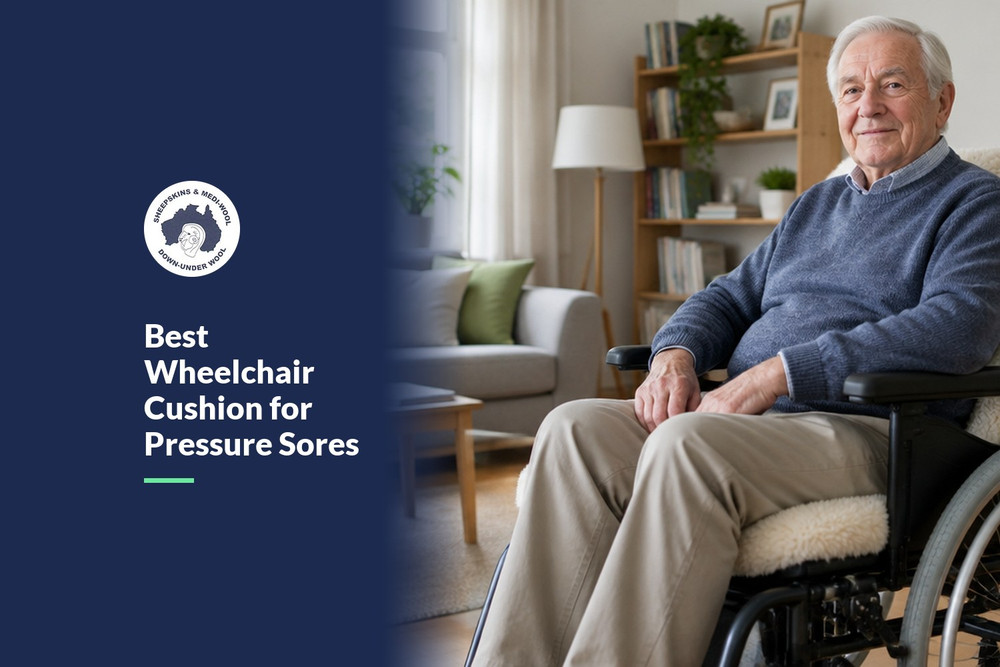
For a wheelchair, choose a pad cut to the seat with straps that hold it in place. The Cushion-It is our first choice for wheelchair comfort: its Velcro straps can fasten under the existing seat or be left loose so it moves between chairs, and many people use one on the seat and a second on the back. The 18" x 36" Hospital Wool Fleece Seat Cover covers the seat and back in one piece. The wheelchair pressure sore prevention package (M120XD) puts two Cushion-Its, a pair of arm pads and a bottle of Woolskin together. Our post on wheelchair pressure sore prevention covers seating habits as well as products.

Recliners and armchairs
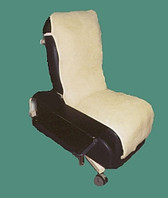
For someone who spends most of the day in a recliner or armchair, a longer pad works better than a seat-sized one, because the back and legs rest on the chair too. The Healthcare Lambskin and the full-length M118 both suit recliners; our guide to medical sheepskin for a recliner chair covers sizes and placement.
Dialysis and treatment chairs
The M118 Lambswool Dialysis Chair Pad was designed for the long hours of dialysis. At 30" x 60" it covers the whole chair, and an elastic strap near the top keeps it in place.
Office chairs and car seats
The Cushion-It fits an office chair as well as a wheelchair, and it protects leather car seats while adding warmth in winter. The Healthcare Lambskin can also be laid over a car seat.
Is sheepskin or lambswool better for a seat pad?
For most wheelchair users, a lambswool seat pad is the more practical choice, because it is cut to size, strapped in place and can be machine washed and dried. A sheepskin seat pad gives a deep, silky natural pile, but a hide needs gentler washing and air drying.
Washing matters most when incontinence is involved. The Cushion-It is not adversely affected by urine or feces, which makes it suitable for incontinent users; the Healthcare Lambskin is not urine resistant and is not recommended in that case. The maker of Pressure Smart XD1900 says the material meets the Australian standard AS4480.1 for medical sheepskin, and it stopped making a sheepskin version of the Cushion-It after pressure mapping showed the XD1900 surface reduced pressure more. Read more about the material on our Pressure Smart XD1900 page.
Wheelchair arm pads and other covers
A seat pad protects the buttocks and thighs, but forearms and hands rest on hard armrests for hours too. Our arm pads strap over the armrests:
- HiTemp medical sheepskin arm pads (M125G): 14" long, green, 30 mm pile, sold in pairs.
- LowTemp medical sheepskin arm pads (M125): 14" x 3", beige or champagne, hand wash.
- Pressure Smart XD armrest supports (SC125XD): 13.5" x 5", 1,900 GSM Merino, three Velcro straps; some customers also use them on commode frames.
Walker, crutch and seat belt covers are in our roundup of lesser-known sheepskin aids.
How to use and care for a seat pad
- Keep the skin in contact with the wool. Protection comes from the wool, so avoid thick layers of clothing or bedding between the person and the pad where possible.
- Use it with, not instead of, a pressure care cushion. The Cushion-It can be used on its own on a canvas wheelchair seat or on top of a pressure care cushion. If a nurse or therapist has prescribed a cushion, ask them before changing the seating. Mayo Clinic advises against doughnut-shaped cushions, which can focus pressure on the surrounding tissue.
- Keep moving. No pad replaces changing position. Mayo Clinic suggests shifting weight frequently, and wheelchair pushups for people with enough upper body strength.
- Wash it in Woolskin. Woolskin cleans, conditions and disinfects the wool. Wool pile pads can be tumble dried on low heat; take them out while still slightly damp, because wool does best with about 15% moisture left in it. Sheepskins dry best on a rack, leather side up. Our guide on how to wash sheepskin has the details.
- Have a spare. With two pads, one can be in use while the other is drying.
Sheepskin seat pad FAQs
Is sheepskin good for pressure sores?
Medical sheepskin is good for preventing pressure sores in bed, and that is where the strongest evidence is. In a 2004 trial of 441 patients at a Melbourne teaching hospital, those given an Australian Medical Sheepskin developed new pressure ulcers at less than half the rate of those without one (9.6% vs 16.6%). Seat pads use the same dense wool to cushion and keep skin dry, but they have not been tested in a trial of that size.
Can you use a sheepskin seat pad on top of a wheelchair cushion?
Yes. A thin, dense wool pad such as the Cushion-It can sit on top of a pressure care cushion to add moisture control and comfort. Check with the nurse or therapist who prescribed the cushion first.
What size seat pad does a wheelchair need?
Most wheelchair seats take an 18" x 20" or 18" x 22" pad. For the seat and back in one piece, choose the 18" x 36" seat cover.
Can you machine wash a sheepskin seat pad?
Yes, all the pads in our table are machine washable in Woolskin. The lambswool pads can also be tumble dried on low heat; the Healthcare Lambskin should be washed cool to warm and air dried.
What is the best seat pad for incontinence?
Choose a pad that tolerates urine and frequent machine washing, such as the Pressure Smart XD1900 Cushion-It. Don't use a lambskin that isn't urine resistant. Our urine-resistant wool pads cover the bed as well.
Is lambswool the same as sheepskin?
No. Lambswool is wool shorn from a young sheep, which can be woven into a pad; sheepskin is the tanned hide with the wool still attached. Both are real wool.
Can you use a sheepskin seat pad in the car?
Yes. The Cushion-It and the Healthcare Lambskin both work on car seats, where they add cushioning on long drives and keep the seat warm in winter.
The short version
For a wheelchair, pick a strapped lambswool seat pad such as the 1,900 GSM Cushion-It or the Hospital Wool Fleece pads, and add arm pads if the forearms rest on hard armrests. For a recliner or dialysis chair, choose a full-length pad. Choose a urine-resistant pad for incontinence, keep the skin on the wool, keep changing position, and wash the pad in Woolskin. Questions about which pad fits your chair? Contact us; we've been helping caregivers choose since 1988.