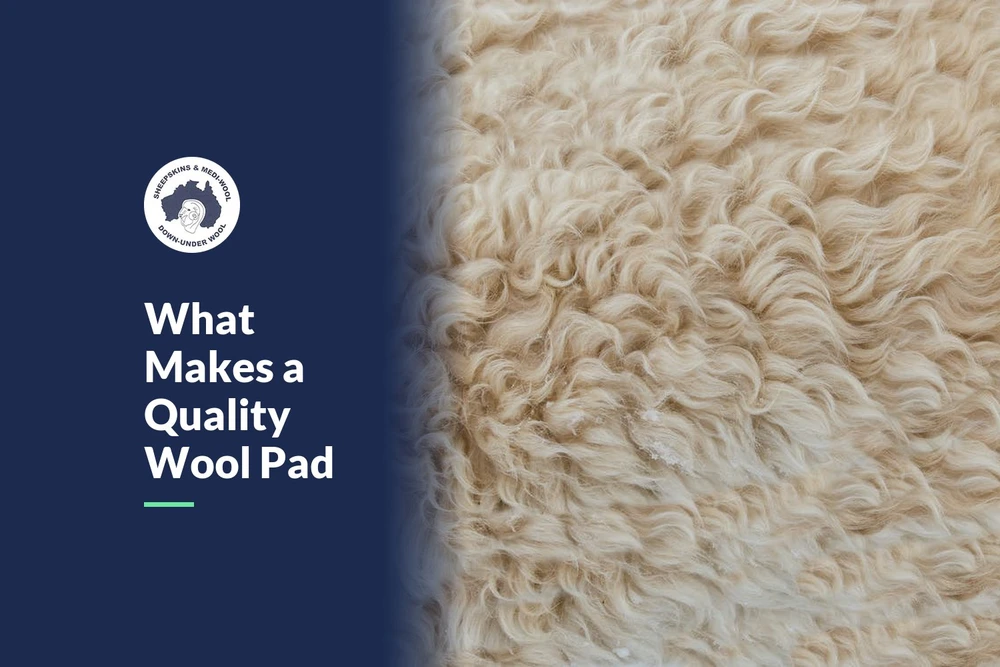
A high-quality wool pad is one with a dense, even pile of fine Merino wool, a pile deep enough to cushion bony areas, a backing that holds the wool firmly, and care instructions that let you wash it as often as real life demands. You can check most of that from the product details: the wool density in grams per square meter (GSM), the pile height in millimeters, the fiber diameter in microns, the type of backing, and the washing temperature. Down-Under Wool has sold wool and sheepskin pads since 1988, from 550 GSM fleeces to 1,900 GSM pressure care pads, and this guide explains what each number means and how our pads compare.
What makes a high-quality wool pad?
A high-quality wool pad scores well on six points:
- Wool density: how many grams of wool are in each square meter of pad.
- Pile height: how deep the wool layer is.
- Fiber diameter: how fine the individual wool fibers are, in microns.
- Backing: whether the wool grows from a tanned hide (sheepskin) or is knitted into a fabric backing (wool pile).
- Washability: the water temperature it takes, whether it can go in the dryer, and whether it resists urine.
- Size: whether it covers the areas that need protecting.
For pressure care, these points decide how well a pad deals with the three main causes of pressure sores: pressure, moisture and shear. For the clinical background, see our bed sores guide.
Wool density (GSM): how much wool is in the pad?
Wool density is the weight of wool in one square meter of pad, written as GSM or g/m². A higher number means more fibers packed into the same area, which gives more cushioning and more wool to absorb moisture. Here is how density varies across our range:
- 550 GSM: the Hospital Bed Nursing Fleece (F102), a whole-mattress cover for comfort and everyday protection.
- 1,050 GSM: the Hospital Wool Fleece Bed Pad (F103C) and its wheelchair versions, almost twice the wool of the F102.
- 1,900 GSM: the Pressure Smart XD1900 range, our densest wool pile, used for overlays, chair pads and wheelchair cushions.
Density also affects day-to-day care. At 1,900 GSM, the pile of the Pressure Smart XD Superior Overlay is so dense that a spill does not readily pass through, so it can often be wiped up with a damp cloth.
Pile height: how deep should the wool be?
For pressure care, look for a pile of about 25 to 30 mm (1 to 1.2 inches). Our medical sheepskins, the Healthcare Lambskin and the 1,900 GSM XD1900 overlays all have a 30 mm pile. According to our published summary of the Australian standard AS4480.1, a medical sheepskin's pile must be at least 25 mm in a washed state, and the pile density must look uniform. A deep pile with gaps or thin patches gives uneven support, so check that the wool looks even across the whole pad.
Fiber diameter: how fine is the wool?
Fiber diameter is measured in microns (thousandths of a millimeter), and finer fibers feel softer. Woolmark gives Merino wool as generally less than 22 microns, against 50 to 100 microns for a human hair. Fiber diameter is also what decides whether wool feels prickly: Woolmark notes that itch and prickle come from coarse fibers thicker than about 30 to 32 microns pressing on the skin, which is mechanical irritation, not an allergy. A 2017 review in Acta Dermato-Venereologica also found that wool has not been shown to be an allergen.
A medical sheepskin isn't judged on softness alone. Our summary of AS4480.1 gives a fiber diameter range of 26 to 34 microns for medical sheepskin wool, and the standard itself sets requirements for fiber diameter, pile height and the leather's shrinkage temperature. All the pads in this guide use Merino wool, and our footcare lambswool, for example, is 23.5 micron fine Australian Merino.
Backing: sheepskin or wool pile?
The backing decides how a pad is made and how it washes. There are two kinds:
- Sheepskin: the wool grows from a tanned hide. Quality depends on the tanning as well as the wool. A HiTemp medical sheepskin is tanned so its leather has a minimum shrinkage temperature of 110°C, according to our AS4480.1 summary, which is why it can be washed in hot water. Real medical sheepskins made to AS4480.1 carry a stamp on the leather. Read more in what is medical sheepskin.
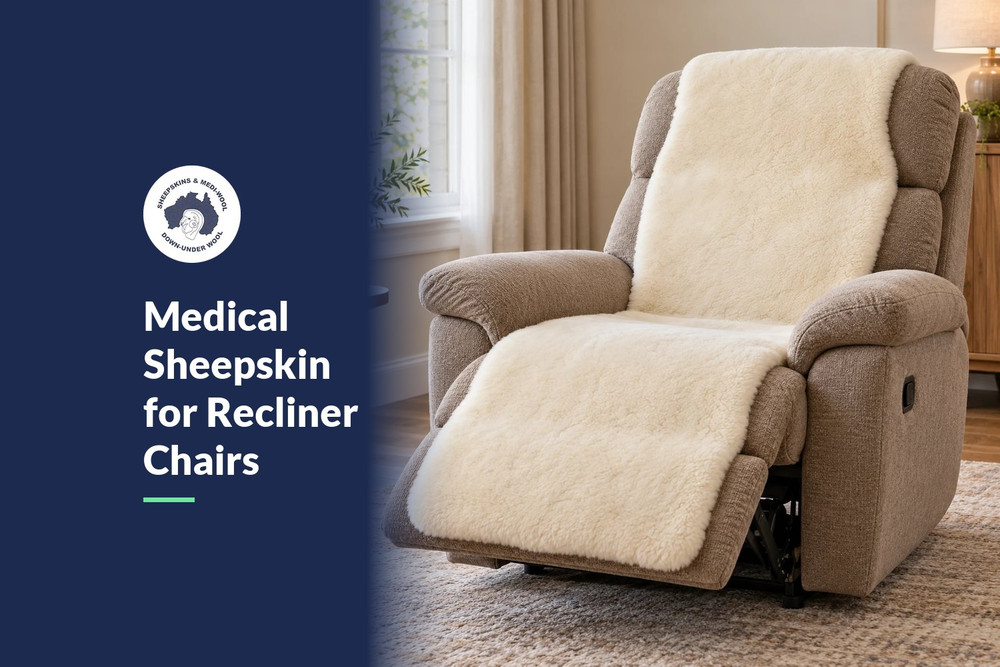
- Wool pile: the wool is knitted or woven into a fabric backing. Pressure Smart XD1900 is made by the Sliverknit process, in which the wool is knitted into the backing. A wool pile pad can be cut to any size, and the fabric backing lets it be machine dried.
Our page on sheepskin vs wool explains the differences in more depth.
Washability and urine resistance
A wool pad is only as useful as it is washable, especially for incontinence. Check three things:
- Water temperature. HiTemp medical sheepskins and XD1900 pads can be washed at up to 80°C (175°F), hot enough to disinfect. LowTemp sheepskins such as the Healthcare Lambskin need cool to warm water, or they may shrink.
- Dryer use. Wool pile pads can go in the dryer on low heat; sheepskins dry best in the air, leather side up. Either way, wool does best with about 15% moisture left in it.
- Urine resistance (UR). UR pads stand up to urine and frequent washing. A pad that isn't UR, such as the Healthcare Lambskin, can be permanently damaged by urine.
Wash any wool pad in Woolskin, which cleans, conditions and disinfects the wool; detergents with enzymes, phosphates, peroxide, alkali or bleach can damage sheepskin leather for good. Our guide on how to wash sheepskin has the details.
Wool pad specifications compared
| Pad | Backing | Wool density | Pile | Washing | Urine resistant |
|---|---|---|---|---|---|
| Hospital Bed Nursing Fleece (F102), 35" x 80" | wool pile | 550 GSM | not stated | machine wash; dryer, low heat | not stated |
| Hospital Wool Fleece Bed Pad (F103C), 30" x 60" | wool pile | 1,050 GSM | not stated | machine wash; dryer, low heat | yes |
| Pressure Smart XD1900 Overlay (M102XD), 26" x 40" | wool pile (Sliverknit) | 1,900 GSM | 30 mm | up to 80°C; dryer, low heat | yes |
| Pressure Smart XD Superior Overlay (SC104XD), 30" x 60" | wool pile | 1,900+ GSM | 30 mm | machine wash; dryer, low heat | yes |
| Australian Medical Sheepskin (M102C), 24" x 36" | HiTemp sheepskin, AS4480.1 | hide; judged by pile and AS4480.1 | 30 mm | machine wash, hot allowed; air dry | yes |
| Healthcare Lambskin (M101), approx. 30" x 40" | double chrome tanned lambskin | hide; very dense pile | 30 mm | cool to warm; air dry | no |
To compare our bed products side by side, see compare pressure sore prevention products.
How to check a wool pad before you buy
- Is it 100% wool, and is the wool Merino?
- Is the wool density stated in GSM? For pressure care, more wool gives more cushioning.
- Is the pile height stated, and does the pile look even?
- For a sheepskin, is there an AS4480.1 stamp on the leather? Green color alone doesn't prove it.
- What temperature can it be washed at, can it go in the dryer, and is it urine resistant?
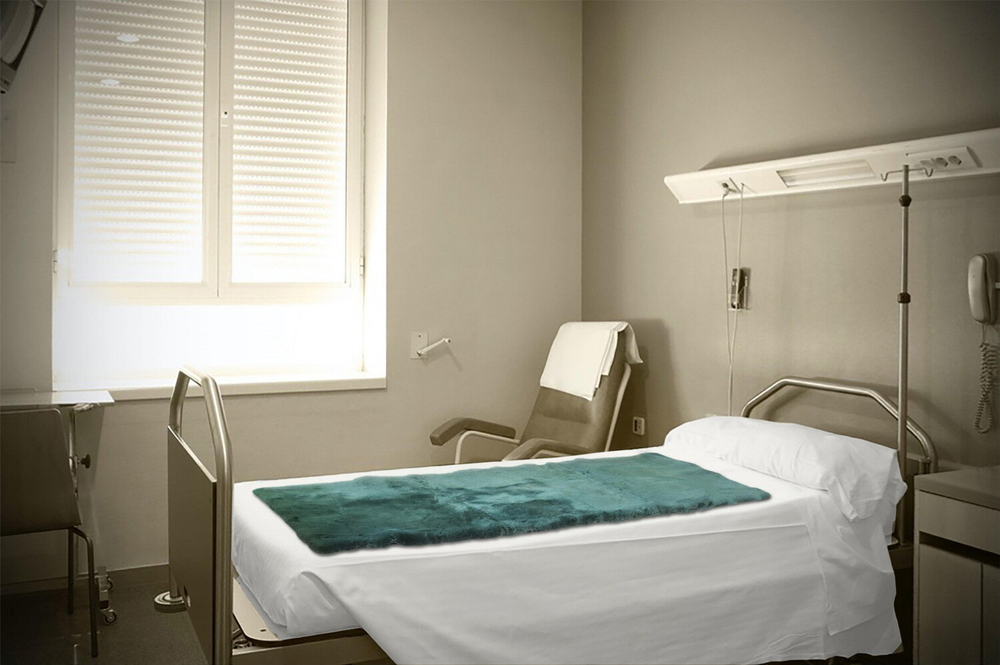
- Is it large enough? A bed pad should reach from the shoulders to below the buttocks.
Wool pad FAQs
What does GSM mean for a wool pad?
GSM means grams of wool per square meter. It measures how densely the wool is packed, so a 1,900 GSM pad has more than three times the wool of a 550 GSM fleece in the same area.
What is wool pile?
Wool pile is a layer of wool fibers knitted or woven into a fabric backing so they stand up like the wool on a sheepskin. It is real wool, but not a hide.
Is a wool pile pad as good as a medical sheepskin?
A dense wool pile pad is a practical alternative: the maker of Pressure Smart XD1900 says it meets the AS4480.1 standard for medical sheepskins, and it is easier to launder. Medical sheepskin is the material tested in the 2004 hospital trial of 441 patients; see medical sheepskin for that evidence.
Is a higher GSM always better?
For pressure care, more wool usually means more cushioning and moisture absorption. For comfort on a whole bed, a lighter fleece such as the 550 GSM F102 may be all you need.
What micron is Merino wool?
Merino wool is generally less than 22 microns, according to Woolmark. Superfine Merino is finer still, and wool over about 30 to 32 microns is more likely to feel prickly.
Can wool pads go in the dryer?
Wool pile pads can, on low heat with low agitation, taken out while still slightly damp. Sheepskins should air dry, leather side up, away from heat.
Does a wool pad cause allergies?
Wool has not been shown to be an allergen. Itch from wool comes from coarse fibers rubbing the skin, which is why fine Merino feels more comfortable.
The short version
Look at five numbers and facts before you buy: wool density in GSM, pile height, fiber diameter, the backing, and the washing temperature, plus urine resistance if incontinence is involved. For pressure care, choose fine Merino in a dense, even pile (our pressure care pads run from 1,050 to 1,900 GSM, and the XD1900 range has a 30 mm pile) that you can machine wash in Woolskin. For the health benefits behind these specs, read how Merino wool pads benefit your health, and for the environmental side, are sheepskins sustainable?