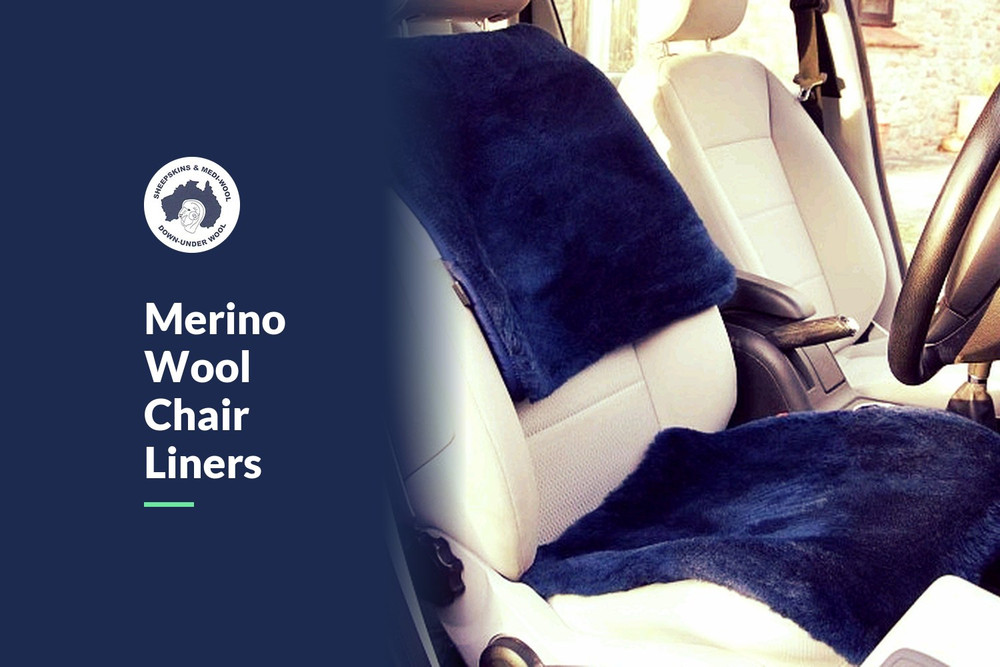
Merino wool chair liners are dense pads of fine Merino wool that cover the seat, and often the back, of a wheelchair, recliner, dialysis chair or armchair, so the person sitting rests on wool instead of vinyl, foam or synthetic fabric. The health benefits come from the fiber: Merino wool can absorb about 30% of its own weight in moisture without feeling wet, it breathes, and fine Merino is not a skin allergen. Our densest pads carry 1,900 grams of Merino wool per square meter. Down-Under Wool has supplied wool and sheepskin pressure care products since 1988, and this guide explains what Merino wool pads are, which health benefits are backed by evidence, and how to choose and care for a chair liner.

What are merino wool chair liners?
A Merino wool chair liner is a pad of real Merino wool fibers fixed into a backing, made to lie over a chair seat or to run from the seat up the back. Our Pressure Smart XD1900 pads are made with the Sliverknit process, in which the Merino wool is knitted into a backing material; the Hospital Wool Fleece range, made by MiniJumbuk in Australia, is 100% pure new Merino wool at 1,050 grams per square meter. Both look and feel much like a sheepskin, but they are shorn wool rather than a tanned hide.
Liners are held on with elastic straps or Velcro, so they can be taken off for washing or moved from a wheelchair to a car seat or armchair. To understand the fiber itself, see what wool is made of; for how Merino compares with lambswool and other wools, see our guide to types of wool.
What are the health benefits of merino wool?
The health benefits of Merino wool that have evidence behind them are about skin comfort: keeping skin drier, not irritating it, and, for wool worn as clothing, small gains in sleep and eczema.
| Benefit | What the evidence says |
|---|---|
| Keeps skin drier | Wool can absorb up to 30% of its weight in water without feeling wet, and its fibers pass water vapor away from the skin (Science Learning Hub). |
| Breathable, steadier temperature | Crimped fibers trap still air for warmth while the fiber absorbs water vapor and lets excess heat escape (Woolmark). |
| Gentle on skin | A 2017 review found no evidence that wool is a skin allergen; itch comes from coarse fibers of about 30 microns and thicker, and fine Merino is well tolerated (Zallmann et al., Acta Derm Venereol). |
| May help eczema | In a small 2017 trial, superfine Merino clothing "may assist in the management of childhood AD" (Su et al., Br J Dermatol). |
| Faster sleep onset | In a 2019 trial of 36 adults aged 50 to 70, wool sleepwear gave small but significant sleep benefits over cotton and polyester (Chow et al., Nat Sci Sleep). |
| Resists odor and flame | Keratin binds odor molecules until washed; wool is naturally flame resistant and does not melt or drip. |
The eczema and sleep studies were small and funded by the wool industry, and they looked at clothing, not chair pads. More on both in is merino wool hypoallergenic? and is it good to sleep on wool?
Why does the seat surface matter when you sit for hours?
The seat surface matters because skin that stays under pressure, damp and rubbed for long periods can break down into a pressure sore. Mayo Clinic describes bedsores as injuries to the skin and underlying tissue from prolonged pressure, and for people who use wheelchairs lists these common sites:
- the tailbone or buttocks
- the shoulder blades and spine
- the backs of the arms and legs where they rest against the chair
A wool surface cannot replace a pressure-relieving cushion or regular changes of position, but it helps with the moisture and friction part of the problem: it takes up sweat, lets air reach the skin and gives a soft, low-friction surface. The strongest trial evidence for wool in pressure care is for medical sheepskin under patients in bed: in a 2004 trial of 441 patients, 9.6% of those on an Australian Medical Sheepskin developed a new pressure ulcer, against 16.6% on standard care. For wheelchair-specific advice, read wheelchair pressure sore prevention.
Merino wool pads vs sheepskin for chairs
| Merino wool pad (XD1900, Hospital Wool Fleece) | Medical sheepskin (AS4480.1) | |
|---|---|---|
| What it is | Shorn Merino wool knitted or fixed into a backing | A whole tanned hide with the wool attached |
| Wool density | 1,050 or 1,900 g/m² | Dense, deep pile made to the AS4480.1 standard |
| Shape and size | Cut to fit seats, backs and armrests | Limited by the size of the hide, about 38" x 24-26" |
| Washing | Machine wash and dry at low heat | Machine wash (HiTemp); air drying is best |
| Urine resistant | Some are (the XD1900 overlays and the F103C bed pad) | HiTemp UR sheepskins, yes |
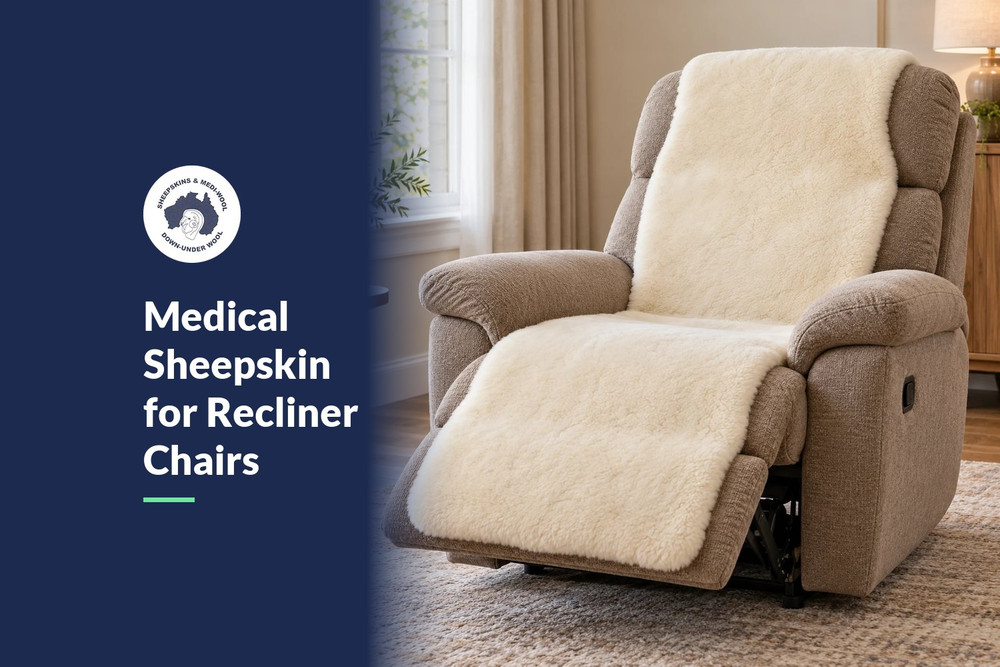
Pressure Smart XD1900 products are made to meet AS4480.1, the Australian standard for medical sheepskins. If you prefer a natural hide, see sheepskin wheelchair seat covers and chair pads or medical sheepskin for a recliner chair.
Which merino wool chair pad fits your chair?
| Pad | Size | Wool | Use it on |
|---|---|---|---|
| Pressure Smart XD1900 Cushion-It (M105XD) | 18" x 22" | 1,900 g/m² | Wheelchair, office or armchair seat or back; Velcro straps; can sit on top of a pressure care cushion |
| Hospital Wool Fleece Seat Pad (F103A) | 18" x 20" | 1,050 g/m² | Most wheelchair seats; also as a heel pad in bed |
| Hospital Wool Fleece Seat Cover (F103B) | 18" x 36" | 1,050 g/m² | Seat and back of most wheelchairs, with an elastic strap |
| Lambswool Dialysis Chair Pad (M118) | 30" x 60" | 1,900 g/m² | Dialysis chairs and recliners, full length |
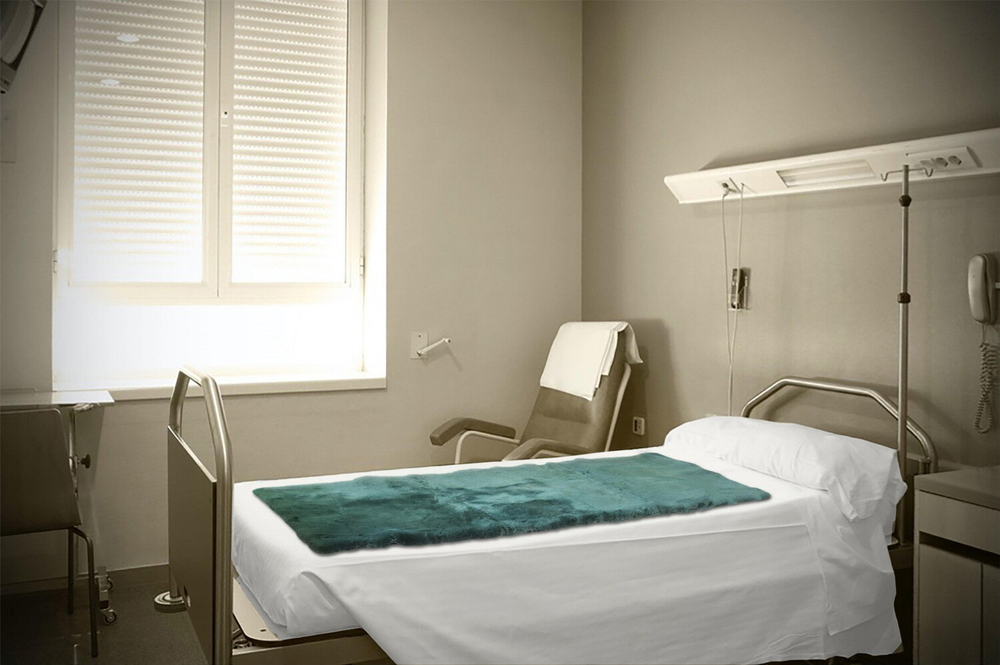
| Pressure Smart XD1900 Overlay (M102XD) | 26" x 40" | 1,900 g/m² | Bed or recliner; moves easily between them |
| XD Wheelchair Armrest Supports (SC125XD) | 13.5" x 5", pair | 1,900 g/m² | Wheelchair armrests, held by 3 Velcro straps |
The wheelchair pressure sore prevention package (M120XD) combines two Cushion-It pads (seat and back), the armrest supports and a bottle of Woolskin. To compare everything side by side, see compare wheelchair and walker products.

How do you use a merino wool chair liner?
- Sit directly on the wool where you can. Extra layers between skin and wool reduce its moisture and airflow benefits.
- Keep the pressure-relieving cushion your nurse or therapist recommended; the wool pad goes on top of it, not instead of it.
- Shift position often, as Mayo Clinic advises, and avoid doughnut-shaped cushions, which can concentrate pressure on the surrounding tissue.
- Check the skin over the tailbone, buttocks and other pressure points regularly, and ask a nurse or doctor about any red area that does not fade or any open skin.
How do you care for merino wool pads?
Machine wash Merino wool pads in Woolskin on a wool or gentle cycle, which cleans, conditions and disinfects the wool. Dry them in the dryer at low heat with gentle agitation, and take them out before they are completely dry: wool does best with about 15% moisture left in it. Finish drying on the back of a chair or a rack. Between washes, a good shake restores the pile.
Merino wool pad FAQs
Is lambswool the same as merino wool?
Not exactly. Lambswool means wool from a young sheep's first shearing; Merino means wool from the Merino breed. Pads described as "Merino lambswool" use fine Merino wool, and the word lambswool is often used loosely for any soft wool pile.
Are merino wool pads good for bed sores?
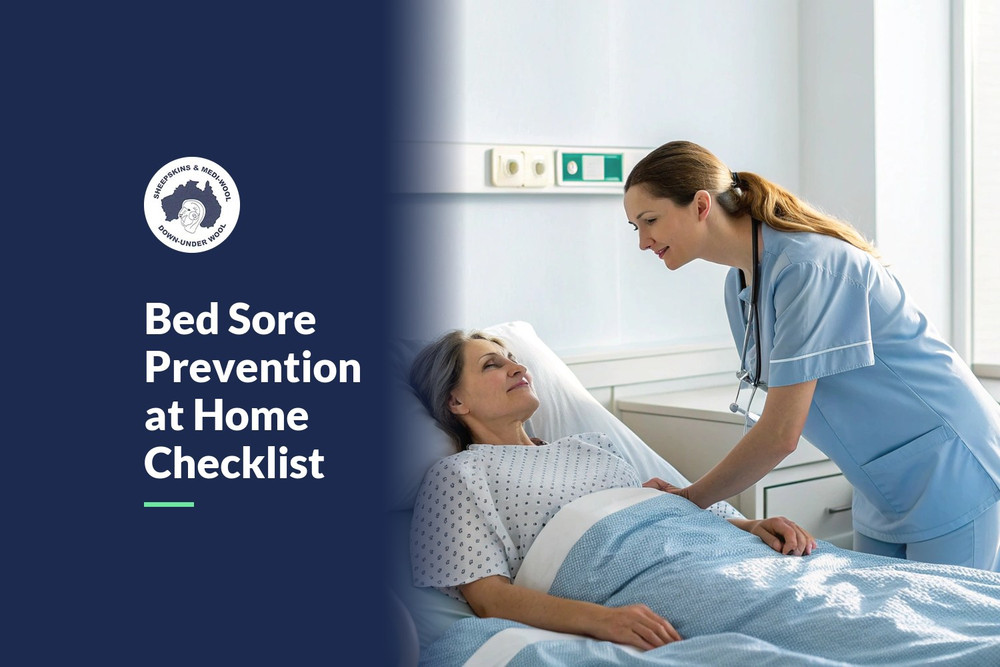
A dense Merino wool pad helps keep skin dry and reduces friction, which supports pressure sore prevention, but it is not a treatment. Use it alongside regular position changes and a suitable cushion or mattress, and ask a nurse or doctor about any existing sore. See our bedsore prevention guide.
Can you wash merino wool chair pads?
Yes. All the pads in the table above are machine washable in Woolskin on a gentle cycle and can be tumble dried on low heat until nearly dry.
Do wool seat pads make you hot?
No, wool seat pads don't usually make you hot, because wool absorbs water vapor and lets heat escape.
Is merino wool itchy to sit on?
Fine Merino is not usually itchy, because itch comes from coarse fibers of about 30 microns and thicker.
What are the disadvantages of merino wool?
Merino wool usually costs more than synthetic fleece, it needs a gentle wool wash rather than hot water and harsh detergent, and it can felt or shrink if it is washed too hot or agitated too hard.
The short version
Merino wool chair liners put a dense, breathable layer of fine wool between the skin and the chair. The evidence-backed health benefits of Merino wool are a drier, gentler surface for the skin, and the best pads carry up to 1,900 grams of wool per square meter and are machine washable. Use them on top of a good cushion, keep changing position, and pick the size that fits your chair. Questions about fit? Contact us; we have been fitting wool to wheelchairs and recliners since 1988.