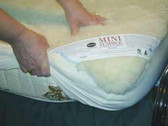
Sleeping on wool is good for most people: wool absorbs moisture vapor and lets heat escape, so a wool mattress topper or bed pad keeps the surface you lie on drier and more even in temperature than a synthetic one. Sleep studies so far point the same way for wool sleepwear; in a 2019 University of Sydney trial, older adults fell asleep about 12 minutes faster in wool than in cotton on warm nights. Down-Under Wool has supplied Australian Merino wool and sheepskin bedding since 1988, mostly for people who spend long hours in bed, and this guide explains what the research shows, the benefits of a wool mattress topper, whether wool sleeps hot and how to choose and care for wool bedding.
Is it good to sleep on wool?
Yes, for most people sleeping on wool is comfortable and healthy for the skin. Wool can absorb about 30% of its weight in water without feeling wet, and its fibers take up water vapor and release it into the air while letting excess heat escape (Woolmark; Science Learning Hub). In bed, that means less of the clammy feeling you get on a plastic or polyester surface, and a surface that stays closer to body temperature through the night.
The main exceptions are practical: babies should never sleep on a wool topper or any soft surface (see the FAQ below), and very coarse wool can prickle. Fine Merino wool is the type used for bedding; for why it rarely itches, see is merino wool hypoallergenic?
What does sleep research say about wool?
A small number of controlled studies, most from one University of Sydney group and several supported by the wool industry, have compared wool with other fibers:
| Study | Who and how | What it found |
|---|---|---|
| Shin et al., Nature and Science of Sleep, 2016 | Young adults; wool vs cotton sleepwear and wool vs polyester bedding at 17°C and 22°C (63°F and 72°F) | Wool sleepwear shortened the time to fall asleep, most clearly at 17°C. The bedding fiber made no measurable difference. |
| Chow et al., Nature and Science of Sleep, 2019 | 36 adults aged 50 to 70; wool, cotton and polyester sleepwear at 30°C (86°F) | Small but significant benefits for wool; older participants fell asleep 12.4 minutes faster in wool than in cotton, with the clearest gains in poor sleepers. |
| Li et al., Journal of Sleep Research, 2024 (systematic review) | Nine studies comparing fibers in sleepwear and bedding | Wool sleepwear helped sleep onset in adults in cool conditions and older adults in warm conditions; the authors call the link between fiber and sleep "complex" and ask for more standardized studies. |
So the honest answer is that wool next to the skin has the best evidence, and that wool bedding has not yet been shown to change sleep measurements on its own. What wool bedding does reliably is change the surface you lie on: drier, cushioned and breathable.
Benefits of a wool mattress topper
- A drier surface. Wool takes up moisture vapor from the skin, so sweat doesn't sit between you and the bed.
- Even temperature. Crimped fibers trap still air for warmth, while the fibers let water vapor and excess heat move away.
- Cushioning. Wool's spring-like fibers stretch and recover, so a dense pile softens a firm mattress and spreads the contact under shoulders and hips.
- Odor resistance. Keratin, the protein wool is made of, binds odor molecules until the wool is washed.
- Natural flame resistance. Wool is hard to ignite and does not melt or drip (Woolmark fact sheet).
- Renewable and biodegradable. Sheep grow a new fleece every year, and pure wool breaks down at the end of its life.
These properties come from the fiber's structure; our guide to what wool is made of explains how.
Are wool mattress toppers hot?
No, a wool topper is not usually hot, because wool releases heat and moisture instead of trapping them. Wool feels warm on a cold night because its fibers hold still air, but it breathes: in the 2019 study above, run at a warm 30°C (86°F), older adults slept better in wool than in cotton or polyester. If you sleep hot, use a breathable cotton sheet over the wool, or lie directly on the wool, rather than adding a waterproof plastic layer that stops moisture escaping.
Sleeping on wool when you spend long hours in bed
For someone who is in bed most of the day, the surface matters even more, because pressure, moisture and friction on the skin are what lead to pressure sores. Dense wool is used in health care for exactly this reason. In a 2004 randomized trial of 441 patients at a Melbourne teaching hospital, 9.6% of patients given an Australian medical sheepskin developed a new pressure ulcer, compared with 16.6% of those on standard care.

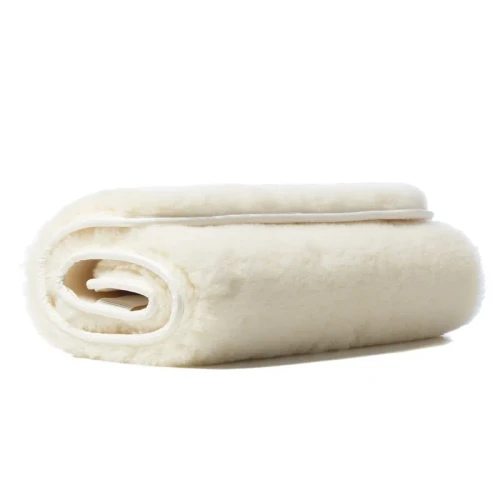
A dense Merino wool pad gives a similar wool surface and is easy to machine wash. For a full comparison of wool, foam and air overlays, read the best mattress topper for bed sores, and if a sore has already started, ask a nurse or doctor what surface to use.
Which wool bedding should you choose?
| Product | Size | Wool | Best for |
|---|---|---|---|
| Hospital Bed Nursing Fleece (F102) | 35" x 80", fitted with an elastic skirt | 550 g/m² Merino | Covering a whole hospital-bed mattress |
| Superior Overlay XD (SC104XD) | 30" x 60" | 1,900 g/m² Merino, 30 mm pile | Whole-body protection, head to toe; urine resistant |
| Hospital Wool Fleece Bed Pad (F103C) | 30" x 60" | 1,050 g/m² Merino | Shoulders to feet; machine wash and dry |
| Pressure Smart XD1900 Overlay (M102XD) | 26" x 40" | 1,900 g/m² Merino | Shoulders to below the buttocks; moves to a chair |
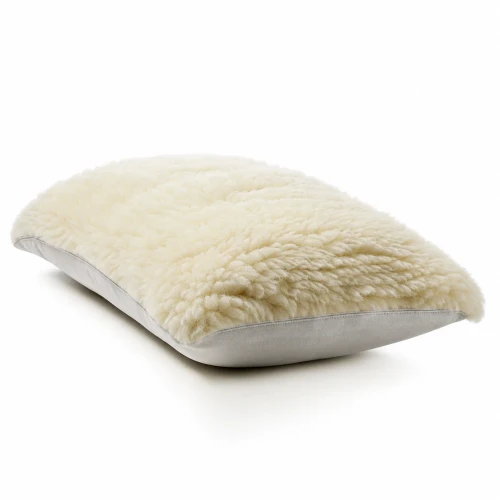
| Wool Pillow Cover (M129D) | 18" x 28" | Premium Merino surface | Trying wool for your face and head first |
Browse the full range in wool bedding and Merino wool bedding, or see lambskin bedding if you prefer a natural sheepskin. For pillows, read the benefits of wool pillows.
How do you care for wool bedding?
Between washes, take wool bedding off the bed, give it a good shake and air it every week or so to restore the pile. When it does need washing, the pads above can be machine washed in Woolskin on a gentle or wool cycle, then dried at low heat with low agitation. Don't over-dry: wool does best with about 15% moisture left in it, so finish drying over a rack or the back of a chair. Always follow the care label of the specific product.
Sleeping on wool FAQs
Are wool mattress toppers itchy?
A fine Merino topper is not usually itchy, because itch comes from coarse fibers of about 30 microns and thicker. Fine Merino is much finer, and many people lie on it directly.
Are wool mattress toppers safe for babies?
No. Babies should sleep on their back on a firm, flat surface with nothing soft in the crib, as the NIH Safe to Sleep campaign advises, so a wool topper or sheepskin does not belong in a baby's crib.
Is it good to sleep with a wool blanket?
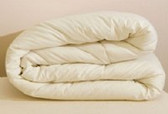
Yes. A wool blanket or duvet keeps you warm without trapping sweat, because wool absorbs moisture vapor and lets it escape. Pair it with breathable cotton sheets.
Is it OK to sleep in wool socks?
Yes, wool bed socks are a comfortable way to keep cold feet warm at night. Our Merino wool foot warmers and bed socks are made for exactly that.
Can you wash a wool mattress topper?
It depends on the topper. All the wool pads in the table above are machine washable; many thick wool mattress toppers and wool-filled duvets are not, and should be aired and spot cleaned or dry cleaned instead. Check the label.
Do wool mattress toppers help with pressure points?
A dense wool pile cushions bony areas such as hips and shoulders and spreads body weight over a wider area. For people at risk of pressure sores, a medical-grade wool or sheepskin surface is the better choice than a thin topper.
Are wool mattresses good?
Wool is a good material in or on a mattress for the same reasons: it is breathable, absorbs moisture, resists odor and is naturally flame resistant. A wool topper or pad is a lower-cost way to get a wool sleeping surface on the mattress you already have.
The short version
Sleeping on wool is good for most adults: a wool topper or pad keeps the bed drier, breathes on warm nights and cushions a firm mattress. The strongest sleep evidence so far is for wool sleepwear, which helped people fall asleep faster; wool bedding mostly improves the surface you lie on. For anyone in bed for long hours, a dense Merino pad or medical sheepskin adds pressure care. Need help choosing? Contact us; we have been helping families and caregivers since 1988.