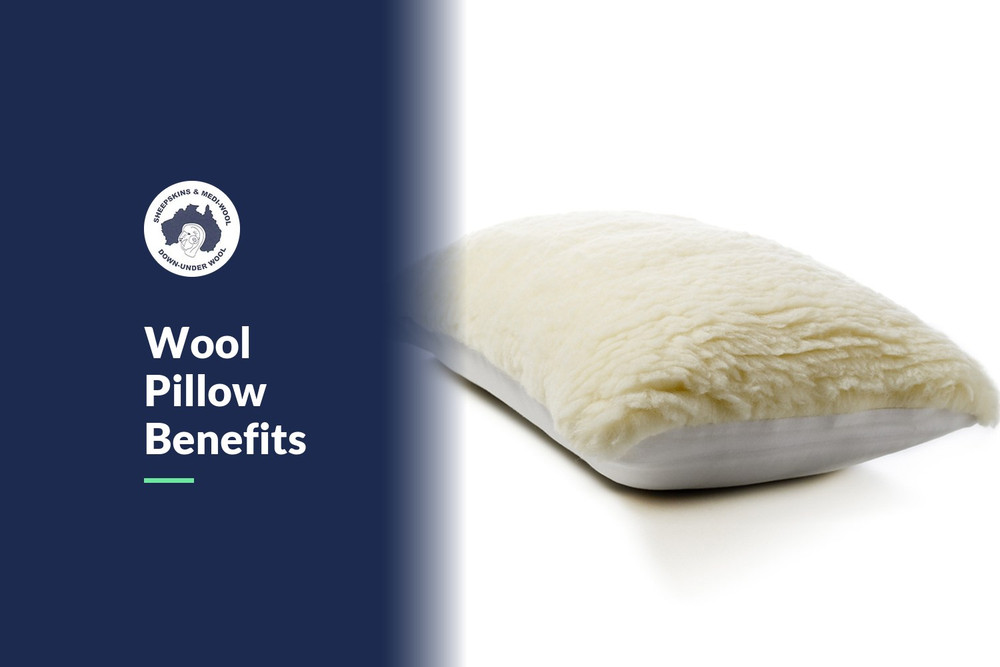
Wool pillows are hypoallergenic for most people, because wool fiber itself has not been shown to be an allergen: a 2017 review in Acta Dermato-Venereologica found no reliable evidence of wool allergy and traced most "wool itch" to coarse fibers. A wool pillow or wool pillow cover also gives you a breathable, moisture-absorbing surface that stays drier against your face than polyester or foam. Down-Under Wool has supplied Merino wool bedding since 1988, including our own Merino wool pillow cover, and this guide covers the benefits of wool pillows, what they can and cannot do for allergies and dust mites, and how to choose and wash a wool pillow cover.
Are wool pillows hypoallergenic?
Yes, for most people wool pillows are hypoallergenic in the sense that matters: the wool fiber is not a known allergen. The review by Zallmann et al. (2017) concluded that the evidence does not support wool being a skin allergen, that lanolin and processing chemicals are very unlikely to cause allergy in modern wool products, and that irritation comes from coarse fibers of about 30 microns and thicker. Fine Merino wool, the kind used for bedding, is much finer than that.
Two honest caveats. First, "hypoallergenic" is a marketing word rather than a test result, so if you have a diagnosed allergy, ask what the product has actually been tested for. Second, the claim you will often read that wool "repels dust mites" is not well supported, and wool covers cannot be washed hot enough to kill mites (see below). Our guide to merino wool allergy goes through the research in detail.
What are the benefits of wool pillows?
- A drier surface for your face. Wool can absorb about 30% of its weight in water without feeling wet (Science Learning Hub), so sweat is taken up instead of sitting on the pillow.
- Breathable. Wool absorbs water vapor and lets excess heat escape (Woolmark). That is especially useful over foam and latex pillows, which don't breathe and can feel hot.
- Soft cushioning. A dense Merino pile is soft against the cheek and ear and springs back after you move.
- Odor resistance. Wool's keratin protein binds odor molecules until the wool is washed.
- Naturally flame resistant, renewable and biodegradable.
- Kind to sensitive skin. Fine Merino doesn't prickle, and wool has not been shown to be an allergen.
Those properties all come from the structure of the fiber; see what wool is made of for how it works.
Wool pillow vs wool pillow cover: what's the difference?
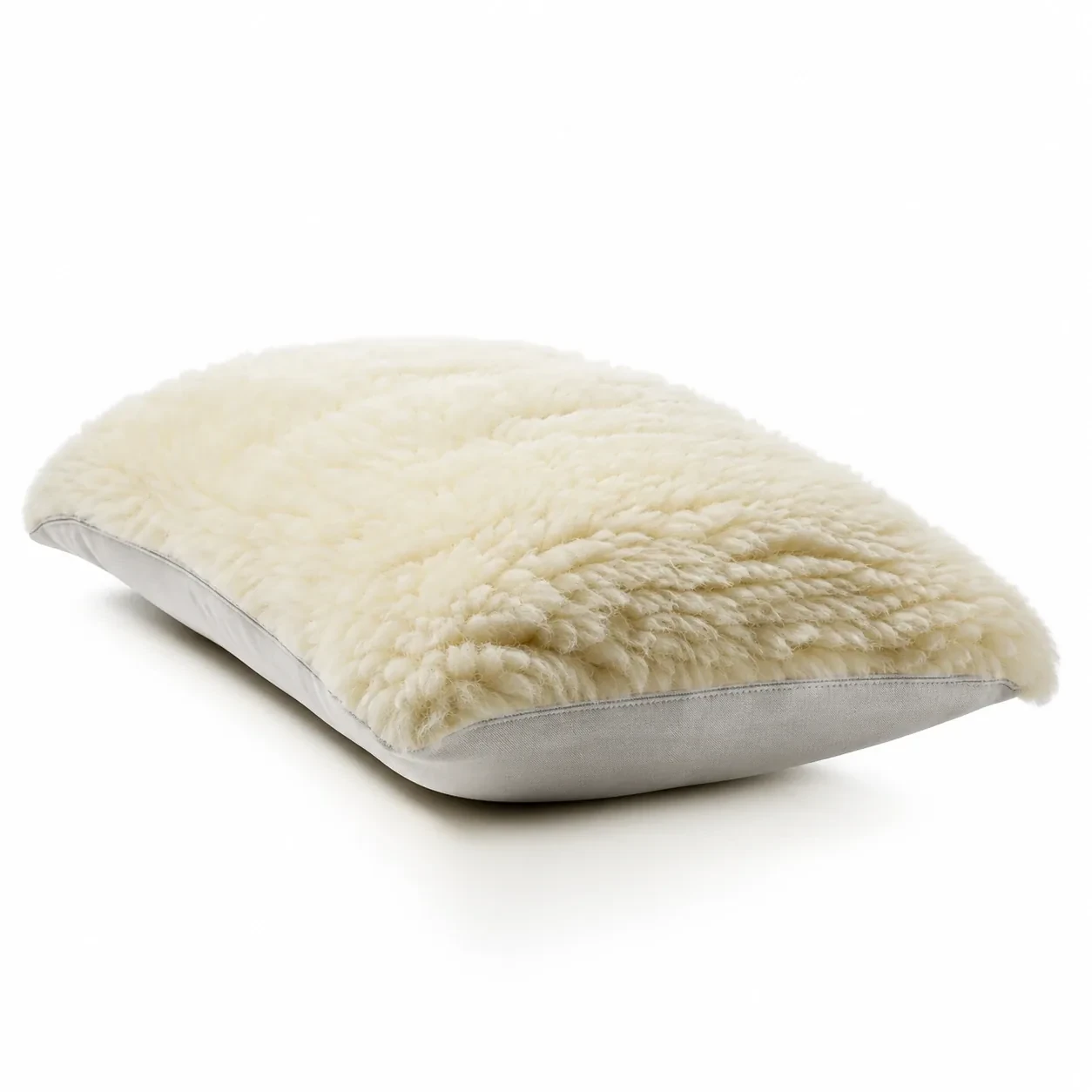
A wool pillow is filled with wool; a wool pillow cover puts a wool surface over the pillow you already own.
| Wool-filled pillow | Merino wool pillow cover | |
|---|---|---|
| What touches your face | Usually a cotton casing, with wool inside | The wool pile itself |
| Support and height | Set by the wool filling | Set by your own pillow (foam, latex, fiber or wool) |
| Washing | Varies; many are spot clean or air only, so check the label | Our M129D is machine washable on a wool or gentle cycle |
| Best for | People who want an all-wool pillow | Keeping a pillow you like, adding a soft, breathable wool surface |
What to look for in a merino wool pillow cover
- Fine Merino wool on the sleeping surface, so it feels soft rather than scratchy.
- Machine washability, because a pillow cover touches your face every night.
- The right size for your pillow, and an easy way to get the pillow in and out.
Our Pillow Soft Merino Wool Pillow Cover (M129D) is made exclusively for Down-Under Wool by MiniJumbuk in Australia. Its premium Merino wool surface measures 18" x 28" (45 x 70 cm); you slide a queen-size pillow into it and it is ready to use. It is fully machine washable, and it protects the pillow inside, which helps it last longer. It is also part of our Merino wool bedding range and the overlays, underlays, duvets and pillow covers collection.
Are wool pillows good for allergies and dust mites?
Wool pillows are fine for most allergy sufferers, but they are not a dust-mite treatment. For house dust mite allergy, NHS advice from Cambridge University Hospitals is to enclose pillows, duvets and mattresses in breathable allergy covers (the single most effective measure, though not enough on its own) and to wash bedding that is not encased on a 60°C (140°F) cycle. Fine wool can't be washed that hot, so if you have a dust-mite allergy:
- Put a breathable, fully enclosing allergy cover on the pillow itself, then the wool cover over it.
- Wash the wool cover regularly on a wool cycle, and air it.
- Follow the rest of your doctor's or allergy nurse's advice for the bedroom.
Wool pillow covers for people who spend long hours in bed
For someone confined to bed, the pillow is a pressure point too. Mayo Clinic lists the back and sides of the head among the places bedsores can form in people who stay in bed. A soft, dry wool surface under the head and ears is gentler than a smooth synthetic pillowcase, which is why we recommend the M129D for people who have abrasions or pressure-sore problems around the head. For the rest of the body, a medical sheepskin or one of our Merino wool pads gives the same soft, dry wool surface; see also sleeping on wool and our bedsore prevention guide, and ask a nurse or doctor about any sore that has already started.
How do you wash a wool pillow cover?
Wash a wool pillow cover in the machine on a wool or gentle cycle with a wool wash such as Woolskin, and never use bleach. These are the care instructions for the M129D:
- Take the pillow out of the cover.
- Machine wash on a wool or gentle cycle with Woolskin.
- Dry naturally, or tumble dry on low heat with gentle agitation.
- Don't over-dry: wool does best with about 15% moisture left in it. Finish drying flat or over a rack.
- Avoid excess heat and agitation, which damage fine wool. It may also be dry cleaned; air it well afterwards.
Wool pillow FAQs
Are wool pillows hot?
No, wool pillows are not usually hot, because wool absorbs moisture vapor and lets heat escape. A wool cover can actually make a foam or latex pillow feel cooler and less sweaty.
Are wool pillows good for allergies?
For most people, yes: wool is not a known allergen. If you are allergic to dust mites, use a breathable allergy cover on the pillow under the wool and follow your doctor's advice, because wool can't be hot-washed.
Are wool pillows itchy?
Fine Merino wool pillows and covers are not usually itchy. Itch comes from coarse fibers of about 30 microns and thicker, and bedding Merino is much finer.
Are wool pillows comfortable?
Most people find a wool surface soft and comfortable, and a wool cover lets you keep the support of your current pillow.
Are wool pillows good for neck pain?
The height and firmness of a pillow matter more for neck pain than the fiber it is made of. A wool cover keeps your current pillow's support; if you have ongoing neck pain, ask your doctor or physical therapist what pillow suits you.
Can babies use a wool pillow?
No. Babies should sleep on their back on a firm, flat surface with no pillows or anything soft in the crib, as the NIH Safe to Sleep campaign advises.
The short version
Wool pillows and wool pillow covers are hypoallergenic for most people, because wool has not been shown to be an allergen, and fine Merino doesn't itch. Their real benefits are a dry, breathable, soft surface for your face and a cooler feel over foam. They are not a dust-mite cure, so pair a wool cover with an allergy cover if you need one. To try wool without replacing your pillow, see our Merino wool pillow cover, or contact us; we have been helping people sleep on wool since 1988.