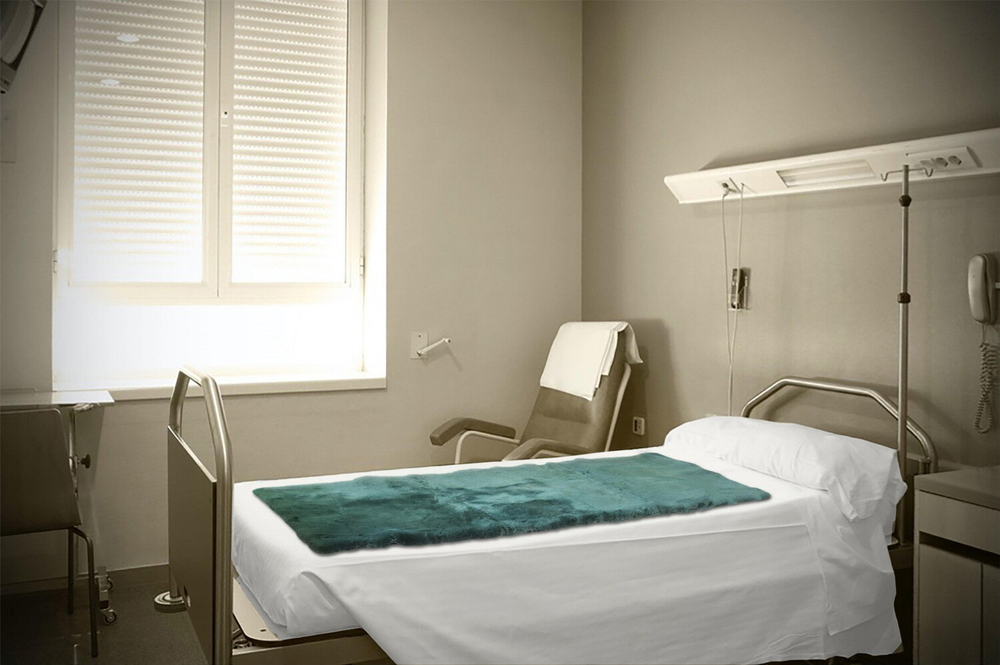

A medical sheepskin for a recliner chair is a dense wool pad that the person sits and lies on, so that the tailbone, buttocks and back rest on deep, springy wool instead of the chair's upholstery. Medical sheepskin has been tested in randomized trials: a 2010 analysis of 1,281 patients found sacral (tailbone) pressure sores in 5.4% of people on an Australian Medical Sheepskin, compared with 12.2% of those without one.
Recliners and lift chairs are where many older people spend their days, and often their nights. Some find breathing easier sitting up, some have hip or back pain in a flat bed, and some simply refuse to go to bed. Caregivers keep asking the same questions: is it safe, where do the sores start, and what can be put on the chair? This guide answers them and explains which sheepskin or wool pad fits which chair.
This guide is about prevention and comfort. If the skin is already broken, blistered or dark, ask a nurse or doctor which support surface is needed before buying anything.

Is sleeping in a recliner every night bad for your skin?
Sleeping in a recliner every night is not harmful in itself, but it concentrates pressure and sliding on the tailbone and heels, so the skin needs more protection than in a bed. Some people sleep in a recliner for years without skin problems. The risk rises when the person can't shift their weight easily, has poor circulation or diabetes, is incontinent, or is very thin.
A bed has two advantages over a recliner: the person can be turned from side to side, and the mattress can be a pressure-relieving foam or air surface. A recliner keeps the person in roughly the same sitting-back position for hours, with most of their weight on a small area at the base of the spine. As one caregiver on the AgingCare forum put it, if the recliner can raise, tilt and lie back, the main difference from a bed is its padding and surface. That surface is exactly what a medical sheepskin or wool pad improves.
If the person won't move to a bed, the practical goal is to make the recliner as skin-friendly as possible rather than fighting over it every night.
Where pressure sores start in a recliner
Pressure sores in a recliner tend to start in the same few places, and knowing them tells you what to protect and what to check each day:
- Tailbone and buttocks (sacrum and coccyx). The most common site. When the chair is tilted back, most of the body's weight rests here, and every time the person slides down the seat, the skin is dragged over the bone.
- Heels and the back of the ankles. On lift and riser recliners the legs rest on the footrest, and the heels can press on its edge or hang over it. Keep the heels supported along their length, not perched on the hard edge.
- Shoulder blades and spine. Thin people with little padding over the bones can get red patches where the back meets the chair.
- Elbows. Arms resting on hard armrests for hours take pressure on the elbow points.
For a fuller map of risky spots, see our guide to pressure points for pressure sores.
How does a medical sheepskin help in a recliner?
A medical sheepskin helps in a recliner by tackling the three causes of pressure sores at once: pressure, shear and moisture.
- Pressure. The deep, dense wool pile (about 30 mm on an Australian Medical Sheepskin) compresses under the bony points and spreads the weight over a bigger area.
- Shear and sliding. Wool fibres move with the skin, so when the person slides or is pulled up the chair, the skin glides over the wool instead of being dragged over the upholstery.
- Moisture and heat. Vinyl, leather and synthetic covers trap sweat. Merino wool can absorb up to about a third of its own weight in moisture without feeling wet, and lets air circulate, so the skin stays drier.
The evidence for medical sheepskin comes from hospital and nursing-home trials rather than recliners specifically. In a 2004 trial of 441 hospital patients at low to moderate risk (Jolley and colleagues, Medical Journal of Australia), people given an Australian Medical Sheepskin developed new pressure sores at less than half the rate of those without one; the trial was open-label, which is a limitation. A 2010 pooled analysis of three trials found sacral sores in 5.4% of sheepskin users against 12.2% of controls. In the Dutch nursing-home trial included in that analysis, about one user in three found the sheepskin too warm, worth knowing if the person runs hot.

Pressure maps of a seated person without (left) and with (right) a Pressure Smart XD1900 wool surface, from the product information for the XD1900 Cushion-It.
Which recliner pad should you buy?
The right recliner pad depends on how the chair is used: all day and night, for dialysis, or mainly for sitting. Measure the chair from the top of the backrest down to the front edge of the seat with the chair in its usual position. Small square chair pads (around 17" x 17") cover only the seat and leave the back and tailbone area exposed when the chair is tilted back.
| Pad | Size | Best for | Good to know |
|---|---|---|---|
| Pressure Smart XD1900 Overlay (M102XD) | 26" x 40" | Sleeping or sitting in a recliner most of the day; moving between bed, recliner and wheelchair | Very dense Merino pile (1,900 g/m²) knitted into a backing; covers shoulders to below the buttocks; easy to launder |
| Lambswool Dialysis Chair Pad (M118) | 30" x 60" | Dialysis chairs and long, fully reclined sessions; long enough to run from the backrest across the seat | Elastic strap near the top holds it on the chair; 1,900 g/m² Merino pile; machine wash and dry |
| Australian Healthcare Lambskin (M101) | About 30" x 40" | Comfort and warmth on a recliner, sofa or chair for people who are continent | Real lambskin with a 30 mm silky pile; wash in cool to warm water; not for incontinence |
| Pressure Smart XD1900 Cushion-It (M105XD) | 18" x 22" | Seat and back of an upright armchair or lift chair used mainly for sitting | Velcro straps; use one on the seat and one on the back; not harmed by urine |
Sizes and features from each product page. Free shipping on orders over $180 to the USA & Canada.
Some practical pointers:
- Sleeps in the recliner: choose a long pad that runs from the shoulders past the buttocks, such as the M102XD or the 60-inch M118, so the tailbone stays on wool when the chair is reclined.
- Incontinence: skip the M101 lambskin, which can be damaged by urine. The XD1900 Cushion-It is not harmed by urine; read more in bed sore prevention for incontinent patients.
- Uses a wheelchair as well: our sheepskin wheelchair seat covers and cushions guide covers wheelchair seats in detail.

How do you stop a sheepskin sliding off a recliner?
To stop a sheepskin sliding off a recliner, fix the top of the pad to the backrest so it can't creep down as the chair tilts. A few methods work:
- Use the pad's own strap. The M118 Dialysis Chair Pad has an elastic strap near the top that goes over the backrest, and the Cushion-It has velcro straps that can be fastened around or under the chair's cushions.
- Try men's suspenders (braces). For the M102XD, we suggest clipping a pair of men's pant suspenders to the top of the pad and around the back of the recliner. It is a cheap, simple fix that holds the pad in place when the chair reclines.
- Keep layers to a minimum. The wool works best in direct contact with the skin or with one thin layer of clothing. Extra blankets and incontinence pads between the person and the wool slide around and reduce the benefit.
- Stop the person sliding, too. Some recliners and dialysis chairs are slippery, so people slide down and then strain to push themselves back up. Adjusting the footrest and seat angle so the knees are slightly raised can help them stay put; an occupational therapist can advise on the best position.
Dialysis recliners: bringing your own pad
A dialysis recliner is often a vinyl chair that patients sit in for about 4 hours, usually three times a week (NIDDK), and some find it hard and slippery. The Lambswool Dialysis Chair Pad (M118) was designed for these chairs: at 30" x 60" it is long enough to cover the backrest and seat, and its elastic strap holds it at the top.
Before taking a pad to the unit, ask the dialysis nurses. Clinics may have infection-control rules about what can go on their chairs, or ask that personal items be washed between sessions. The M118 can be machine washed in Woolskin, which cleans and disinfects the wool, and dried on a gentle, low-heat cycle. The same pad can also be used on a recliner at home.
A recliner routine that protects the skin
A medical sheepskin works best as part of a simple daily routine for anyone spending long hours in a recliner:
- Change the angle regularly. Shifting between more upright and more reclined moves the pressure from one area to another. If the person can't move themselves, build regular angle changes into the care plan, day and night.
- Get up when possible. Even standing for a moment or a short walk to the bathroom takes pressure off the tailbone.
- Protect the heels. If the heels rest on the footrest for hours, add heel protection. See heel protectors for bed sores for the options.
- Check the skin daily. Look at the tailbone, buttocks, heels, shoulder blades and elbows for red patches that don't fade when pressed for a few seconds.
- Keep skin clean and dry. Change wet clothing and pads promptly, and wash the wool regularly in Woolskin. See how to wash and care for your sheepskins.
- Eat and drink well. Good nutrition and enough fluids help keep skin healthy; ask the doctor or a dietitian if appetite is poor.
When a recliner pad isn't enough
A recliner pad isn't enough when the skin is already breaking down or the person is at very high risk, for example if they can't move at all, are very frail, or a red area keeps coming back. Contact a nurse or doctor if you see:
- a red, purple or darker patch that doesn't fade when pressed;
- a blister, or skin that feels hot, hard or boggy;
- any open skin.
An occupational therapist can assess the chair and seating. Options they may suggest include an alternating air pressure pad made for recliners, a pressure-relieving cushion, or a hospital bed with a raising head section for people who sleep in a recliner because they need to sit up. For beds, see our comparison of the best mattress toppers for bed sores.
Choosing your recliner pad
For most people who sit or sleep in a recliner for long hours, a long, dense wool pad that covers the back and seat is the place to start:
- Pressure Smart XD1900 Overlay (M102XD), 26" x 40", for recliners, beds and wheelchairs
- Lambswool Dialysis Chair Pad (M118), 30" x 60", for dialysis chairs and fully reclined use
- Australian Healthcare Lambskin (M101), about 30" x 40", for comfort on chairs and sofas (continent users)
- Pressure Smart XD1900 Cushion-It (M105XD), 18" x 22", for chair seats and backs
Not sure which one fits your chair? Contact us with the chair's measurements and a little about how it's used, and we'll help you choose.