Incontinence and pressure ulcers are closely linked: skin that is often wet with urine or stool breaks down more easily under pressure, so people who are incontinent and spend long hours in bed or a chair are at much higher risk of bed sores. A meta-analysis of 58 studies found pressure ulcers were about twice as likely with urinary incontinence and about five times as likely with both urinary and fecal incontinence. Down-Under Wool has supplied urine-resistant wool bedding to caregivers since 1988. This guide explains how incontinence damages skin, how moisture damage differs from a pressure ulcer, and the everyday steps that protect skin when someone is incontinent.
How does incontinence lead to pressure ulcers?
Incontinence leads to pressure ulcers because urine and stool keep the skin wet and irritated, and damp, damaged skin gives way more easily to pressure, friction and shear. Mayo Clinic lists incontinence as a risk factor for bedsores because skin becomes more vulnerable with extended exposure to urine and stool.
The research is consistent. The meta-analysis of 58 studies found an association between incontinence, moisture and pressure ulcers in 86% of them (odds ratio 1.92 for urinary and 4.99 for double incontinence). In a survey of 192,852 US hospital patients, 32% were incontinent, yet almost three-quarters (72.6%) of the patients who developed a pressure injury in hospital were incontinent. Incontinent patients in that survey were also older and scored as higher risk on the Braden Scale.
What is moisture-associated skin damage?
Moisture-associated skin damage (MASD) is skin inflammation caused by repeated contact with body fluids such as urine, stool, saliva or other secretions. A 2022 review describes it as irritant contact dermatitis, with or without loss of the top layer of skin. When the cause is urine or stool, it is called incontinence-associated dermatitis (IAD).
IAD is not a pressure ulcer, even though the two often appear in the same place and at the same time. An international consensus panel agreed that IAD is clinically and pathologically distinct from pressure ulcers, and also that telling them apart remains a major challenge, even for clinicians.
Is it a moisture lesion or a pressure ulcer?
A moisture lesion is caused by urine, stool or other body fluids on the skin, while a pressure ulcer is caused by pressure over a bone. The difference matters because they are prevented in different ways, and many people need both kinds of prevention at once:
| Incontinence-associated dermatitis (moisture damage) | Pressure ulcer | |
|---|---|---|
| Main cause | urine or stool in repeated contact with the skin | sustained pressure, with shear and friction |
| Where | skin that urine or stool touches, such as the perineal area and buttocks | over bony areas such as the tailbone, hips and heels |
| What helps prevent it | prompt, gentle cleansing; moisturizing; a skin protectant | regular position changes; a pressure-reducing surface |
| Sources | MASD consensus | NHS, MedlinePlus |
If you see redness, broken skin or a sore around the buttocks or tailbone, ask a nurse or doctor to look at it. They can assess which it is and advise on care.
How do you prevent bed sores in incontinent patients?
You prevent bed sores in incontinent patients by keeping the skin clean, dry and protected, and by relieving pressure on it regularly. These steps come from MedlinePlus, the NHS and the MASD consensus panel:
- Ask a doctor about the incontinence itself. The NHS advises seeing a GP for any type of urinary incontinence; it is common, and finding the cause is the first step toward managing it. Our guide to urinary incontinence types and causes explains the main kinds.
- Clean the skin right away and dry it well after every episode, as MedlinePlus advises. Clean gently: the consensus panel recommends gentle cleansing and moisturizing for at-risk skin, and MedlinePlus notes that a full bath or shower every day can dry the skin out.
- Protect the skin. The consensus panel recommends a skin protectant on the perineal skin of people with incontinence who are at risk. Ask the nurse which product to use.
- Absorb the wetness. MedlinePlus suggests pads under the bottom to absorb wetness and keep the skin dry. Change wet pads and bedding promptly.
- Keep layers to a minimum. Minimizing the number of linen layers under a person is one of the standard hospital prevention practices tracked in the US pressure injury prevalence survey, and MedlinePlus advises keeping clothes and sheets smooth so they don't bunch up under pressure points.
- Relieve pressure. Change position every 1 to 2 hours in bed and shift weight every 15 to 20 minutes in a wheelchair. Our guide to care of pressure points shows where to check.
- Check the skin every day and offer enough food, protein and fluids.
Why moisture, pressure, shear and friction work together is explained in our guide to the causes of pressure sores, and the full prevention plan is on our bedsore prevention page.
Why use urine-resistant (UR) wool for incontinent patients?
Urine-resistant wool is the right choice for incontinent patients because ordinary sheepskins are not tanned to withstand urine and stool and can be permanently damaged by them. Our own washable Healthcare Lambskin, for example, is not recommended for incontinent users for exactly that reason. UR medical sheepskins and wool pads are made to resist urine and to be washed often.

Authentic Australian Medical Sheepskins carry a stamp on the leather backing, like the one above; for incontinent users, check that the sheepskin is described as HiTemp UR. Wool also handles moisture well: our XD1900 wool can absorb up to 33% of its own weight without feeling wet, which helps keep the skin underneath drier.
These are the urine-resistant products caregivers most often choose for incontinent patients:
| Product | Size | Best for |
|---|---|---|
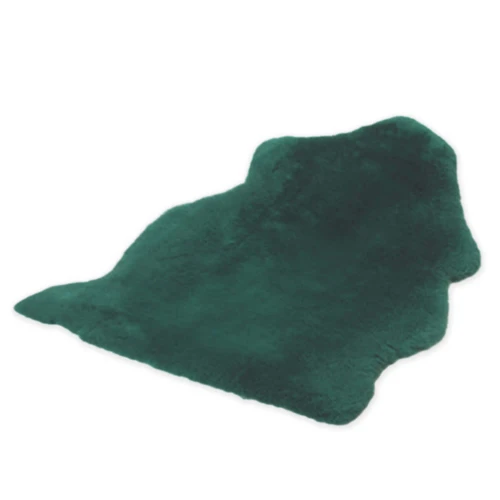
| Australian Medical Sheepskin, natural shape (M102) | about 38 x 24-26 in | bed or chair; HiTemp wash |
| Australian Medical Sheepskin, rectangular (M102C) | 24 x 36 in | shoulders to below the buttocks; HiTemp wash |
| Pressure Smart XD1900 Overlay (M102XD) | 26 x 40 in | easy laundering; washable up to 80°C, can go in the dryer on low |
| Superior Overlay XD (SC104XD) | 30 x 60 in | whole-body cover; machine washable |
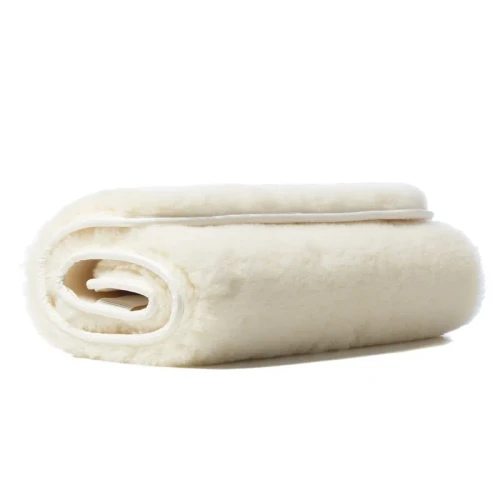
| Hospital Wool Fleece Bed Pad (F103C) | 30 x 60 in | an economical full-length pad; machine wash and dry |
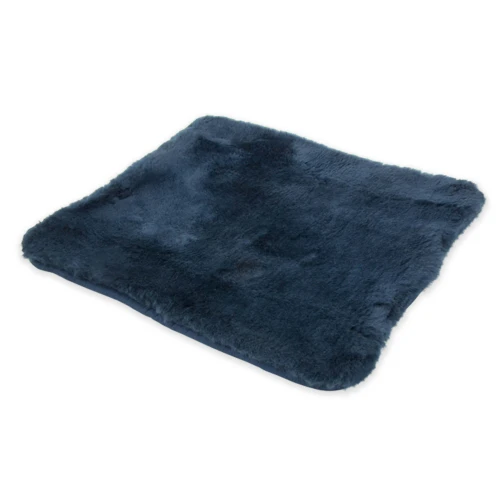
| XD1900 Cushion-It (M105XD) | 18 x 22 in | wheelchair or armchair seat; not harmed by urine or feces |
See the whole range of incontinence bedding. Many caregivers keep two or three pads so one is always on the bed while another dries, and some place a disposable bed pad under the wool to protect the mattress.
How do you clean urine-resistant wool?
Wipe up small spills with a damp cloth straight away, and machine wash the pad in a sheepskin wash such as Woolskin when it becomes smelly or after a large spill. Woolskin cleans, disinfects and conditions the wool. Air drying usually takes about 24 hours; keep it out of direct sun and away from heaters. Step-by-step instructions, including temperatures for HiTemp sheepskins, are in our guide on how to wash sheepskin.
Does medical sheepskin help prevent bed sores in incontinent patients?
Medical sheepskin helps prevent bed sores in general, and a urine-resistant one can be used safely by incontinent patients. A Cochrane review of three trials found Australian standard medical sheepskins reduce pressure ulcers; in the largest, 441 hospital patients, 9.6% on a sheepskin developed one against 16.6% with usual care. The trials did not look at incontinent patients separately, so skin cleaning and drying still matter as much as the sheepskin. Read how to use sheepskin for bed sores or learn more about medical sheepskin.
When should you call a nurse or doctor?
Call a nurse or doctor about any redness, rash or skin change that lasts more than a few days, or any broken skin or sore, whether you think it is moisture damage or a pressure ulcer. The NHS advises urgent help for pus coming from a sore, a high temperature, or pain that is severe or getting worse. Don't treat an open sore yourself; ask the nurse or doctor how to care for it.
Incontinence and pressure ulcers FAQs
Can incontinence cause pressure sores?
Incontinence doesn't cause pressure sores on its own, but it makes them much more likely. Wet skin breaks down more easily under pressure, and studies link urinary incontinence with about twice the risk and double incontinence with about five times the risk.
Are moisture lesions and pressure sores the same thing?
No. A moisture lesion (incontinence-associated dermatitis) is caused by urine or stool on the skin; a pressure sore is caused by pressure over a bone. They often occur together and can be hard to tell apart, so ask a nurse to assess any broken or red skin.
Do incontinence pads cause pressure sores?
Pads don't cause pressure sores by themselves, but a wet pad left against the skin keeps it damp, and bunched layers under the hips add pressure. Change wet pads promptly and keep the layers under the person to a minimum.
Should you use barrier cream for incontinence?
A skin protectant is recommended for people with incontinence whose skin is at risk, according to the MASD consensus panel. Ask the nurse which product suits the person.
Can urine damage a sheepskin?
Yes, if the sheepskin is not urine resistant. Urine and stool can permanently damage an ordinary sheepskin; for incontinent users choose a HiTemp UR medical sheepskin or a urine-resistant wool pad.
What bedding is best for an incontinent person?
Bedding that absorbs moisture, resists urine, washes easily and reduces pressure. A urine-resistant medical sheepskin or wool pad does all four; keep two or three so one is always clean and dry.
The short version
Incontinence and pressure ulcers go together because wet skin breaks down faster under pressure. Clean and dry the skin straight away, protect it as the nurse advises, keep layers to a minimum, change position regularly and use a urine-resistant pressure-reducing surface. Ask a nurse or doctor about any skin change. Questions about the right pad? Contact us; we've helped caregivers since 1988.