
Preventing pressure sores in a wheelchair comes down to three habits: take the weight off your seat every 15 to 20 minutes, sit on a cushion that fits your chair, and check your skin every day. Pressure sores (also called bed sores or pressure ulcers) are not an unavoidable part of using a wheelchair, but sitting puts steady pressure on a few small areas, so the routine matters. Down-Under Wool has supplied wool and sheepskin wheelchair pads since 1988; this guide sets out the weight shifts, seating and skin care advice from MedlinePlus, Mayo Clinic and the Spinal Cord Injury Model Systems, and the pads that help.
Why do wheelchair users get pressure sores?
Wheelchair users get pressure sores because sitting presses the same bony areas against the seat for hours, which reduces blood flow to the skin and the tissue underneath. Mayo Clinic lists the most common sites for people who use wheelchairs:
- the tailbone or buttocks;
- the shoulder blades and spine;
- the backs of the arms and legs where they rest against the chair.
Pressure is not the only cause. Friction (skin rubbing on the seat or clothing), shear (sliding down in the chair while the skin stays put) and moisture all make skin easier to damage. The risk is higher if you can't feel discomfort because of a spinal cord injury or another condition, since you won't get the signal to move. For where sores form in bed as well as in a chair, see pressure points for pressure sores.
How often should you do pressure relief in a wheelchair?
Shift your weight every 15 to 20 minutes. MedlinePlus advises that you, or your caregiver, shift your weight by leaning forward, left and right every 15 to 20 minutes. Each shift needs to last long enough to let blood flow back: the Spinal Cord Injury Model Systems guide to pressure reliefs describes holding each position for 30 to 90 seconds. If you can't shift your own weight, a caregiver can help, and your therapist may set a different schedule for you.
A phone timer or watch alarm is the easiest way to remember.
How do you do a weight shift?
There are four main ways to do a weight shift in a wheelchair, and the right one depends on your strength, your injury level and your chair. These are the techniques described by the Spinal Cord Injury Model Systems:
| Technique | How to do it | Who it suits |
|---|---|---|
| Forward lean | Turn the front casters forward and lock the wheels, then bring your chest toward your knees. Hold, then sit up. | People who can lean forward and sit back up safely, alone or with a helper |
| Side lean | Lock the wheels, swing one armrest away and lean to the other side, taking the weight off one buttock for 30 to 90 seconds. Repeat on the other side. | People who can lean sideways and return upright safely |
| Push-up | Grip the armrests and lift your body off the seat for 30 to 90 seconds. | Only people with enough arm strength; it can harm the rotator cuff, so use it only if the leans aren't possible |
| Tilt or recline | Use the chair's tilt-in-space (and recline) feature. A tilt of 25 to 65 degrees has been shown to relieve pressure; 15 degrees or less does not. | People who can't lean or lift; works best with tilt and recline combined, after training |
Ask a physical or occupational therapist to check your technique, because a shift that is too short or too shallow doesn't relieve enough pressure. Mayo Clinic also suggests looking into a specialty wheelchair that tilts if you can't lift yourself.
Which cushion should you sit on?
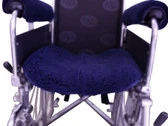
The best wheelchair cushion for pressure sores is a pressure-redistributing cushion that fits your chair and is chosen with your therapist: MedlinePlus recommends a foam or gel seat cushion that fits the chair, and both MedlinePlus and Mayo Clinic advise against doughnut-shaped cushions. A wool layer on top adds moisture absorption and comfort. Our guide to the best wheelchair cushion for pressure sores compares foam, gel, air-cell and wool and explains how to choose.
Wool options we supply:
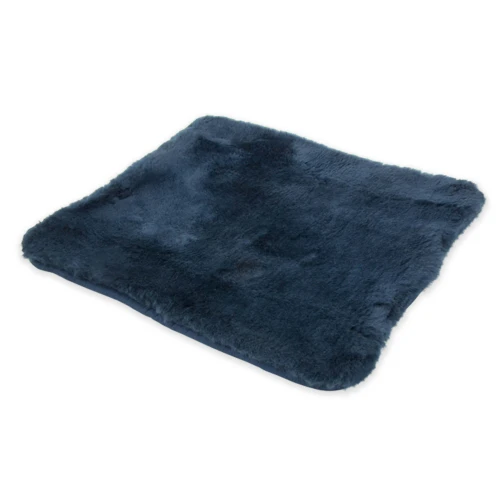
- The Pressure Smart XD1900 Cushion-It, an 18" x 22" pad of dense Merino wool (1,900 grams per square meter) that straps onto the seat, the back, or on top of an existing pressure care cushion. Many people use two: one on the seat and one on the back.
- The Hospital Wool Fleece wheelchair seat pad (18" x 20"), large enough to cover the seat of most wheelchairs.
- The Hospital Wool Fleece wheelchair seat cover (18" x 36"), which covers the seat and back in one piece and is held by an elastic strap.

Our guide to sheepskin wheelchair seat covers, cushions and chair pads compares the seat options in more detail.
Which wheelchair pads protect the arms and back?
Arm pads and a back pad protect the areas a seat cushion doesn't reach: the forearms on the armrests and the shoulder blades and spine against the backrest. This table compares our in-stock wheelchair pads:
| Product | Where it protects | Size | Washing |
|---|---|---|---|
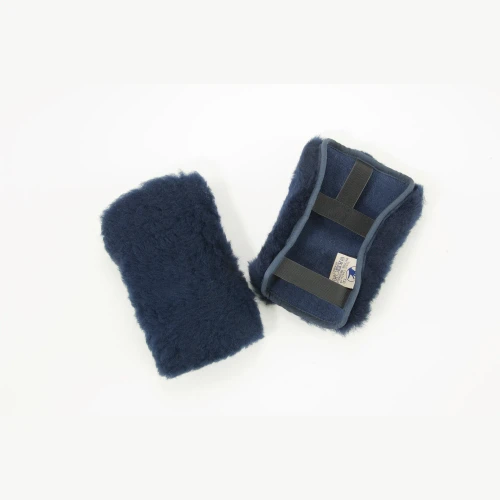
| HiTemp Medical Sheepskin Arm Pads (M125G) | Forearms and hands on the armrests | 14" long, pair, hook-and-loop straps | Wash like a good wool sweater in Woolskin; air dry |
| LowTemp Medical Sheepskin Arm Pads (M125) | Forearms and hands | 14" x 3", pair, beige or champagne | Hand wash in Woolskin; air dry |
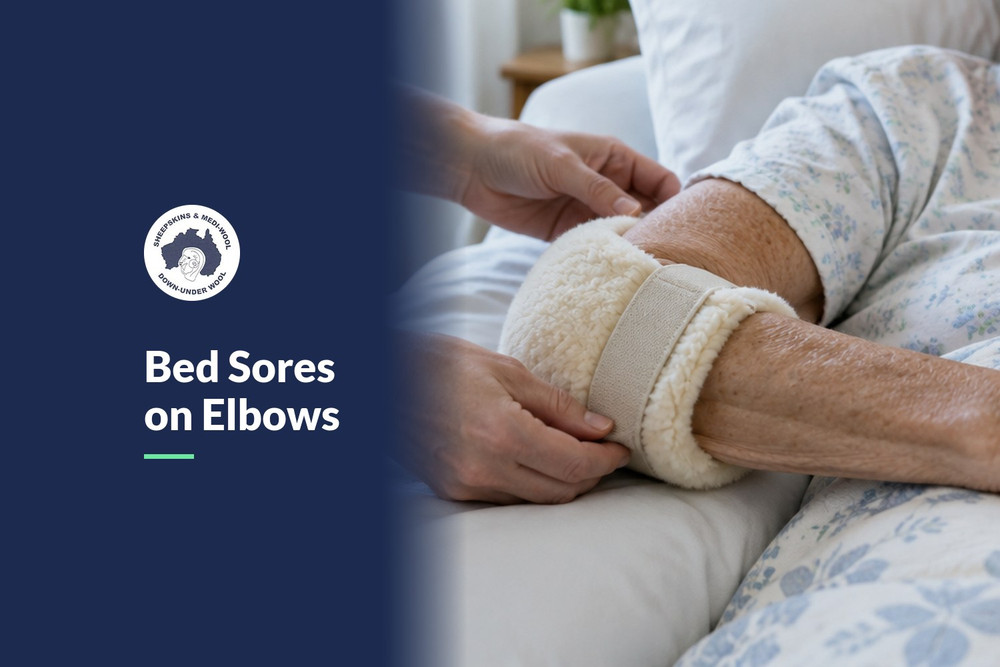
| XD1900 Armrest Supports (SC125XD) | Forearms; some use them on commode frames | 13.5" x 5", pair, 3 straps | Machine wash, wool cycle; dryer on low |
| XD1900 Cushion-It (M105XD) | Seat or backrest | 18" x 22" | Machine wash; dryer on low; not harmed by urine |
| Hospital Wool Fleece Seat Cover (F103B) | Seat and back in one piece | 18" x 36" | Machine wash and dry, low heat |

To set up a whole chair at once, the wheelchair pressure sore prevention package includes two Cushion-Its (seat and back), a pair of XD1900 armrest supports and a bottle of Woolskin. You can also line up every seat and arm product on our compare wheelchair products page.
Does your wheelchair fit you?
A wheelchair that fits matters, because a poor fit can press on the skin. MedlinePlus says to make sure your wheelchair is the right size, and to have your provider or physical therapist check the fit once or twice a year, and sooner if you gain weight or feel pressure anywhere. Call them, too, if the chair no longer fits.
Clothing counts too: MedlinePlus advises avoiding thick seams, buttons or zippers that press on the skin. For the rest of the chair, from brakes to tires, see our wheelchair safety checklist.
How do you protect your skin when moving and sitting?
Protect your skin by lifting rather than dragging during transfers, checking it every day, and keeping it clean and dry. MedlinePlus advises lifting your body with your arms when you transfer to or from the wheelchair, never dragging yourself, and asking a physical therapist to teach the right technique if it is hard. If a caregiver moves you, make sure they know the proper way.
- Check your skin every day from head to toe, or ask your caregiver to. Look for red, purple or blue patches that don't fade when pressed, or skin that feels warm, spongy or hard.
- Keep skin clean and dry. Mayo Clinic advises washing with a gentle cleanser, patting dry, and using a moisture barrier cream if urine or stool reaches the skin. Wool seat pads that resist urine, such as the Cushion-It, can go straight in the washing machine.
- Eat and drink well. Skin needs enough fluids, calories, protein, vitamins and minerals every day to stay strong.
For the full daily routine, including time in bed, use our bed sore prevention checklist.
When should you see a doctor about a pressure sore?
See a doctor or nurse if a red or discolored area hasn't improved 24 to 48 hours after you take the pressure off it, and get care right away for signs of infection: fever, drainage, a bad smell, or warmth and swelling around a sore, according to Mayo Clinic. Stay off the area in the meantime and don't treat broken skin yourself. The NHS also notes that pressure ulcers can sometimes appear within a few hours, so don't wait to see whether it passes.
Wheelchair pressure sore FAQs
How often should wheelchair users perform weight shifts?
Every 15 to 20 minutes, according to MedlinePlus, holding each shift for about 30 to 90 seconds. Your therapist may set a different schedule based on your skin and strength.
Can you get pressure sores from sitting too long?
Yes. Sitting for long periods without shifting your weight puts constant pressure on the tailbone, buttocks and the backs of the legs, which is how most wheelchair pressure sores start. Regular weight shifts and a well-fitted cushion lower the risk.
Where do wheelchair users get pressure sores?
Most often on the tailbone and buttocks, the shoulder blades and spine, and the backs of the arms and legs where they rest on the chair.
Is sheepskin good for wheelchair users?
Yes. MedlinePlus notes that natural sheepskin pads help reduce pressure on the skin, and wool absorbs sweat, which keeps the skin drier on long days in the chair. Use sheepskin or wool on top of a cushion that fits, not instead of one.
Are donut cushions good for pressure sores?
No. Mayo Clinic and MedlinePlus both advise against donut-shaped cushions, because they focus pressure on the ring of tissue around the hole.
Do I still need weight shifts if I have a good cushion?
Yes. A cushion spreads pressure but doesn't remove it, so regular weight shifts are still needed. MedlinePlus lists both, and neither replaces the other.
Can a wheelchair that doesn't fit cause pressure sores?
It can add to the risk, which is why MedlinePlus advises having the fit checked by your provider or physical therapist once or twice a year, and sooner if you gain weight or feel pressure anywhere.
The short version
Shift your weight every 15 to 20 minutes and hold it for 30 to 90 seconds, sit on a cushion that fits (never a doughnut), have your wheelchair's fit checked once or twice a year, and check your skin every day. A wool or medical sheepskin layer on the seat, back and armrests keeps skin drier and more comfortable. See all our bed sore prevention products, or contact us for help choosing; we've been doing it since 1988.