
Sheepskin is the hide of a sheep tanned with the wool still attached, so one piece of material has soft leather on one side and a deep layer of wool on the other. That combination is why sheepskin has been used for coats, boots, rugs and bedding for centuries: the wool insulates, cushions and can trap between 30 and 36 percent of its own weight in moisture while still feeling dry. Down-Under Wool has worked with Australian sheepskin and Merino wool since 1988, and this guide explains what sheepskin is, what sheep fur is called, the main types of sheepskin, and how to tell real sheepskin from imitations.

What is sheepskin?
Sheepskin is a sheep's hide that has been tanned with the fleece left on. Ordinary leather is made by removing the wool or hair before tanning; sheepskin keeps it. The result is a natural two-layer material: a supple leather backing (called the pelt or skin side) and a wool pile that can be short and velvety or several inches long.
Sheepskin's wool fibers trap air, which makes it a good insulator, and the fleece is naturally resistant to flame and static electricity. Because the fibers draw perspiration away from the skin, sheepskin feels warm in the cold yet stays comfortable and dry to sit or lie on.
What is sheep fur called?
Sheep fur is called wool. A sheep doesn't grow fur in the way a mink or a fox does; its coat is made of wool fibers, and the words used for it change depending on whether the wool is still on the animal, shorn off, or attached to a tanned hide:
| Term | What it means |
|---|---|
| Wool | The fiber that grows on a sheep. Once shorn, it can be cleaned, spun and knitted or woven. |
| Fleece | The whole wool coat of one sheep, shorn off in one piece. ("Polar fleece" is a different thing: a synthetic fabric.) |
| Sheepskin | The hide with the wool still attached, tanned so it lasts. |
| Shearling | Sheepskin from a recently shorn sheep or young lamb, with a short, even wool layer; used for coats, boots and slippers. |
| Lambskin | Sheepskin from a young sheep, usually finer and softer. The word is also used loosely for any soft sheepskin. |
To learn more about the fiber itself, see what wool is and what makes it special.
Sheepskin vs lambskin: what's the difference?
Lambskin is sheepskin from a young sheep, a lamb. Lambskin tends to have a thinner, lighter hide and finer, softer wool, while sheepskin from an adult sheep is larger, heavier and often has a longer, denser pile. In practice the two words overlap, and many sellers call any soft sheepskin a lambskin.
For comfort products, what matters more than the name is the density and length of the wool and how the hide was tanned. A lambskin made for babies or chairs, such as our Australian Healthcare Lambskin, is double chrome tanned with a very dense 30 mm (1.2 inch) pile; for babies, see the benefits of lambskin for babies.
How is sheepskin made?
Sheepskin is made by tanning a sheep's hide without removing the wool. The basic steps are:
- Cleaning and fleshing: the hide is washed and the fat and tissue are removed from the skin side.
- Tanning: the hide is treated so the skin becomes stable, soft leather that won't rot.
- Finishing the wool: the wool is washed, combed and often clipped to an even length. Skins are graded and sold by wool length, from newly shorn "bares" up to "full wools" of 2 to 4 inches.
- Finishing the skin side: the leather may be sanded to a suede finish, smoothed to a nappa finish, or left natural.
Quality depends on the animal and the tanning. Skins are also graded for seed contamination (small scars from burrowing plant seeds), which can leave holes or marks in the pelt.
Types of sheepskin
Types of sheepskin are usually described in two ways: by the breed or region the sheep comes from, which decides the wool's length, curl and softness, and by how the skin is finished. These are the breed and origin names you will see most often, with descriptions as sheepskin retailer Overland summarizes them:
Merino sheepskin (Australian and Spanish)
Merino sheepskin comes from Merino sheep, the breed best known for fine, soft wool. Australian Merino skins are prized for dense, plush wool and a smooth leather side; Spanish Merino skins have soft, slim wool, a smooth reverse side and a high warmth-to-weight ratio, which is why they rank among the most sought-after skins for coats.
Toscana sheepskin
Toscana sheepskin has long, silky wool and soft leather. It comes from mountain sheep in Europe, the finest from Spain, and is often used for luxury shearling coats, collars and accessories.
Icelandic sheepskin
Icelandic sheepskin comes from a breed thought to have been brought to Iceland by the Vikings. Its wool is long and shaggy (Overland quotes a pile of about 4 to 6 inches) and less dense, which gives Icelandic rugs and throws their wild look.
Tibetan lamb sheepskin
Tibetan lamb sheepskin has silky curls that measure about 5 inches when fully extended. It is used mostly for pillows, throws, rugs and trims rather than for warmth.
Curly sheepskin (South African and Tigrado)
Curly sheepskins have tightly curled wool. South African sheepskin is known for curly wool and durable hides, often used for coats and hats; Tigrado, from Spain, has tight curls on small pelts and is used as trim or for reversible pieces.
Sheepskin by finish
| Finish | What it is | Common uses |
|---|---|---|
| Shearling / double-face | Short, even wool on one side, finished leather or suede on the other; both sides can be worn | Coats, jackets, boots, slippers |
| Long-wool sheepskin | The full natural pile, combed and left long | Rugs, throws, seat covers |
| Mouton | Sheepskin processed to resemble beaver or seal fur ("beaver lamb" in the UK) | Vintage coats and collars |
| Sheepskin leather and suede | The hide with the wool removed, finished smooth or brushed | Gloves, bags, garments |
| Medical sheepskin | Dense, washable sheepskin made to a medical standard (see below) | Bed overlays, wheelchair and chair pads, heel protectors |
What is sheepskin used for?
Sheepskin is used wherever warmth, cushioning or comfort against the skin matters:
- Clothing and footwear: shearling coats and vests, boots, slippers, gloves and hats.
- Home: rugs, throws, pillows and baby rugs.
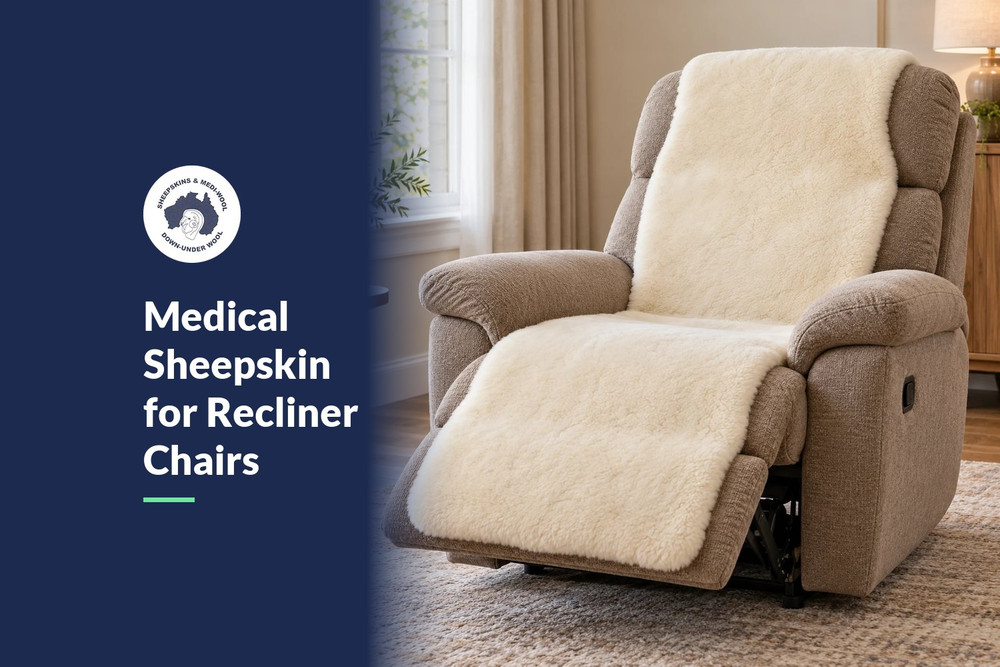
- Seats: car seat covers, saddle pads and other equestrian gear, office and wheelchair seat covers.
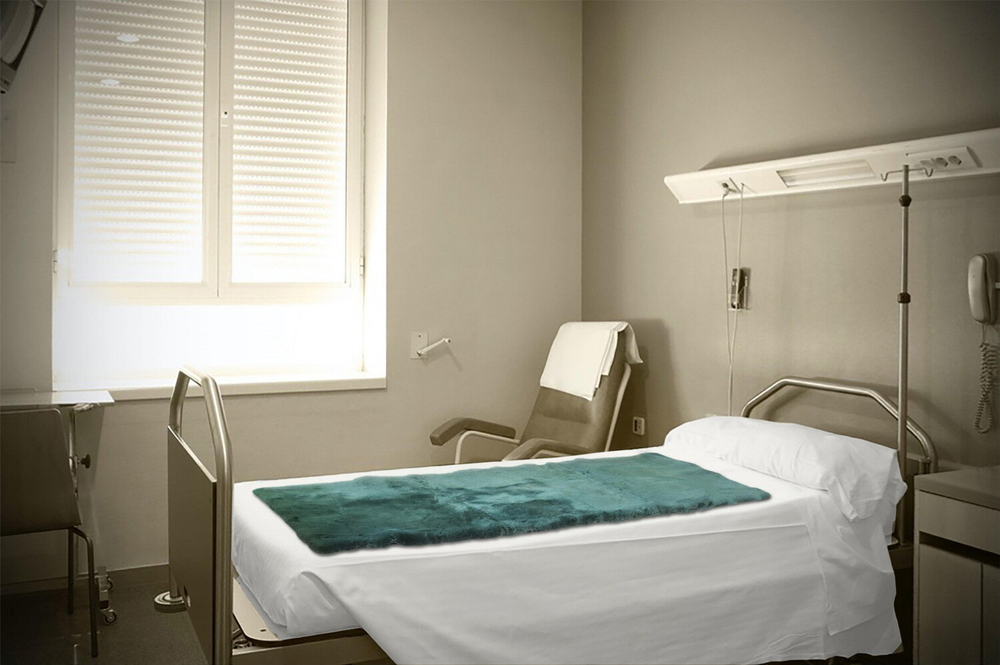
- Health care: medical sheepskins under people who spend long hours in bed or a chair, to reduce pressure, friction and moisture on the skin.
Sheepskin is also a by-product of the meat and wool industries; read more in are sheepskins sustainable and eco-friendly?
What is medical sheepskin?
Medical sheepskin is sheepskin made for patient care: a dense, deep wool pile on a hide tanned so it can be machine washed and disinfected at high temperatures. In Australia, medical sheepskins are made to the standard AS4480.1, developed with the CSIRO, which sets out the properties a sheepskin needs for health care use. AS4480.1 sheepskins sold as "HiTemp UR" are urine resistant and can be washed at up to 80°C (176°F), and they are warranted for at least 50 washes in Woolskin.
Medical sheepskin is not the same as a decorative sheepskin rug. Testing at the Royal Melbourne Hospital and the CSIRO's leather research center confirmed its value in preventing and treating pressure ulcers, and in a 2004 randomized trial of 441 patients at a Melbourne teaching hospital, patients given an Australian Medical Sheepskin developed new pressure ulcers at less than half the rate of those without one (9.6% vs 16.6% of patients). To see what a certified skin looks like and how it is used, visit our medical sheepskin store, or read what to look for in an AS4480.1 sheepskin and what "HiTemp UR" means.

How can you tell real sheepskin from fake?
Real sheepskin has wool growing out of a leather or suede backing; imitation sheepskin has synthetic pile attached to a knitted or woven fabric. Quick checks:
- Look at the back. Part the wool: real sheepskin shows skin at the base of the fibers and a leather or suede back. Faux sheepskin shows a fabric grid.
- Feel the wool. Real wool is springy and slightly crimped; synthetic pile is often slippery and uniform.
- Check the label. "100% sheepskin" or "genuine sheepskin" should be stated; vague terms like "sherpa" or "faux shearling" mean synthetic.
- For medical use, look for proof of the AS4480.1 standard. Sheepskins that meet AS4480.1 carry a stamp on the leather backing.
Some products, such as wool pile pads, are real wool knitted into a backing rather than sheepskin: genuine wool, but not a hide.
How do you clean and care for sheepskin?
Sheepskin should be washed with a detergent made for wool and sheepskin, because ordinary household detergents can permanently damage the leather backing. Not every sheepskin is washable; the tanning decides that. Washable sheepskins can go in the machine on a gentle wool cycle; dry them flat or over a rack away from direct heat and sunlight, and take them out of a dryer while still slightly damp. Wool does best with some moisture left in it.
We use Woolskin, a concentrated sheepskin and wool detergent and conditioner developed by the Australian tanning industry. For step-by-step instructions, see how to wash and care for your sheepskins or how to clean a sheepskin rug at home.
Sheepskin FAQs
Is sheepskin real leather?
Yes. Sheepskin is a genuine leather, because it is a tanned animal hide; the difference from ordinary leather is that the wool is left on. When the wool is removed, the hide is sold as sheepskin leather or suede.
Is sheepskin the same as wool?
No. Wool is the fiber a sheep grows, while sheepskin is the whole hide with that wool still attached. A wool blanket or wool pile pad is made from shorn fiber; a sheepskin is one piece of tanned skin.
What is the difference between shearling and sheepskin?
Shearling is a type of sheepskin. It comes from a recently shorn sheep or young lamb and has a short, even wool layer, which makes it suited to coats, boot linings and slippers. All shearling is sheepskin, but long-wool rugs and medical sheepskins are not shearling.
What is sheepskin lining?
Sheepskin lining is sheepskin or shearling sewn inside a boot, slipper, glove or coat with the wool facing in. The wool cushions and insulates, and it wicks moisture away from the skin.
Does sheepskin keep you warm or cool?
Sheepskin does both. The wool traps air, which keeps you warm, and it draws moisture away from the skin, which helps you stay comfortable when it is warm. That is why medical sheepskins made to AS4480.1 are used all year round.
Does sheepskin kill the sheep?
Sheepskins come from sheep raised for meat; the skin is a by-product of the meat industry rather than the reason the animal is raised. Wool, by contrast, is shorn from living sheep. Read more in are sheepskins sustainable?
Can you wash sheepskin in a washing machine?
Only if the sheepskin was tanned to be washable, so check the label first. Washable skins go on a gentle wool cycle with a sheepskin detergent such as Woolskin. Medical sheepskins sold as HiTemp UR can be washed at up to 80°C (176°F); a decorative rug often cannot.
How long does sheepskin last?
With the right care, sheepskin lasts for years. Medical sheepskins made to AS4480.1 are warranted for at least 50 washes in Woolskin, which matters when a sheepskin is washed often in a hospital or at home.
Why is sheepskin so expensive?
Each sheepskin is a whole hide from one animal, so its size and quality are limited by that skin. Tanning and finishing take several steps, and skins are graded by wool length and seed damage, with the best grades costing the most.
Is sheepskin good for bed sores?
Yes, when it is a medical sheepskin. In a 2004 trial of 441 patients, those given an Australian Medical Sheepskin developed new pressure ulcers at less than half the rate of those without one. Decorative rugs are not made or tested for this; see our bedsore prevention products.
The short version
Sheepskin is a sheep's hide tanned with its wool; sheep "fur" is wool; lambskin is sheepskin from a young animal; and the main types differ by breed (Merino, Toscana, Icelandic, Tibetan, curly) and finish (shearling, long-wool, mouton, leather, medical). If you're looking for sheepskin for comfort in bed or a chair, the deciding factors are wool density, washability and, for health care, the AS4480.1 standard. Questions? Contact us; we've been answering them since 1988.