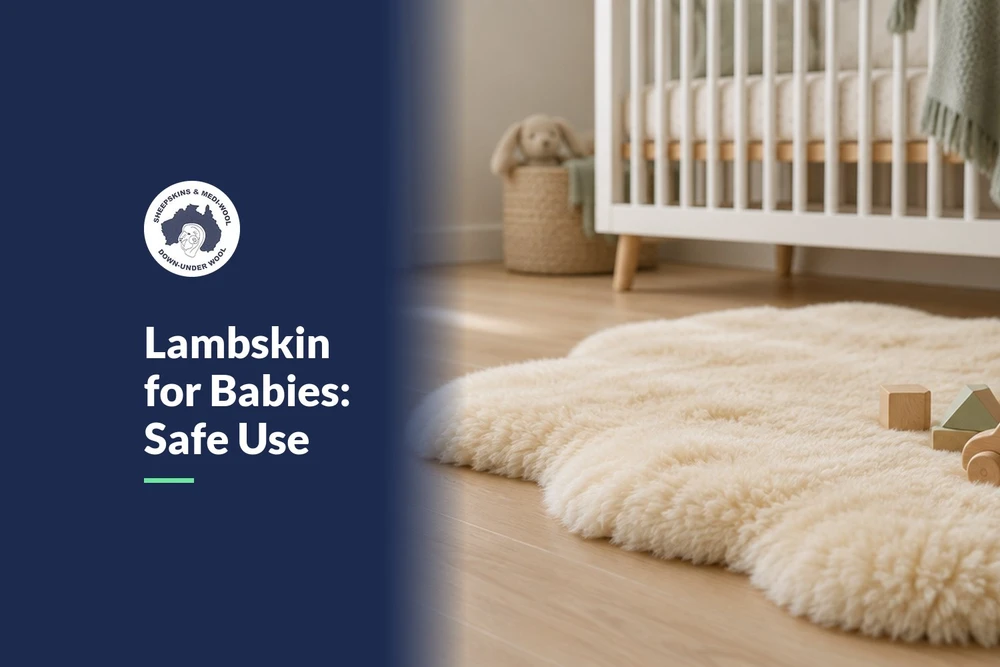
A lambskin is a soft, washable sheepskin from a young sheep, and for babies it is best used as a warm, cushioned place to lie during supervised awake time, tummy time and play, or as a stroller liner while an adult is with them. It is not a sleep surface. The National Institutes of Health's Safe to Sleep campaign lists sheepskins among the soft surfaces that are not safe for babies to sleep on, and says babies should sleep on their backs, on a firm, flat surface, until they are 1 year old. Down-Under Wool has supplied Australian lambskins since 1988, and this guide explains what a lambskin is good for, how to use one safely, and how to keep it clean.
Can babies sleep on sheepskin or lambskin?
No. Babies should not sleep on a sheepskin or lambskin, at night or for naps. Safe-sleep guidance from the American Academy of Pediatrics (AAP) and the NIH is clear:
- Place your baby on their back for every sleep, naps included, until they are 1 year old.
- Use a firm, flat, level sleep surface, such as a crib or bassinet mattress, covered only by a fitted sheet.
- Keep nothing soft in the sleep area: no pillows, blankets, quilts, bumpers, soft toys or sheepskins.
- If your baby falls asleep in a car seat, stroller or carrier, move them to their regular sleep space as soon as you can.
That rule applies to every lambskin, including ours. If your baby gets drowsy on a lambskin, move them to their crib or bassinet, on their back.
What are the benefits of lambskin for babies?
The benefits of lambskin for babies come from the wool: it is soft, warm and comfortable to lie on while your baby is awake and watched.
- Softness: a lambskin has finer, softer wool than an adult sheepskin, and our BabyCare lambskins are chosen for extremely soft wool.
- Warmth and comfort: wool fibers trap air, which insulates against a cold floor, and they draw moisture away from the skin, so the surface stays comfortable rather than clammy.
- Cushioning: the springy pile gives a softer surface than a bare floor or a thin play mat for tummy time and play.
- Washability: a lambskin tanned to be washable can be hand washed as often as a baby's things need it.
We have deliberately left out claims sometimes made for baby lambskins, such as that babies sleep longer or grow faster on them, because there is no good evidence for healthy babies at home, and because sleep on a lambskin is unsafe.
How to use a lambskin safely
- Awake and supervised only. Lay the lambskin on the floor for tummy time or play while you watch your baby. The NIH describes tummy time as time on the stomach while the baby is awake and someone is watching.
- Never in the crib, bassinet or cot. Keep the sleep space bare apart from a fitted sheet.
- In the stroller, stay with your baby. A lambskin liner can make a stroller warmer and softer on a walk. If your baby falls asleep, move them to their own sleep space as soon as you are home.
- Never under or behind a baby in a car seat. The AAP advises against adding padding under or behind a child, or any insert that did not come with the car seat, because these products have not been crash tested with the seat. See HealthyChildren.org on car seats.
- Watch for drowsiness. When your baby starts to fall asleep, move them to their crib on their back.
- Keep it clean and dry, and check it is completely dry after washing before using it again.
What does the research on premature babies show?
A small hospital trial found that very premature babies gained weight a little faster when nursed on lambswool, but it was carried out in incubators under constant nursing care and does not apply to healthy babies at home. In the 1983 study, published in The Lancet (Scott and colleagues), 34 very low birthweight babies with an average birthweight of 1,143 g were nursed either on lambswool or on ordinary cotton sheets. During periods when they were well, the lambswool group gained 22.7 g a day against 18.6 g a day for the cotton group.
That is one small study, more than 40 years old, of babies who were monitored around the clock in a neonatal setting. It does not change the safe-sleep advice for your baby: back to sleep, on a firm, flat surface, with nothing soft in the crib. If your baby was born early, ask your neonatal team or pediatrician before using any soft surface.
Choosing a lambskin for your baby
Choose a genuine lambskin that is tanned to be washable and large enough for a play area. Our BabyCare Lambskin and Woolskin package (B101) includes:
| Feature | BabyCare Lambskin (B101) |
|---|---|
| Size | about 90 x 60 cm (35" x 24") |
| Wool | champagne colored, specially chosen for extremely soft wool |
| Washing | hand wash in Woolskin; air dry on the back of a chair or a drying rack |
| Included | 250 mL bottle of Woolskin, enough for about 10 washes |
| Best uses | supervised tummy time and play, and a stroller liner while you are with your baby |
To tell real lambskin from imitation, part the wool: real lambskin shows leather at the base of the fibers, while faux lambskin shows a fabric backing. Our guide to sheepskin vs lambskin explains the difference. For adults, see our Healthcare Lambskin and lambskin bedding.
How to wash a baby lambskin
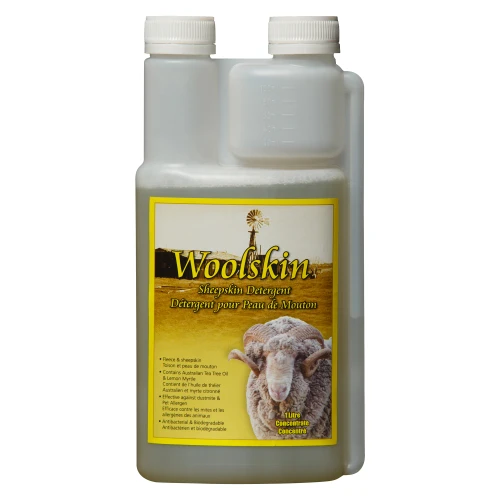
Hand wash a baby lambskin in cool or lukewarm water with Woolskin, which cleans, conditions and disinfects the wool and leather and keeps the skin soft. Baby lambskins often need washing, so it helps to have it ready:
- Fill a tub with lukewarm water, then add Woolskin.
- Work the solution gently through the wool, then squeeze; don't wring or twist.
- Rinse twice in cool water until the water runs clear.
- Dry it on the back of a chair or a drying rack, leather side up, away from heat and direct sun.
- Brush the wool gently once it is completely dry.
Never use ordinary household detergents, which can damage the leather. For drying tips, see washing and drying sheepskin; our guide on how to wash sheepskin has more detail.
Lambskin for babies FAQs
Is sheepskin safe for babies?
Sheepskin is fine for babies during supervised awake time and play, but it is not safe for sleep. The NIH lists sheepskins among soft surfaces babies should not sleep on.
Can a baby sleep on a lambskin in the crib or cot?
No. A crib, bassinet or cot should hold only a firm, flat mattress and a fitted sheet, with your baby on their back.
Can I use a lambskin in the stroller?
Yes, as a liner while you are with your baby. If your baby falls asleep in the stroller, move them to their crib or bassinet as soon as you can.
Can I put a lambskin in a car seat?
No. The AAP advises against putting padding under or behind a child, or using any insert that didn't come with the car seat.
Does sheepskin keep babies cool?
Wool draws moisture away from the skin, so a lambskin stays comfortable to lie on in warm weather. That doesn't make it safe for sleep in any season.
At what age can a baby sleep on sheepskin?
Safe-sleep guidance says to put babies on their backs on a firm, flat surface until they are 1 year old, with nothing soft in the sleep area. Ask your pediatrician about bedding for an older child.
Can babies be allergic to sheepskin?
True wool allergy is unlikely: a 2017 review in Acta Dermato-Venereologica found that wool fiber has not been shown to be an allergen, and that itch comes from coarse fibers. If your baby's skin reacts, stop using it and ask your pediatrician; see also allergic to sheepskin?
How often should you wash a baby lambskin?
Wash it whenever it is soiled or starts to smell; baby lambskins often need washing. Spot clean small spills straight away with a damp cloth and a little Woolskin.
The short version
A lambskin gives a baby a soft, warm, washable surface for supervised tummy time, play and stroller walks. It is never for sleep: babies sleep on their backs, on a firm, flat surface, with nothing soft in the crib, until they are 1 year old. Wash it by hand in Woolskin and dry it slowly. Questions? Contact us; we have been answering them since 1988.