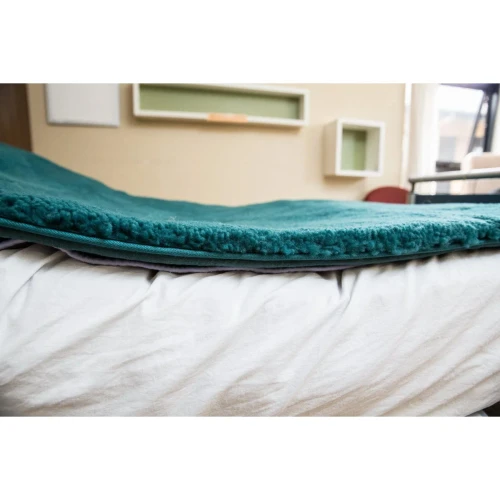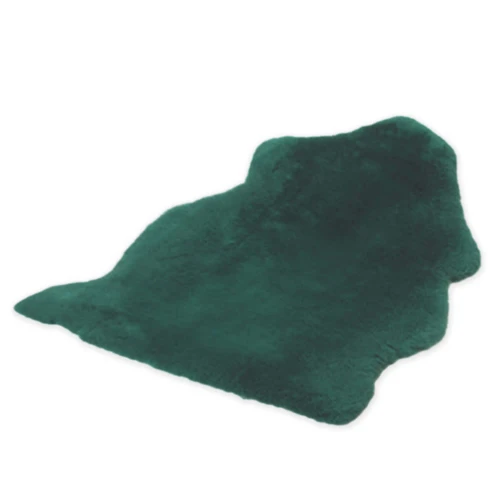

The best medical sheepskin is one made to AS4480.1, the Australian Standard for medical sheepskins: it carries the standard's stamp on its leather back, has a dense wool pile about 25 to 30 mm (1 to 1.2 inches) deep, can be washed hot, resists urine if that matters to you, and is big enough for the part of the body you need to protect. That gives you six things to check before you buy, and this checklist walks through each one, including how to spot a sheepskin that only looks medical. Our 24" x 36" AS4480.1 HiTemp UR sheepskin is one example. Down-Under Wool has sold medical sheepskins to caregivers, hospitals and nursing homes since 1988, and these are the questions we ask every customer.

Medical sheepskin buyer's checklist
Use this table when you compare listings, or with the sheepskin in your hands:
| Check | What a genuine medical sheepskin has | Red flag |
|---|---|---|
| 1. Stamp | "Australian Medical Sheepskin" stamp on the leather back, with "AS 4480.1", the grade and a manufacturer ID | No stamp, or only a sewn-in brand label |
| 2. Real hide | Wool growing out of a leather back | A knitted or woven fabric grid under the pile |
| 3. Density | Dense, even pile, about 25–30 mm deep, across the whole skin | Thin, patchy or uneven wool |
| 4. Washability | "HiTemp" on the stamp: washable up to 80°C (176°F) | "Dry clean only", "spot clean only" or no care label at all |
| 5. Urine resistance | "UR" on the stamp, if the user is or may become incontinent | No mention of UR for a bed or wheelchair product |
| 6. Size | Covers the area at risk, for example shoulders to below the buttocks in bed | A small rug that only covers part of the hips |
If a sheepskin passes all six, it is the kind of skin used in the clinical trials. If you want the background on the standard itself, read the AS4480.1 standard explained.
How do you spot a fake medical sheepskin?
You spot a fake medical sheepskin by turning it over: a genuine one has the AS4480.1 stamp printed on its leather back, and a fake has no stamp. The word "medical" in a product name is not a certification, and neither is the color green; many green-dyed sheepskins sold online are not made to the standard. Other warning signs:
- Fabric backing. Part the wool. Real sheepskin shows skin at the base of the fibers and a leather back; imitation sheepskin shows a fabric grid.
- Slippery, uniform pile. Real wool is springy and slightly crimped; synthetic pile often feels slick.
- Vague labels. "Sherpa" or "faux shearling" mean synthetic.
- No washing instructions. A sheepskin meant for health care should tell you exactly how hot it can be washed.
- "Australian" on its own. An Australian sheepskin rug is not automatically a medical one. Look for the stamp.
Not every non-sheepskin product is a fake, though. Wool pile pads such as our Hospital Wool Fleece and Pressure Smart XD1900 pads are real Merino wool knitted into a backing, sold openly as wool pads rather than as sheepskins. We compare them in XD1900 wool pad vs medical sheepskin. For more ways to tell real sheepskin from imitation, see what sheepskin is and the types of sheepskin.
Medical sheepskin vs regular sheepskin: what's the difference?
A medical sheepskin is made and tested to AS4480.1 for patient care; a regular sheepskin is made for comfort or decoration and has no tested specification. The differences that matter to a caregiver:
| Medical sheepskin (AS4480.1) | Regular sheepskin rug | |
|---|---|---|
| Standard | Made and tested to AS4480.1; stamped | None |
| Wool pile | Dense and even; pile height set by the standard | Varies; often long and less dense |
| Washing | HiTemp grades washable up to 80°C (176°F) | Often dry clean only |
| Urine | UR grades are tanned to resist urine | Urine can damage the leather |
| Clinical evidence | Randomized trials in hospitals | None |
How dense should the wool be?
The wool should be dense, even and about 25 to 30 mm (1 to 1.2 inches) deep across the whole skin. The trials of the Australian Medical Sheepskin describe a dense, uniform 25 mm natural wool pile; our M102C Australian Medical Sheepskin has an even 30 mm Merino pile.
Density is what does the work. A deep, close pile spreads the body's weight, lets air reach the skin and lets the skin glide instead of dragging, which reduces pressure, moisture and shear, the three main causes of pressure sores. AS4480.1 sets requirements for both pile height and fiber diameter, which is why the stamp is the easiest check.
Can you wash it hot?
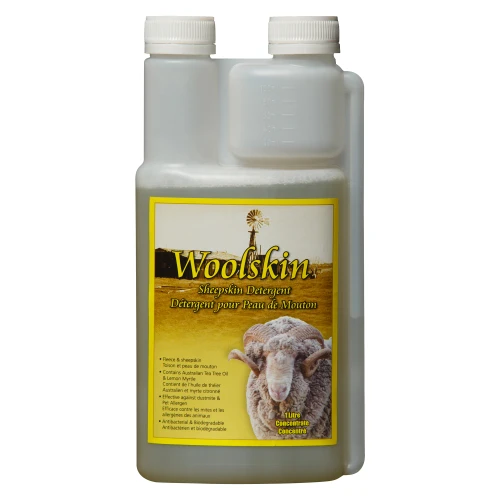
You can wash a medical sheepskin hot only if it is a HiTemp grade, which can go up to 80°C (176°F); everything else needs cool or lukewarm water. Hot washing matters when a sheepskin is shared, soiled often or used near broken skin, because heat disinfects it. Our M102 Australian Medical Sheepskin Overlay is a HiTemp skin warranted for at least 50 washes in Woolskin.
A lovely soft lambskin can still be the wrong choice here: our Healthcare Lambskin (M101) must be washed in cool or lukewarm water and may shrink if washed hot. What the letters on the stamp mean is explained in HiTemp and UR: what they mean, and the full washing method is in how to wash a sheepskin.
Do you need a urine-resistant (UR) sheepskin?
You need a urine-resistant (UR) sheepskin if the person using it is incontinent, or might become so. Urine can permanently damage the leather of a non-UR skin; that is why we don't recommend the M101 lambskin for incontinent users. UR is not the same as waterproof, so a protective pad under the sheepskin is still sensible. We compare both types side by side in urine-resistant vs non-urine-resistant wool products.
What size medical sheepskin do you need?
For most people in bed, you need a medical sheepskin large enough to reach from the shoulders to below the buttocks, about 24" x 36" or larger. Match the size to where the person spends their time:
| Where it is used | Size | Product |
|---|---|---|
| Bed: shoulders to below the buttocks | 24" x 36" (60 x 90 cm) | M102C Australian Medical Sheepskin (AS4480.1, HiTemp UR) |
| Bed, then chair or recliner during the day | about 38" x 24–26", natural shape | M102 Overlay (AS4480.1, HiTemp UR) |
| Whole body, head to toe | 30" x 60" | Superior Overlay XD (SC104XD), a UR Merino wool pad |
| Chair, sofa or recliner (continent user) | about 30" x 40" | Healthcare Lambskin (M101), cool wash, not UR |
| Feet and heels in bed | 12" x 26" with mattress flaps | Pressure Care Assistant (M103XD) |
| Wheelchair arm rests | 14" long, pair | HiTemp Medical Sheepskin Arm Pads (M125G) |
Placement matters as much as size; see how to use sheepskin for bed sores. Many caregivers buy two or three sheepskins so there is always one on the bed while another is being washed and dried, which takes about 24 hours in the air. Our bedsore prevention packages combine a sheepskin or wool pad with a foot pad and Woolskin.

Medical sheepskin buying FAQs
What is the best medical sheepskin?
The best medical sheepskin is an AS4480.1 HiTemp UR skin with the stamp on its back, in a size that covers the area at risk. For most people at home, a 24" x 36" rectangular skin such as the M102C covers the shoulders to below the buttocks in bed.
How can you tell if a sheepskin is real?
Part the wool and look at the base: real sheepskin has wool growing out of skin, with a leather or suede back, while imitation sheepskin has pile attached to a fabric grid. A real sheepskin is not necessarily a medical one; for that, look for the AS4480.1 stamp.
Is a green sheepskin always medical grade?
No. HiTemp medical sheepskins are dyed green, but anyone can dye a sheepskin green. Only the AS4480.1 stamp on the leather back shows the skin was made to the standard.
Is sheepskin good for pressure sores?
A medical sheepskin is good for preventing pressure sores in people at low to moderate risk: in a 2004 trial of 441 hospital patients, 9.6% of patients on an Australian Medical Sheepskin developed a new pressure ulcer, compared with 16.6% on usual care. If someone already has a sore, ask a nurse or doctor what they need.
Should you put a sheet over a medical sheepskin?
No. A medical sheepskin works best with the skin lying directly on the wool, day and night. The protection comes from the wool itself, so a sheet over it takes away much of the benefit.
How many medical sheepskins do you need?
Two or three, if the sheepskin is used every day. Air drying takes about 24 hours, so a spare keeps protection in place while one is washed.
Can you use a medical sheepskin on a wheelchair or recliner?
Yes. A natural-shape overlay such as the M102 moves easily from the bed to a chair; for a dedicated chair sheepskin, see our recliner chair guide.
The short version
Before you buy, turn the sheepskin over and find the AS4480.1 stamp; check the pile is dense and about 25 to 30 mm deep; choose HiTemp if it will be washed often or shared, UR if incontinence is possible, and a size that covers the shoulders to below the buttocks. Green dye, the word "medical" and an Australian origin prove nothing on their own. Browse our stamped medical sheepskin range, or contact us with your questions; we've helped caregivers choose since 1988.