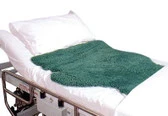
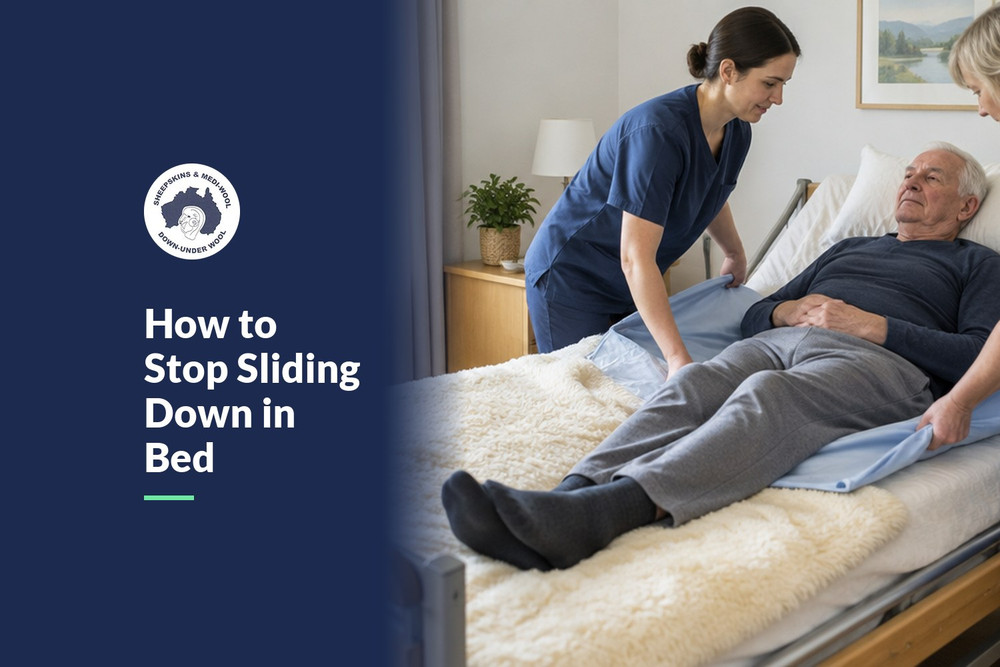
To stop someone sliding down in bed, keep the head of the bed at 30 degrees or lower when you can, raise the knee section a little when the head goes up, support the calves, and move the person back up with a slide sheet and two helpers instead of dragging them. Sliding strains the skin over the tailbone and heels and slumps the person into a poor position for eating and breathing. Down-Under Wool has supplied medical sheepskin to caregivers since 1988. A wool overlay such as our Australian Medical Sheepskin Overlay (M102) protects the skin under the hips, but no source we found shows that any surface stops sliding on its own; positioning does that.
Why do people slide down in bed?
People slide down mainly because of gravity once the head of the bed is raised, and some bed frames make it worse. A 2015 study of four hospital beds names two causes of this "migration" toward the foot of the bed: gravity over time, and bed designs that push the body down as the head section rises.
| Why the person slides | What helps |
|---|---|
| Head of the bed raised high | Keep it at 30 degrees or lower when health allows |
| Straight legs, nothing to stop the hips | Raise the knee section slightly; support the calves |
| Bed with a simple hinge and no knee contour | Use a knee section if there is one; ask about the bed |
| Slide sheet left underneath | Take it out after every move |
| Too weak to shift position | Regular help; ask a therapist about aids |
Why does sliding down in bed matter?
Because the body moving down against the sheet strains the skin and deeper tissue, mostly over the tailbone and heels. In a 2020 study combining motion tracking of 10 people with computer modeling, the farther a person slid, the higher the stress in the tissue over the sacrum. The international pressure injury guideline (NPIAP, EPUAP and PPPIA, 2026) warns that slouched positions increase pressure and shear on the sacrum and coccyx, and calls the heel particularly sensitive to shear. How shear leads to sores is covered in our guide to the causes of pressure sores; the tailbone and heels are among the main pressure points.
Posture suffers too. The 2015 study notes that sliding lowers the torso angle the bed was set to, so if the head was raised to help someone eat or breathe, sliding undoes part of that.
How to stop sliding down in bed: positioning that works
Keep the head of the bed low. MedlinePlus advises not raising it above 30 degrees because lying flatter keeps the body from sliding down. The guideline suggests 30 degrees or lower: across four pooled critical care trials, 11.1% of patients kept at 30 degrees developed a pressure injury versus 18.9% at 45 degrees or more, though it rates that evidence as low certainty.
- Bend the knees slightly. When the head must go higher, the guideline advises raising the thighs to reduce sliding. On a bed with a knee section (often called the knee break), raise it a little along with the head.
- Support the whole lower leg. MedlinePlus says not to put pillows under the knees, because that presses on the heels. The guideline spreads the leg's weight along the calves, knee bent 5 to 10 degrees, so the heels float clear.
- Feet neutral. Rest the foot neutral or pointing slightly up; lowering the foot of the bed, if it can, takes pressure off the heels (guideline).
- Smooth sheets. Keep them dry and wrinkle-free, with nothing left in the bed (MedlinePlus).
If heels still rub, see our guide to heel protectors for bed sores.
How do you keep a patient from sliding down in a hospital bed?
Use the knee section whenever you raise the head, and raise the head no higher than needed. In the 2015 study of 12 healthy volunteers, the bed with the least sliding had a knee section that rose automatically with the head, giving the thighs a small "stop"; beds with a simple hinge pushed people further down.
Some people need the head higher. AHRQ notes that patients with feeding tubes or breathing problems need it above 30 degrees, and the guideline names people at risk of aspiration (food or fluid entering the lungs). Follow the nurse's plan, raise the thighs and lower the head when safe. The guideline also suggests sitting out of bed for meals, since a chair gives better posture and foot support; a medical sheepskin for recliner chairs keeps that seat comfortable.

How to move someone back up the bed without dragging
Lay the bed flat, use a slide sheet or draw sheet, and have two people pull the sheet rather than the person. These steps follow MedlinePlus on pulling a patient up in bed, which says it takes at least 2 people:
- Explain what you are doing, raise the bed to a comfortable working height if you can, and lay it flat.
- Get the sheet under them. Roll the person to one side, place a half rolled-up slide sheet (or a bed sheet folded in half) against their back, roll them back and spread it flat under the head, shoulders and hips.
- Stand on opposite sides, grip the sheet at the upper back and hips, one foot forward.
- If they can help, ask them to tuck the chin, bend the knees with heels on the bed, and push with their heels.
- On three, shift your weight forward and slide the sheet toward the head of the bed, in short moves if needed.
- Remove the slide sheet and smooth the bottom sheet. The guideline adds that loosening the sheet can stop it pulling on the skin at rest.
Never pull someone up by hooking them under the arms; MedlinePlus says this can injure the shoulders, and rubbing can scrape or tear skin on the back, buttocks, elbows and heels. The guideline says to lift rather than drag and to watch the heels. It is also a good moment to change their position; see how often to turn a bedridden patient.
Does the bed surface make a difference?
Yes, for protecting the skin, though not for stopping the slide. NICE guideline CG179 recommends a high-specification foam mattress for adults at high risk, and our guide to the best mattress topper for bed sores compares toppers. Medical sheepskin has trial evidence for the area sliding affects most: pooling three randomized trials of 1,281 patients, sacral pressure ulcers occurred in 5.4% on an Australian Medical Sheepskin versus 12.2% without. Those trials measured sores, not sliding.
- Hips and back: the M102 overlay meets Australian Standard AS4480.1, is about 38" x 24-26", urine resistant and HiTemp washable. The AS4480.1 sheepskin (M102C) is 24" x 36" with a 30 mm pile, covering shoulders to below the buttocks.
- Whole mattress: the Hospital Bed Nursing Fleece (F102) is 35" x 80" for a standard hospital bed, Merino wool at 550 grams per square meter, held on by an elasticized skirt.
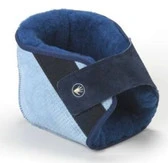
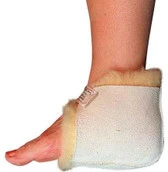
- Heels: Shear Comfort heel protectors (SC112, pairs, three sizes) and the one-size sheepskin heel pad (M112) are wool cups closed with Velcro. They cushion the heel rather than lift it, so keep the calf support.
When should you ask a nurse or occupational therapist?
Ask when sliding keeps happening despite these steps, when moving the person hurts them or you, or when a new bed arrives. The guideline recommends involving an occupational or physical therapist for people at long-term risk, and aids such as trapeze bars or slide boards for those who can help move themselves. Call a nurse or doctor if you see a discolored patch that does not change color when pressed, or skin that feels warm, spongy or hard (NHS); these are early signs of bed sores. Do not treat broken skin yourself. For daily routines, see how to prevent bedsores at home.
Sliding down in bed FAQs
Why do patients keep sliding down in bed?
Mostly because the head of the bed is raised and gravity pulls the body down, especially with straight legs; some bed frames also push the body down as the head rises.
How do you keep an elderly person from sliding down in bed at home?
Keep the head of the bed at 30 degrees or lower, bend the knees slightly with the knee section or calf support, and help them change position regularly.
Can one person pull a patient up in bed alone?
It is not recommended: MedlinePlus says it takes at least 2 people. If you are often alone, ask a nurse or occupational therapist about equipment.
How do you keep from sliding down in an adjustable bed?
Raise the knee section a little whenever you raise the head, and keep the head as low as is comfortable, ideally 30 degrees or less.
Is a slide sheet the same as a draw sheet?
No: a slide sheet is low-friction fabric made for moving people, while a draw sheet can be a bed sheet folded in half. Remove either after the move.
Why keep the head of the bed at 30 degrees?
Because lying flatter keeps the body from sliding down; the guideline suggests 30 degrees or lower unless the person's health needs it higher.
The short version
Keep the head low, bend the knees, support the calves and move the person up with a sheet and two people. To protect the skin under the hips, compare our bedsore prevention packages or contact us.