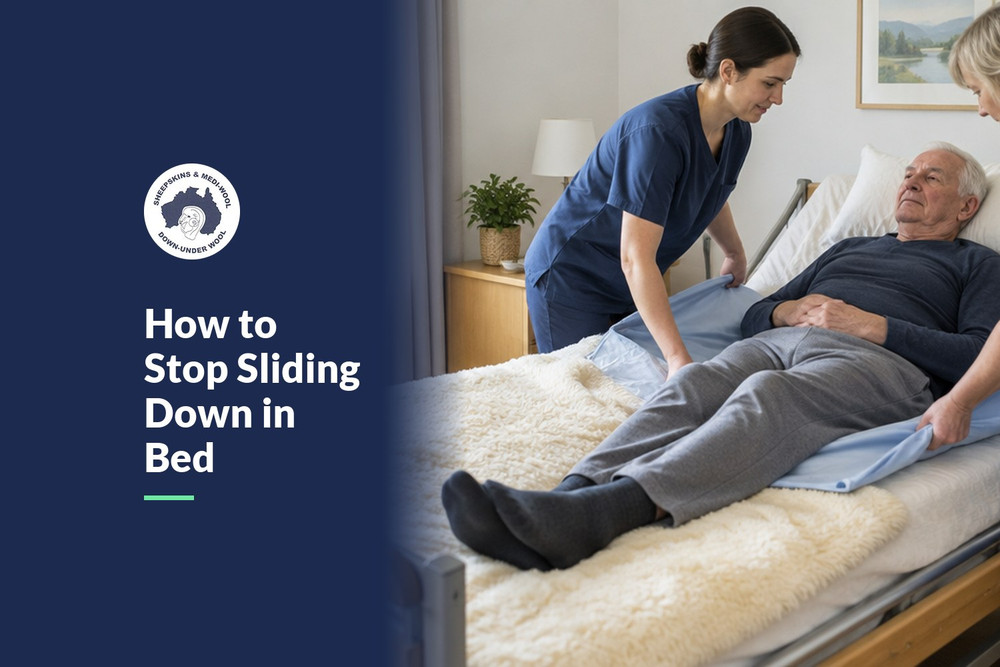

Bed sores in dementia patients are pressure ulcers that form when a person with dementia stays in one position too long, and they become more likely as the illness takes away movement, appetite and the ability to say that something hurts. The Alzheimer's Association advises changing a bedbound or chair-bound person's position at least every 2 hours and keeping the skin clean and dry. A washable surface such as an Australian Medical Sheepskin overlay (M102) adds comfort under the back and hips, but the daily routine matters most. Down-Under Wool has supplied medical sheepskin to families since 1988; this guide covers the risks, spotting pain and skin changes, turning someone who resists, and the late stage.
Why are people with dementia more likely to get bed sores?
People with dementia are more likely to get bed sores because the illness affects several risk factors at once. The NHS lists problems moving, being underweight, sweaty skin and problems feeling pain, and the NICE pressure ulcer guideline (CG179) names significant cognitive impairment as a risk factor.
- Less movement. The Alzheimer's Association says a person in the late stage can become bedridden or chair-bound, which can cause skin breakdown and pressure sores.
- Not reporting pain. Someone with advanced dementia may not be able to tell you they hurt, so soreness over a hip or heel can go unnoticed.
- Incontinence. The National Institute on Aging (NIA) says most people with Alzheimer's will have incontinence at some point.
- Eating and drinking less. People with Alzheimer's often lose interest in food and may not realize they are thirsty.
For how pressure damage forms and is staged, see our guide to bed sores.
How can you tell if someone with dementia is in pain?
You tell by watching the face, sounds, body and behavior. NIA says people in the final stages may groan or sigh, grimace when touched, become upset or aggressive, or sit in unusual positions to guard the part that hurts. The Alzheimer's Association adds wincing, trembling, shouting and sleeping problems.
The NICE dementia guideline (NG97) recommends considering a structured observational pain tool for people who can't report pain. One is the PAINAD scale (Pain Assessment in Advanced Dementia), a five-item observation scored 0 to 10 (Warden and colleagues, 2003). You don't need to score it; just tell the nurse if the person flinches whenever you touch the same hip, heel or shoulder.
What early skin changes should you look for?
Look for a patch of skin that stays discolored when you press it lightly. The NHS says it is usually red on white skin and purple or blue on black or brown skin, and may feel warm, spongy or hard. NIA says to watch the heels, hips, lower back and back of the head; see our guide to pressure points.
Check during washing and dressing, when the skin is already uncovered. The Alzheimer's Association suggests checking for rashes and sores after each bath, patting dry instead of rubbing, and never massaging moisturizer into bony areas.
How do you reposition someone with dementia?
Reposition them regularly, explain each step in short sentences, and move slowly. The nurse may set a frequency for the person's risk, and our turning schedule has a printable 24-hour plan.
- Say what you are about to do before you touch them. The NHS advice on communicating is to speak clearly and slowly and stay calm.
- Give them something to hold, such as a washcloth. NIA says the person is then less likely to grab onto you or the furniture.
- Support the new position with pillows under the arms and legs.
- Never lift by pulling the arms or shoulders. Ask a nurse or physical therapist to show you how to turn safely.
- Remember the chair. Someone who dozes in one armchair all afternoon needs position changes too; see medical sheepskin for a recliner chair.
The full daily routine is in our guide on how to prevent bed sores at home.
What if the person resists or gets upset during turning?
Stop, stay calm and try again a little later. NIA lists being pushed to do something that has become very hard as one cause of agitation, along with pain, too little sleep and too much noise. What helps:
- Keep a routine. NIA suggests bathing, dressing and meals at the same times each day, so a turn can follow a familiar step.
- Lower the noise and turn off the TV first.
- Get down to their level. The NHS suggests being at the same level or lower, and holding their hand if they are comfortable with it.
- Reassure and distract. Tell them they are safe and offer a drink or music. The Alzheimer's Association's bathing advice is to distract a resistant person and try again later.
- Know your limits. NIA advises not trying to do too much on your own when moving someone. Ask the nurse whether turning needs two people.
If they resist only when rolled onto one side, mention possible pain to the nurse. For clenched hands, see hand contracture care.
How do you manage moisture, incontinence, food and drinks?
Keep the skin clean and dry, change wet pads promptly, and offer food and drinks little and often. The Alzheimer's Association advises mild soap, gentle motions and blotting dry. NICE suggests considering a barrier preparation for people with incontinence at high risk of moisture damage, so ask the nurse.
Our guide to incontinence care at home has a section on dementia, and incontinence and pressure ulcers explains how wet skin adds to pressure damage.
For meals, NIA suggests small amounts, high-calorie healthy foods, and sitting beside the person rather than in front. Offer drinks often, and ask the doctor about a supplement if the person is losing weight.
Which mattress pads and protectors help?
A pressure-reducing pad on the mattress helps alongside turning, not instead of it. NIA suggests a foam, gel, air or water pad that fits snugly. In a trial of 441 patients at a Melbourne teaching hospital (Jolley and colleagues, 2004), 9.6% on medical sheepskin developed pressure ulcers versus 16.6% on standard care; the trial was not limited to dementia.
| Product | Where | Facts |
|---|---|---|
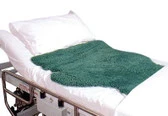
| Medical Sheepskin Overlay (M102) | back and hips | AS4480.1; about 38" x 24-26"; HiTemp washable, urine resistant |
| Medical Sheepskin (M102C) | shoulders to below the buttocks | AS4480.1; dense 30 mm pile; urine resistant |
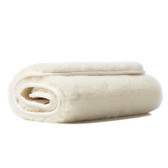
| Hospital Wool Fleece Bed Pad (F103C) | shoulders to feet | 30" x 60"; urine resistant; machine wash and dry |
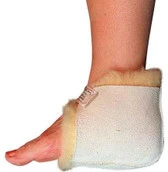
| Medical Sheepskin Heel Pad (M112) | heel | Merino wool cup with a Velcro strap; either foot |
| Lambswool Wrap Booties (M161) | whole foot | flaps wrap the foot with Velcro; sold in pairs |
| Sheepskin Hand Posies (M115) | palm of a clenched hand | medical sheepskin with an elastic strap; pairs |
See also heel protectors for bed sores and our bed sore prevention products.
What changes in late-stage dementia and at the end of life?
In late-stage dementia, comfort becomes the main goal, and gentle turning and skin care are part of it. The Alzheimer's Association says the late stage may last from several weeks to several years and usually needs around-the-clock care, and that hospice focuses on comfort and dignity.
NIA's end-of-life comfort guide says turning the person every few hours may help prevent bed sores and stiffness, and suggests a foam pad to raise the heel or elbow off the bed. It also notes that losing appetite is a normal part of dying, so don't force food. See also the complications of being bedridden.
Some wounds appear near the end of life even with good care. Nursing research describes the Kennedy terminal ulcer as a type of pressure injury linked to the dying process, though evidence is limited (Latimer and colleagues, 2019). A hospice nurse can explain what you see.
When should you call a nurse or doctor?
Call as soon as you see a discolored patch that doesn't fade, a blister or broken skin; NIA says reaching out early can help prevent more serious damage. The NHS says to get urgent help if a sore comes with:
- hot, swollen or red skin (it can look blue or purple on brown or black skin)
- pus
- a high temperature
- severe or worsening pain, which in dementia may show as new agitation
Don't treat a wound yourself; ask the nurse or doctor how to care for it.
Bed sores and dementia FAQs
Do people with dementia get bed sores?
Yes, and the risk grows as the illness progresses. NICE lists significant cognitive impairment as a pressure ulcer risk factor.
Are bed sores common in late-stage dementia?
The risk rises in the late stage, when a person can become bedridden or chair-bound, so turning and skin checks matter most then.
Can a person with dementia feel pain from a bed sore?
Yes, they can still feel pain even when they can't tell you. Watch for grimacing, groaning, guarding or new agitation.
What is the PAINAD scale for dementia?
PAINAD is a five-item observational pain scale, scored 0 to 10, for people with advanced dementia who can't report pain. Nurses use it; families help by reporting what they notice.
How do you turn a dementia patient who resists care?
Explain each step calmly, give them something to hold, keep the room quiet, and stop and try later if they get upset.
Do bed sores mean end of life?
No, a bed sore on its own does not mean a person is dying; anyone who has trouble moving can get one. Ask the nurse or hospice team about any new sore.
The short version
Turn the person regularly with a calm explanation, check the skin at every wash, keep it clean and dry, offer food and drinks often, and call the nurse about any patch that doesn't fade. A washable medical sheepskin overlay and soft heel protection add comfort alongside that routine.