A hand contracture is a hand that has tightened into a bent position, usually a clenched fist, and can no longer be opened fully, even with help. It is common after a stroke and in advanced dementia, and the problems caregivers see every day are fingernails pressing into the palm, a damp palm that starts to smell, and sore skin where nobody can see it. Contractures are not rare: in one hospital study, about half of adults admitted with a stroke developed at least one contracture within six months. Down-Under Wool has supplied medical sheepskin to caregivers since 1988, and this guide covers why the hand closes, how to clean it gently and how to keep the nails off the skin.
What is a hand contracture?
A hand contracture is a tightening of the muscles, tendons and soft tissue of the hand that holds the fingers, thumb or wrist bent. MedlinePlus explains that a contracture develops when normally stretchy tissue is replaced by stiff, fiber-like tissue, so the joint loses its range.
The NHS Berkshire Healthcare hand contracture guide for care homes lists the signs to watch for:
- the hand stays in a clenched fist much of the time
- it can't be fully opened, even with help
- the fingernails are starting to press into the palm
- the hand smells and is getting hard to clean
- opening it causes pain
This is not the same as Dupuytren's contracture, where one or more fingers slowly bend in toward the palm over months or years; the NHS page on Dupuytren's contracture covers that.
Why do the fingers curl into the palm?
The fingers curl in because the muscles that bend them stay short and tight for long periods, and the tissue gradually stiffens in that position. The usual reasons are:
- Stroke and spasticity. Brain damage from a stroke can leave muscles stiff and tight, and MedlinePlus notes that severe, long-term spasticity can leave the joints bent.
- Lack of use. Cleveland Clinic calls lack of movement the leading cause of soft tissue contractures.
- Advanced dementia and other neurological conditions, where the hand is used less and less.
- Long spells in bed. Stiff joints are one of the complications of being bedridden.
In a study of 200 adults admitted to a Sydney hospital with stroke (Kwah and colleagues, 2012), 52% developed at least one contracture somewhere in the body within six months.
What problems does a clenched hand cause?
A clenched hand traps sweat inside the fist, which causes most of the trouble:
- Nails digging into the palm and cutting the skin.
- A damp, smelly palm. Wet, sweaty skin weakens the skin's barrier and can lead to breakdown, sores and infection, says the NHS Berkshire hand hygiene sheet.
- Skin breakdown in the palm, the same kind of damage as bed sores, in a spot that is hard to check.
- Pain when the hand is washed or opened.
The tighter the hand, the higher the risk. The team's severity guide links moderate contractures with odor, yeast infections, moisture damage and skin breakdown.
How do you clean a contracted hand?
Clean a contracted hand slowly, without forcing it open, and dry it completely. These steps follow the NHS Berkshire hand hygiene principles:
- Plan for pain. If washing hurts, ask the doctor or nurse about pain relief beforehand.
- Talk to the person and check they are ready. Touch can make the hand tighten, so chatting and drawing their attention away from the hand helps.
- Soak the hand in a bowl of water if it can be positioned for that.
- Ease the fingers with slow, gentle but firm movements. Never force the hand open.
- Clean the palm, between every finger and the web space by the thumb, with a low-pH, unscented soap.
- Dry it thoroughly with a very absorbent microfiber towel or small baby washcloth. If the hand can't be dried properly, ask a nurse about other ways to clean it.
- Check the skin as you go. Show any redness, broken skin or lasting smell to a nurse or doctor, and don't treat a wound in the palm yourself.
How do you stop fingernails digging into the palm?
Keep the nails short and put something soft between the fingers and the palm. Short nails are one of the NHS hand hygiene principles; when the hand is tight, the severity guide says nail care should be done by trained staff, so ask the nurse or care team.
While you wait for an assessment, the NHS Berkshire guide suggests a rolled-up washcloth in the palm. It works, but it holds moisture, so change it whenever it is damp.
Stretching and splints: ask a therapist
Ask a physical or occupational therapist before you stretch a contracted hand or buy a splint. Cleveland Clinic and MedlinePlus both list stretches and splints as treatments, but how far to stretch and which splint to use is the therapist's decision.
- Splints are fitted by a therapist or orthotist, and wearing time is built up gradually.
- Medicines for spasticity can be reviewed by the doctor.
- Early is better. The NHS team says the best outcomes come when a contracture is spotted early.
How a soft palm protector helps
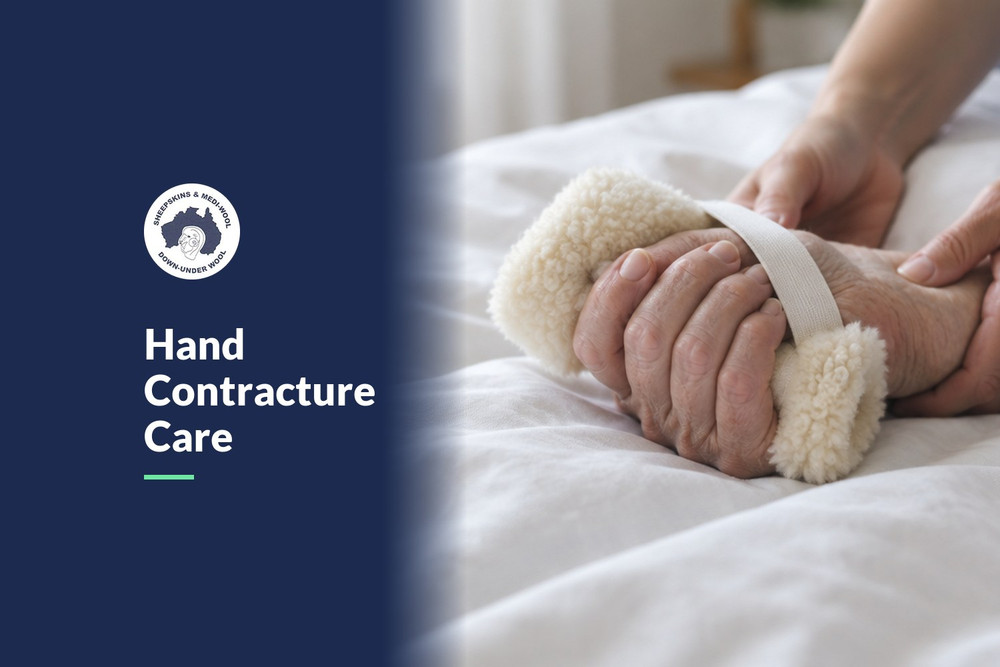
A palm protector sits inside the fist so the fingers curl onto something soft instead of bare skin, which keeps the nails off the palm. The NHS Berkshire team lists sheepskin palm protectors for severe contractures where the aim is to protect the palm. Our three are all in stock:
| Option | What it is | Washing |
|---|---|---|
| Rolled washcloth | a stopgap while you wait for an assessment | change whenever damp |
| Sheepskin palm protector (Hand Posies, M115) | a roll of Australian HiTemp medical sheepskin held on the palm by an elastic strap; absorbs moisture and lets air circulate through the palm; sold in pairs | machine wash in Woolskin, air dry |
| Hand posies with spacer (M115S) | the same roll with a spacer inside that you can add to, or trim with a sharp knife, to fit the hand; sold in pairs | machine wash in Woolskin, air dry |
| Shear Comfort Palm Protector (SC115) | soft Merino lambswool that goes over the thumb and around the hand with a Velcro strap; keeps the fingers warm; sold singly, fits either hand | wash in Woolskin |


The hand posies are made from the same HiTemp medical sheepskin as our bed overlays, so they can go in the washing machine.
Keeping a palm protector clean and in place
A palm protector only helps if it is in the hand, clean and dry:
- Keep two, so one is in use while the other dries. The NHS team's advice is to wash sheepskin palm protectors, dry them well and replace them regularly. Woolskin cleans, conditions and disinfects sheepskin; see how to wash sheepskin.
- Take it out at every wash, dry the palm, and check the skin under the strap.
- Put it in the care plan. Some families find a palm protector in a care home gets taken out for washing and never put back. The NHS guide says monitoring the hand is the job of carers and care staff, so ask for it to be written down, and label it with the resident's name.
For the rest of the body, see our nursing home care range.
Hand contracture FAQs
Can a hand contracture be reversed?
Not fully, once it is fixed: a long-standing contracture usually can't be straightened, but an early, mild one can often be kept from getting worse with a therapist's stretching and splinting plan. The NHS severity guide says full correction is unlikely once a contracture is moderate.
What causes hand contractures in elderly people?
Mostly lack of use, after a stroke, in advanced dementia or after long periods in bed. Spasticity after a stroke adds to it.
Why does a contracted hand smell?
Because sweat is trapped inside the closed fist. Damp skin can break down and moderate contractures carry a higher risk of yeast infection, so wash and dry the palm daily and ask a nurse if the smell stays.
Why do people with dementia clench their fists?
In advanced dementia the hand is used less and less, and lack of use is the most frequent cause of hand contracture. Touch can also make the hand tighten, so approach slowly and talk as you work.
What is a hand contracture cushion?
A hand contracture cushion is a soft roll or pad that sits in the palm so the fingers rest on it instead of the skin. Palm protectors and hand posies are both types.
What is the best splint for a hand contracture?
The best splint is the one a therapist fits for that hand, because the right choice depends on how tight the fingers, thumb and wrist are.
How do you prevent hand contractures?
Keep the hand moving as much as the person tolerates and follow the therapist's plan. Acting on early signs, such as a hand that stays in a fist, gives the best chance of stopping it getting worse.
The short version
Wash a contracted hand gently every day without forcing it open, dry it completely, keep the nails short and put something soft and absorbent in the palm. Leave stretching and splints to a therapist, and show any broken skin to a nurse or doctor. For a washable wool option, see our sheepskin palm protector pairs or the Shear Comfort Palm Protector, and our other bed sore prevention products.