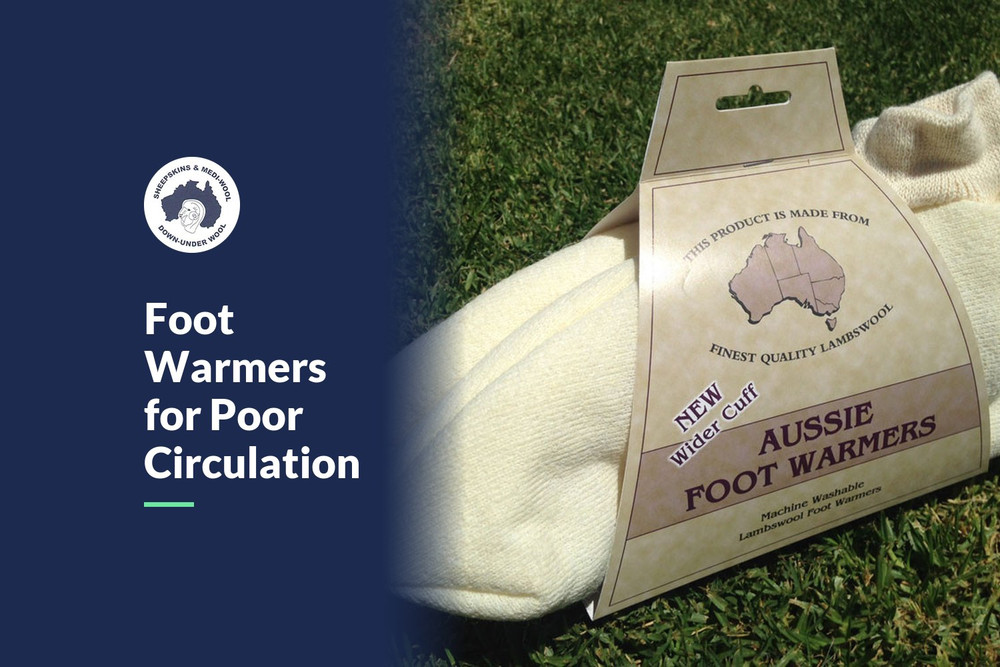
Foot warmers for poor circulation are thick wool socks, bed socks or booties that hold your own body heat around your feet, with no electricity, batteries or hot water. That matters, because the most common cause of cold feet is poor blood flow, and feet with reduced feeling can be burned by a heating pad or hot water bottle without the person noticing. Cleveland Clinic calls thick socks, such as wool socks, the safest way to warm cold feet. Down-Under Wool has worked with Australian sheepskin and Merino wool since 1988, and our Woolly Footwarmers are made from 550 gsm Merino wool. This guide covers why feet get cold, when to see a doctor, and which products for cold feet are worth having.

Why are my feet always cold?
Feet that are always cold are most often caused by poor blood flow to the legs and feet, but several conditions and medicines can cause it too. Cleveland Clinic lists these:
| Cause | What it is | Signs to mention to your doctor |
|---|---|---|
| Poor circulation and peripheral arterial disease | Narrowed arteries reduce blood flow to the legs and feet | Leg pain when walking, pale or blue skin, hair loss on the legs, sores that don't heal |
| Raynaud's | Blood stops flowing properly to the fingers and toes in the cold or under stress | Toes turning white, then blue or red; numbness, pins and needles |
| Diabetes | Can lower blood flow and damage nerves in the feet | Numbness, or sores and blisters you didn't feel |
| Anemia, hypothyroidism, heart disease | Conditions that can cause cold feet as a symptom | Your doctor may suggest a blood test |
| Medicines | Including beta-blockers, ergotamine and pseudoephedrine | Cold feet that started with a new medicine |
Smoking also reduces blood flow to the feet, and the NHS names it as the biggest risk factor for peripheral arterial disease. Often, though, cold feet are simply a sign of a cold room, too little movement or thin socks.
When should you see a doctor about cold feet?
See a doctor if your feet are cold most of the time and warm socks and moving more don't help. Get advice promptly if you notice any of these:
- numbness, severe pain, or you can't feel your feet when you touch them;
- sores on the feet or legs that don't heal;
- skin on the feet or toes that turns pale, white or blue;
- pain in the legs when you walk that eases when you rest;
- Raynaud's-type color changes for the first time after age 30, or on one side only.
If you have diabetes, the NIDDK advises checking your feet every day and calling your provider straight away about a cut or blister that isn't healing or skin that is red, warm or painful. Check with your podiatrist or doctor before trying new products for cold feet.
Do foot warmers help with circulation?
Foot warmers don't improve circulation, but they keep feet warm when circulation is poor, which is what most people want from them. Wool holds body heat because its crimped fibers trap insulating air, and it absorbs moisture vapor, so feet stay warm without getting clammy (Woolmark). To help blood flow itself, the NHS advice for Raynaud's is to exercise regularly, stop smoking and keep the whole body warm, not just the feet.
Wool or electric foot warmers: which is safer?
Wool foot warmers are safer than electric ones or hot water bottles for anyone with poor circulation, diabetes or numb feet, because they add no heat of their own. Diabetes can damage the nerves so that a person may burn their feet and not know it; the NIDDK says not to put a hot water bottle or heating pad on your feet, to keep feet away from heaters and open fires, and to wear socks in bed if your feet get cold. Cleveland Clinic gives the same warning about heating pads and hot water for anyone with reduced feeling.
| Type | How it warms | Safe with reduced feeling? | In bed all night? |
|---|---|---|---|
| Wool foot warmers and bed socks | Holds your own body heat | Yes | Yes |
| Wool-lined booties and boots | Holds body heat; covers ankles | Yes | Soft-soled styles, yes |
| Electric foot warmers and heated pads | External heat | Ask your doctor; burn risk | Follow the maker's instructions |
| Hot water bottles | External heat | No (NIDDK) | No |
Products for cold feet from Down-Under Wool
Our products for cold feet are all wool and need no power. You'll find the current range under foot warmers:
| Product | What it is | Sole | Sizes | Care |
|---|---|---|---|---|
| Merino Woolly Footwarmers (M162) | 550 gsm Merino wool woven into a cotton backing; stretch ribbed ankle; much thicker than socks | None (house and bed) | S to XXL (women's 5 to 14) | Inside out, machine wash in Woolskin, low-heat gentle dry |
| Lambswool Footwarmers with Non-Slip Sole (M160NS) | Merino lambswool with a knitted stretch ankle; no seams at pressure points | Non-slip, for getting out of bed | Small only (size 5-6) | Machine wash in Woolskin, air dry |
| Lambswool Footwarmers (M160) | Hospital nursing fleece, fits like a heavy sock with a ribbed top | None (bed) | XS, S | Machine wash in Woolskin |
| Merino Lambswool Wrap Booties (M161) | Merino lambswool flaps that wrap the foot and close with Velcro | None (bed or chair) | One size | Machine wash and dry, not over-dry |
Woolly Footwarmers started in the shearing sheds of Australia's Snowy Mountains, where shearers strapped wool to their feet to keep them warm and dry. They are made for people confined to a bed or chair and anyone with poor circulation, and work as bed socks, travel socks or house slippers. For walking around the house in the cold, a closed, wool-lined boot such as the Shear Comfort Wrap Around Boot has a rubber sole; see our medical slippers, or how to choose a medical boot if your feet also swell. Stock of some sizes changes, so check each product page.

How to keep feet warm with poor circulation
Keep feet warm with poor circulation by holding in body heat, moving often and avoiding direct heat. Steps that sources agree on:
- Wear thick wool socks or foot warmers, including in bed.
- Move. Walk, flex your ankles and wiggle your toes during long spells of sitting; regular exercise helps circulation.
- Raise your legs on a pillow when you lie down, and drink enough fluids (Cleveland Clinic).
- Keep the room and the whole body warm, and avoid sudden temperature changes (NHS, Raynaud's). Wool layers in bed, such as merino wool bedding, hold warmth the same way foot warmers do.
- Don't smoke, and cut back on caffeine if you have Raynaud's.
- Ask about compression socks. Cleveland Clinic lists them as an option; ask your doctor whether they suit you before you buy.
- Skip the hot water bottle and heating pad if you have diabetes or numb feet.
How to choose the right size foot warmer
Choose a foot warmer about 1 inch longer than your foot. Measure from the back of the heel to the tip of the longest toe, then compare with the outside sole lengths:
| Woolly Footwarmers size | Women's shoe size | Men's shoe size | Outside sole length |
|---|---|---|---|
| S | 5-6 | 4-5 | 9.75" |
| M | 7-8 | 6-7 | 10.25" |
| L | 9-10 | 8-9 | 11" |
| XL | 11-12 | 10-11 | 12" |
| XXL | 13-14 | 12-13 | 12.5" |
Lambswool Footwarmers follow the same rule: the foot should be about 1 inch shorter than the sole.
Foot warmers FAQs
Can diabetics use foot warmers?
Yes, wool foot warmers and socks are a safe way for people with diabetes to warm their feet, because they add no heat of their own. Heated foot warmers, heating pads and hot water bottles are a burn risk if feeling is reduced, so check with your podiatrist or doctor before using one. More in our guide to wool-lined boots for diabetic feet.
Does wearing socks to bed help circulation?
Socks in bed keep your feet warm but don't improve circulation. The NIDDK recommends socks in bed for people with diabetes whose feet get cold, instead of a hot water bottle.
What socks are good for poor circulation?
Thick, soft socks that keep feet warm without being tight are best, and wool is a good choice. For diabetic feet, the NIDDK recommends clean, lightly padded, well-fitting socks, and socks with no seams are best.
Are foot warmers safe for the elderly?
Wool foot warmers are a safe way for older people to warm their feet in bed or a chair, because they add no heat of their own. For walking, choose ones with a non-slip sole, since the NHS falls advice is slippers that fit well, do not slip off and have a good grip.
How do you warm cold feet in bed fast?
Put on wool bed socks or foot warmers, move your feet and ankles, and warm the whole body with an extra blanket. If you have numb feet or diabetes, avoid a hot water bottle or heating pad on the feet.
Why are my feet cold even with socks on?
Feet that stay cold in socks may have poor blood flow, or the socks may be thin, damp or tight. If it happens most days, mention it to your doctor.
How do you wash wool foot warmers?
Turn them inside out and machine wash them in a wool wash such as Woolskin, then follow the drying instructions for each product. For sheepskin slippers and boots, which are hand wash only, see how to clean sheepskin slippers.
The short version
Cold feet are most often a circulation problem, and some causes need a doctor, especially with numbness, color changes or sores. For warmth, wool foot warmers and bed socks are the safest choice because they hold your own heat and can't burn. Browse our foot warmers, read about the benefits of sheepskin boots for older and swollen feet, or contact us; we've been helping people with cold feet since 1988.
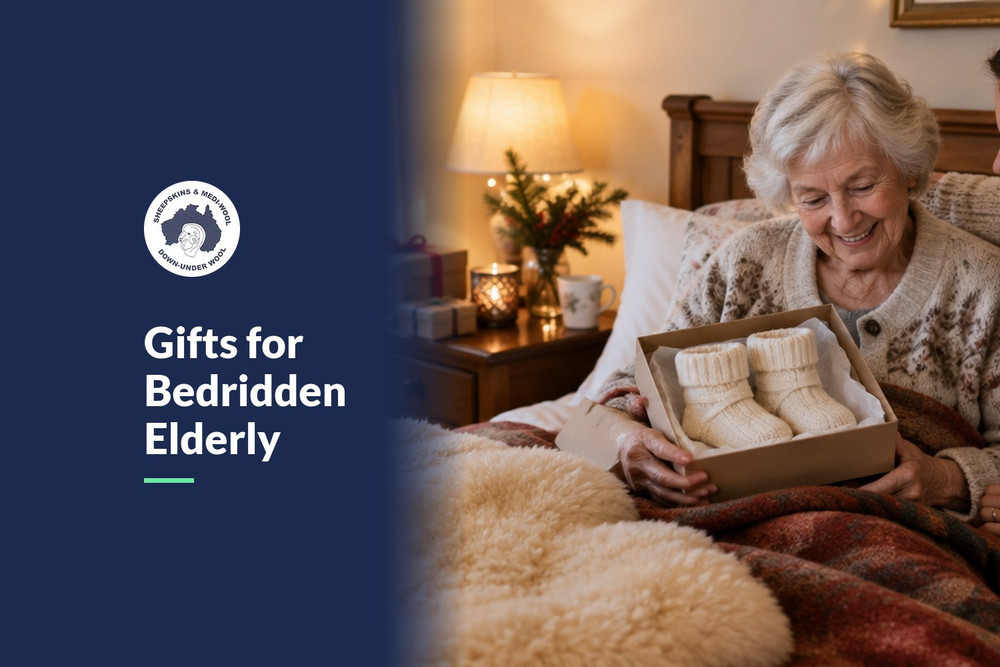
Buying for someone who always has cold feet? Our list of gifts for bedridden elderly starts with wool booties and foot warmers.