Caring for a bedridden patient at home after a hospital stay comes down to three things: a bed and chair surface that spreads pressure, a routine of position changes, and a daily look at the skin. A sheepskin for bedridden patients is one useful part of that setup, not the whole of it. The US National Library of Medicine's MedlinePlus advises changing position in bed every 1 to 2 hours and shifting weight in a chair every 15 to 20 minutes, and no pad replaces that. Down-Under Wool, a family business, has supplied sheepskins and wool pads to hospitals, nursing homes and families since 1988, and this guide is the setup we talk caregivers through when someone is coming home.

Why are bedridden patients at risk of pressure sores at home?
Bedridden patients are at risk because staying in one position keeps pressure on the same areas of skin for hours. Mayo Clinic describes bedsores as injuries to the skin and the tissue under it from prolonged pressure, most often over the heels, ankles, hips and tailbone. MedlinePlus lists spending most of the day in a bed or chair with little movement as a risk factor, along with leaking urine or stool, because moisture softens the skin.
At home, the turning and checking that nurses did in hospital passes to the family. Our bed sores guide explains the causes and stages in more detail.
What to ask before the patient leaves hospital
Ask the hospital team how high the patient's pressure sore risk is and what they recommend for the bed at home. The NHS notes that if someone is cared for at home and may be at risk, you can ask their doctor for a risk assessment so the care team can plan prevention. Useful questions:
- Does the patient need a hospital bed or a special mattress at home, and who will supply it?
- How often should they be turned, and do they need help with it?
- Are any areas of skin already red or broken, and who will check them?
- Will a home health nurse visit, and whom do we call between visits?
The answers tell you what to add to the bed, and when a wool pad on its own is not enough.
How to set up the bed at home
Set up the bed in layers, from the mattress up, so the skin rests on a soft, dry surface that spreads weight. MedlinePlus suggests a foam mattress or one filled with gel or air, sheets that are dry, smooth and free of wrinkles, and keeping the head of the bed no higher than 30 degrees so the patient does not slide down.
| Layer | What it does | Example |
|---|---|---|
| Mattress | The base surface; foam, gel or air as the care team advises | Ask the hospital or home health team |
| Mattress protector | Keeps the mattress dry under a wool pad | A waterproof "blue pad" under the wool |
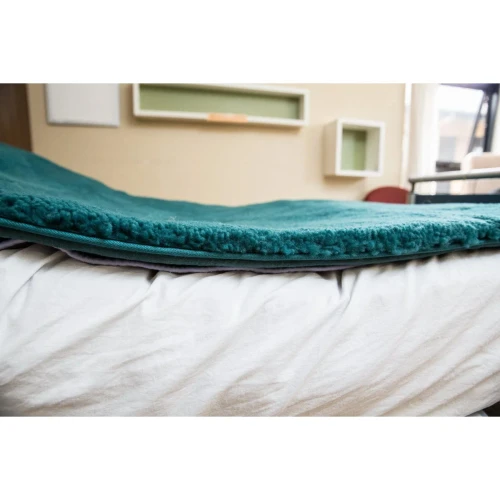
| Sheepskin or wool overlay | Cushions the shoulders, hips and tailbone and absorbs moisture | Australian Medical Sheepskin (M102C), 24" x 36" |
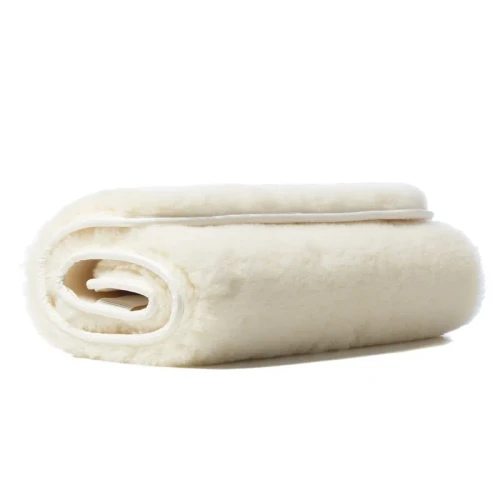
| Whole-bed fleece | Softens the full length of the bed, shoulders to feet | Hospital Wool Fleece Bed Pad, 30" x 60" |
| Foot pad | Protects heels and ankles while letting the feet move | Pressure Care Assistant (M103XD), 12" x 26" |
| Pillows | Keep bony areas apart and off the bed | Between knees and ankles when on the side |
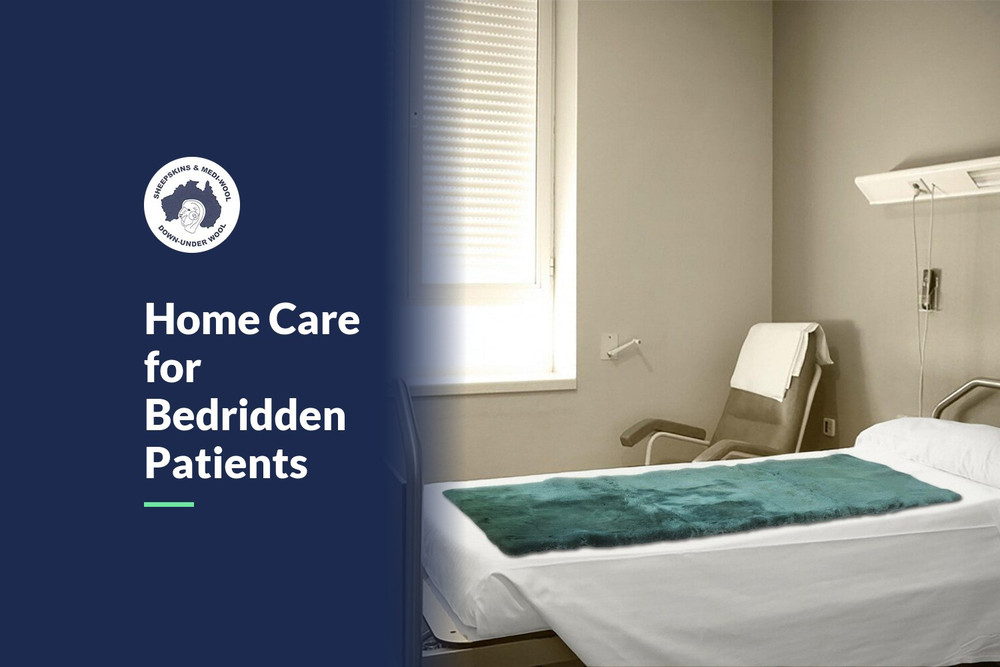
Lay the sheepskin where the body presses hardest, from the shoulders to below the buttocks, with the wool facing up. Protection is best when the skin touches the wool directly, so avoid putting a sheet over it. MedlinePlus also advises against pillows under the knees, because they push the heels into the bed.
Protecting heels and feet in bed
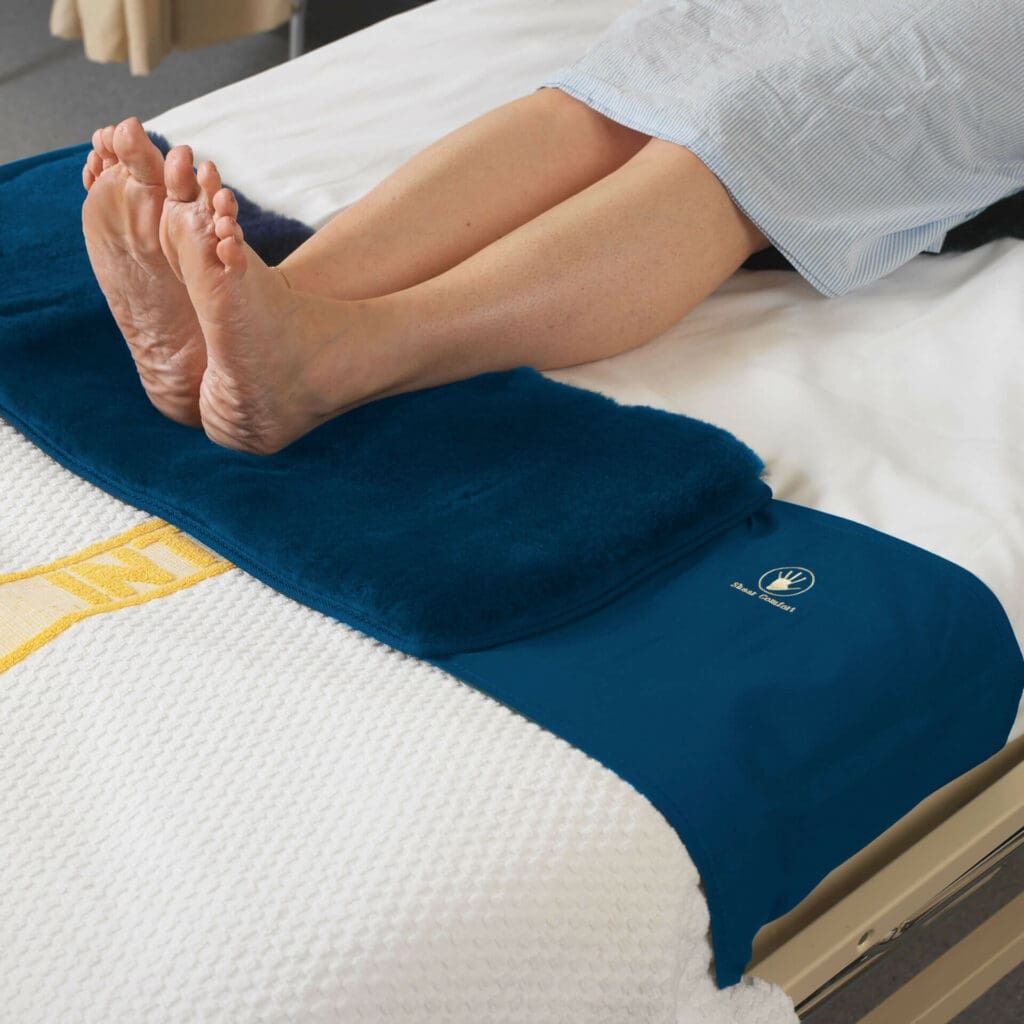
Heels need their own protection, because they carry the weight of the legs on a very small area. A wool pad across the foot of the bed, such as the XD1900 foot pad, wraps under the mattress with side flaps and lets the patient move their feet. For a patient who keeps their feet still or has a sore spot starting, a sheepskin heel pad or lambswool wrap booties hold wool around the heel. Our guide to heel protectors for bed sores compares the options.
How to set up the chair or wheelchair
Set up the chair with a cushion that fits it and a soft, breathable layer on top, and plan short sitting times at first. MedlinePlus recommends a foam or gel seat cushion that fits the wheelchair, notes that natural sheepskin pads also help reduce pressure on the skin, and advises against donut-shaped cushions. Anyone sitting should shift their weight every 15 to 20 minutes, or be helped to.
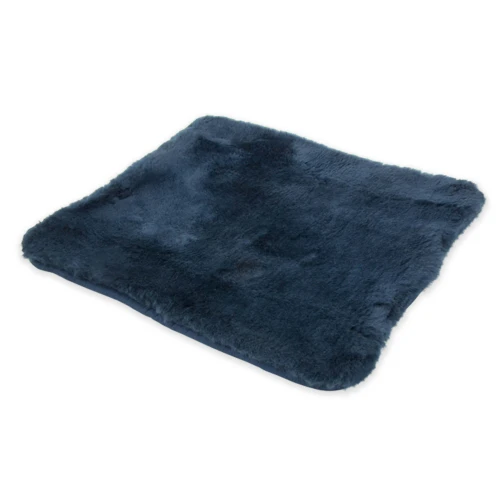
- Wheelchair or armchair: the XD1900 Cushion-It (18" x 22") straps to the seat and a second one to the back. It can sit on top of an existing pressure cushion.
- Wheelchair seat only: the Hospital Wool Fleece seat pad (18" x 20") machine washes and dries.
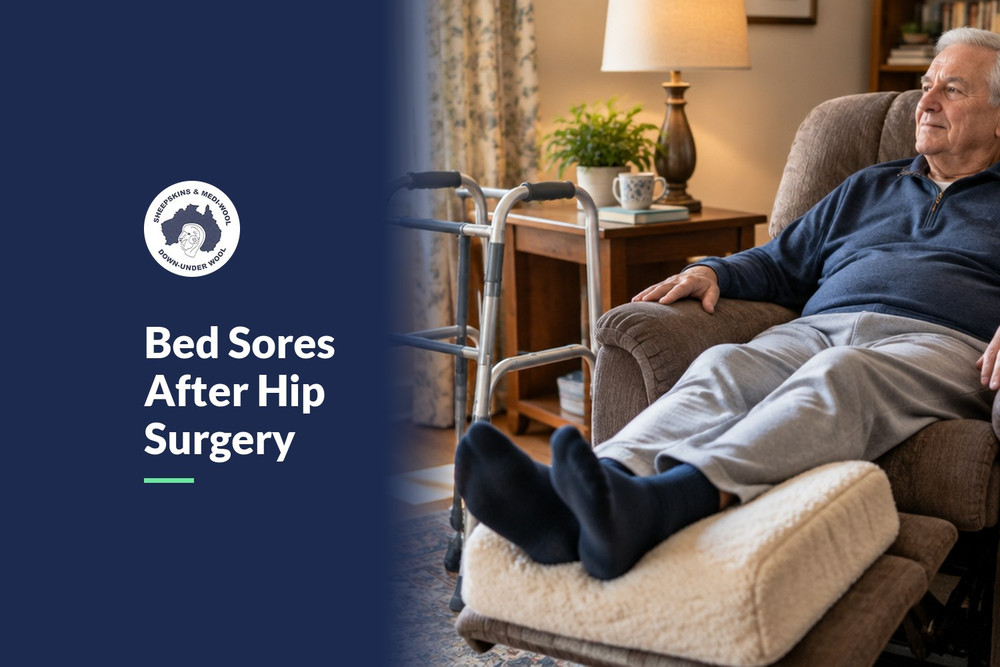
- Recliner: many people recover in a recliner. Our recliner sheepskin guide covers sizes and how to stop the pad sliding.
- Moving between bed and chair: an M102 or M102C sheepskin moves easily from the bed to the chair, which keeps the same surface under the patient all day. Give it a good shake as you move it to lift the wool.

Where does a sheepskin fit, and what does the evidence say?
A sheepskin fits as the layer the skin lies on: it reduces pressure, friction and moisture, while turning and skin checks do the rest. The trials behind it used certified Australian medical sheepskins, not decorative rugs:
- In a 2004 randomized trial of 441 patients at a Melbourne teaching hospital, 9.6% of patients given a medical sheepskin developed a pressure ulcer, compared with 16.6% on standard care.
- In a 2010 Dutch nursing home trial (543 patients analyzed), sacral pressure ulcers developed in 8.9% of the sheepskin group and 14.7% of the control group. Most users rated the sheepskin well, though one in three found it too warm.
A sheepskin does not replace turning and skin checks; use it alongside them. A certified medical sheepskin made to the Australian standard AS4480.1 carries a stamp on its leather backing. For placement step by step, see how to use sheepskin for bed sores.
Which sheepskin or wool pad suits which patient?
The right pad depends mostly on continence, on where the patient spends the day, and on how often you can wash. All of these are in stock:
| Situation | Good choice | Why |
|---|---|---|
| Incontinent, mostly in bed | M102 or M102C medical sheepskin | HiTemp wash and urine resistant |
| Frequent washing, machine dryer at home | XD1900 Overlay (M102XD), 26" x 40" | Dense Merino wool on a knitted backing; machine wash and dry |
| Wants the whole bed covered | Hospital Bed Nursing Fleece, 35" x 80" | Elasticized skirt fits a standard hospital mattress |
| Continent, sits a lot | Healthcare Lambskin (M101) | Very soft for chairs; cool or lukewarm wash, not urine resistant |
| Starting from nothing | bedsore prevention packages | Sheepskin or XD1900 overlay, foot pad and Woolskin together |
If the patient has incontinence, our incontinence bedding page lists the urine-resistant pads.
A daily routine for caregivers
A simple daily routine protects the skin more than any single product. Based on MedlinePlus guidance:
- Turn every 1 to 2 hours in bed, unless the care team gives a different schedule. Lift or use a draw sheet; never drag the patient.
- Check the skin every day, head to toe, paying attention to the heels, hips, spine, tailbone, elbows and ears.
- Clean and dry the skin straight away after urine or stool. Wash gently with a soft cloth and avoid strong soaps and talc.
- Keep sheets and clothes smooth, without wrinkles, thick seams or buttons pressing on the skin.
- Offer enough food, protein and water each day.
Keeping sheepskins clean at home
Medical sheepskins are machine washable, and HiTemp UR sheepskins such as the M102 can be washed in hot water up to 80°C (176°F). Wash in Woolskin, which cleans, conditions and disinfects the wool; ordinary household detergents damage sheepskin leather. Air drying takes about 24 hours, so many caregivers keep two or three sheepskins and rotate them. The full method is in how to wash sheepskin.
When to call a nurse or doctor
Call a nurse or doctor if you see redness, a sore or any change in the skin that lasts more than a few days, or that becomes painful, warm or starts to drain. The NHS advises getting help urgently if the skin is hot, swollen and red, there is pus, a high temperature, or pain that is severe or getting worse. A sheepskin is for prevention and comfort; if a wound has already formed, ask the nurse or doctor how to care for it.
Home care for bedridden patients FAQs
Is sheepskin good for bedridden patients?
Yes, a certified medical sheepskin is a good layer for a bedridden patient. In two randomized trials, patients given one developed fewer pressure ulcers than patients without, as long as turning and skin checks continued.
Should a bedridden patient lie directly on the sheepskin?
Yes. Protection is best when the skin is in direct contact with the wool, so place the sheepskin on top of the bottom sheet rather than under it.
How often should a bedridden patient be turned?
Every 1 to 2 hours in bed, according to MedlinePlus, unless the care team sets a different plan. In a chair, the weight should shift every 15 to 20 minutes.
What do you put under a bedridden patient?
A pressure-spreading mattress, a waterproof pad to protect it, and a sheepskin or dense wool overlay that the patient lies on, with a separate pad or protector for the heels.
Is sheepskin good for elderly people?
Yes, sheepskin suits elderly people who spend long hours in bed or a chair, because it cushions bony areas and absorbs moisture. The same daily turning and skin checks still apply.
Does a sheepskin get too hot in bed?
Some people find it warm: in the nursing home trial, one in three users said so. Wool absorbs moisture and lets air through, which helps, and a lighter top cover can help.
Is a sheepskin rug the same as a medical sheepskin?
No. A decorative rug is not made or tested for patient care and often cannot be washed hot. See medical sheepskin vs regular sheepskin for the differences.
The short version
Before discharge, ask about the patient's risk and the right mattress. At home, put a medical sheepskin or dense wool overlay under the shoulders, hips and tailbone, protect the heels, give the chair its own cushion and wool pad, turn every 1 to 2 hours and check the skin daily. If you are unsure what to choose, contact us; we have been helping families set up a bed at home since 1988.