
The best bed sore prevention products are the ones that put a soft, dry, low-friction layer between the skin and whatever it presses on: a medical sheepskin or dense wool overlay on the bed, a wool pad on the chair, and protectors for heels, elbows and other bony spots. In a 2004 randomized trial of 441 hospital patients, 9.6% of those given an Australian Medical Sheepskin developed a new pressure ulcer, against 16.6% with standard care. Down-Under Wool, a family business, has supplied these products since 1988, and this buyer's guide compares the ones we have in stock: where each one protects, its size, and how it is washed.
What makes a good bed sore prevention product?
A good bed sore prevention product reduces the three things that cause bed sores: pressure, friction and shear, plus the moisture that makes skin fragile. Mayo Clinic recommends cushions or a mattress that relieves pressure, and warns against doughnut cushions, which focus pressure on the surrounding tissue. When you compare products, look for:
- Evidence for the material. A 2015 Cochrane review of support surfaces found that medical grade sheepskins are associated with fewer pressure ulcers, and that higher-specification foam mattresses beat standard hospital foam.
- Coverage. The product must sit under the part of the body that takes the pressure: shoulders to buttocks for most bed pads, the heels at the foot of the bed, the seat and back in a chair.
- Moisture handling. Wool can absorb up to about a third of its weight in moisture without feeling wet; plastic and most synthetics can't.
- Washability. If the person is incontinent, choose a urine-resistant product you can machine wash often.
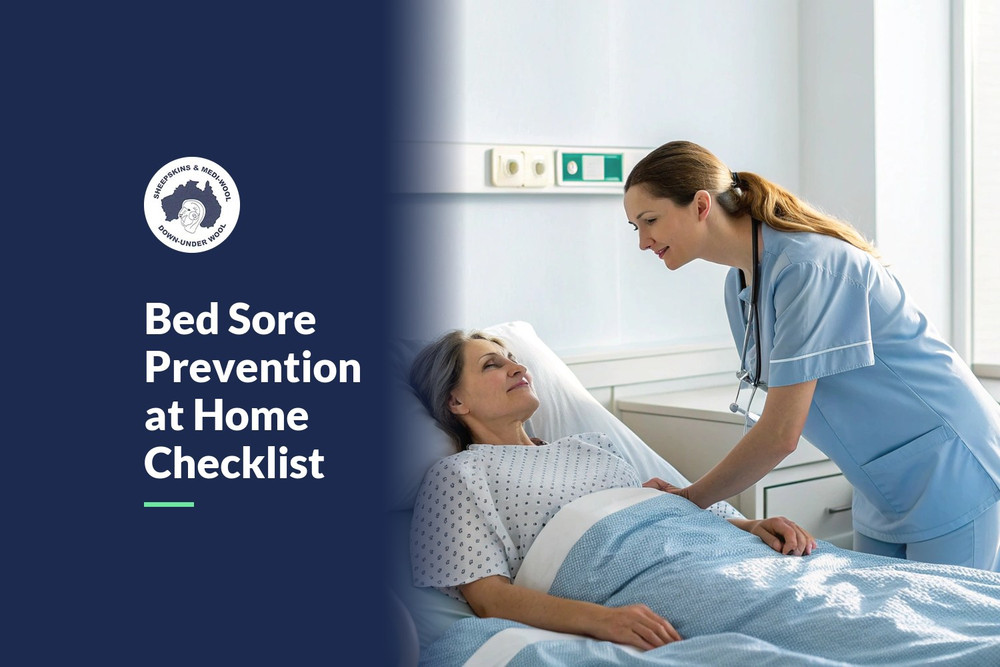
No product replaces regular position changes and daily skin checks. Our daily bed sore prevention checklist covers that routine.
Bed sore prevention products compared
This table lists our in-stock bed sore prevention products by the area they protect. All are Merino wool or Australian sheepskin; "Woolskin" is the sheepskin wash we recommend for all of them.
| Product | Where it protects | Size | Washing |
|---|---|---|---|
| Australian Medical Sheepskin (M102C) | Shoulders to below the buttocks, in bed or a chair | 24" x 36", 30 mm pile | Machine wash in Woolskin (HiTemp, urine resistant); air dry leather side up |
| Medical Sheepskin Overlay (M102) | Shoulders to buttocks; moves easily from bed to chair | About 38" x 24–26" | Machine wash (HiTemp, urine resistant); air dry, or low heat until nearly dry |
| Pressure Smart XD1900 Overlay (M102XD) | Shoulders to below the buttocks; bed, wheelchair or recliner | 26" x 40" | Machine wash, cool, gentle cycle; dryer on low |
| Superior Overlay XD (SC104XD) | Whole body, head to toe; urine resistant | 30" x 60" | Machine wash and dry, low heat; warranted for 50 washes in Woolskin |
| Hospital Wool Fleece Bed Pad (F103C) | Shoulders to feet; urine resistant | 30" x 60" | Machine wash and dry, low heat |
| Hospital Bed Nursing Fleece (F102) | The whole mattress of a hospital bed | 35" x 80" | Machine wash and dry, low heat |
| Healthcare Lambskin (M101) | Bed, chair or sofa; continent users only | About 30" x 40", 30 mm pile | Cool to warm machine wash; air dry (hot water may shrink it) |
| Pressure Care Assistant (M103XD) | Heels, feet and ankles at the foot of the bed | 12" x 26", with mattress flaps | Machine wash and dry |
| Medical Sheepskin Heel Pad (M112) | One heel and ankle bone | One size, either foot | Hand or machine wash in Woolskin; air dry |
| Merino Lambswool Wrap Booties (M161) | The whole foot in bed | One size, pair | Machine wash and dry |
| XD1900 Elbow Protectors (SC110B) | Elbows | Pair, hook-and-loop strap | Machine wash; air dry |
| Sheepskin Hand Posies (M115) | Palms, for curled fingers | Pair | Machine wash; air dry |
| Wool Pillow Cover (M129D) | Ears, scalp and back of the head | 18" x 28", fits a queen pillow | Machine wash, gentle; dryer on low |
| XD1900 Cushion-It (M105XD) | Wheelchair or chair seat and back | 18" x 22" | Machine wash; dryer on low; not harmed by urine |
| Hospital Wool Fleece Wheelchair Seat Cover (F103B) | Wheelchair seat and back in one piece | 18" x 36" | Machine wash and dry, low heat |
| HiTemp Wheelchair Arm Pads (M125G) | Forearms and hands on the armrests | 14" long, pair | Wash like a good wool sweater; air dry |
| Lambswool Dialysis Chair Pad (M118) | A whole dialysis chair or recliner | 30" x 60" | Machine wash; dryer on low |
You can see the full range in our bed sore prevention products store, or line up specifications side by side on our compare prevention products page.
Which bed sore prevention products are best for the bed?
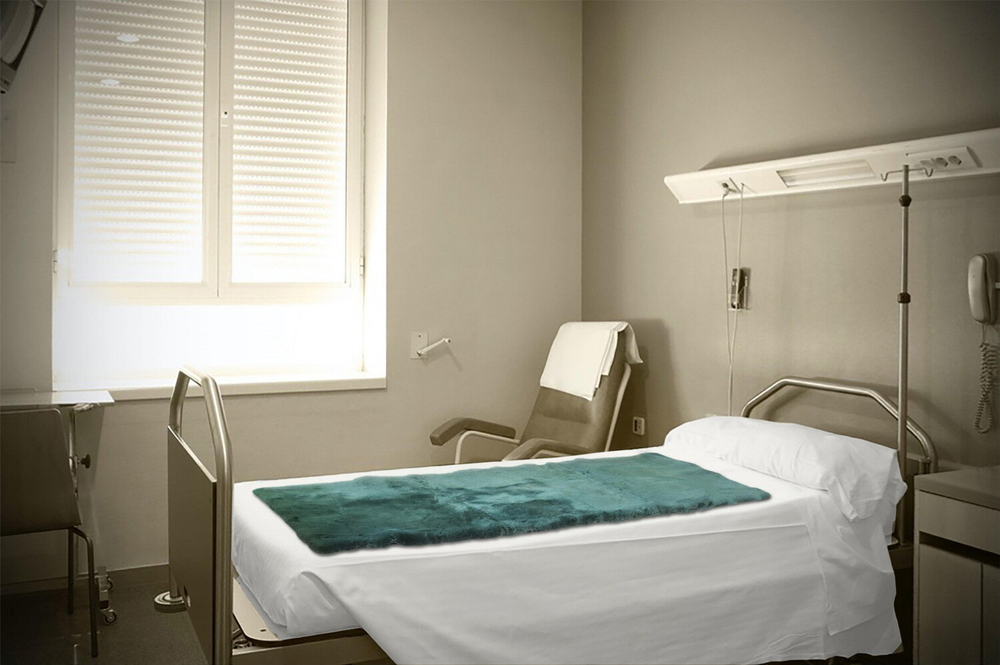
For the bed, the best product is a medical sheepskin or dense wool overlay laid on top of the sheet so the person lies directly on the wool, day and night. Which one depends on three questions:
- Is the person incontinent? Choose a urine-resistant product: the Australian Medical Sheepskin, the XD1900 overlays or the Hospital Wool Fleece Bed Pad. The Healthcare Lambskin is beautifully soft but is not urine resistant, so it suits continent users only.
- How much of the body needs cover? A 24" x 36" sheepskin protects the shoulders to below the buttocks. For whole-body cover, the 30" x 60" Superior Overlay XD or Hospital Wool Fleece Bed Pad reach from the shoulders to the feet.
- Do you need a dryer? Real sheepskin is best air dried, which takes about 24 hours, so many caregivers keep two or three. Pressure Smart XD1900 pads are knitted Merino wool (1,900 grams per square meter, nearly twice the density of most sheepskins) and can go in the dryer on low.

Genuine Australian medical sheepskins are made to the AS4480.1 standard and carry a stamp on the leather backing; a green color alone proves nothing. For placement tips, see how to use sheepskin for bed sores, and for sheepskin against foam and air, our guide to the best mattress topper for bed sores.
Which products protect heels and feet?
Heels are protected best by keeping weight off them and putting soft wool where they rest. Mayo Clinic lists the heels and ankles among the most common sites for bed sores in people who stay in bed. Options:
- Pressure Care Assistant: a 12" x 26" wool strip that wraps around the foot of the mattress, so both feet are protected and can still move.
- Medical sheepskin heel pad: a wool cup around one heel, closed with a hook-and-loop strap.
- Merino wrap booties: the foot sits on a wool sole and the side flaps wrap around it; designed by Down-Under Wool and made in Australia.
- Footcare lambswool: loose Merino wool you tease apart and wrap around toes, bone spurs and rub-prone spots.
For boots and booties, browse our boots for pressure sores, and for a deeper comparison read heel protectors for bed sores.
Which products protect elbows, hands and the head?
Elbows, palms, ears and the back of the head need small, strap-on protectors, because a bed pad doesn't reach them. XD1900 elbow protectors form a wool cup around each elbow and are sold in pairs. Sheepskin hand posies sit in the palm for people whose fingers curl inward, and the Shear Comfort palm protector gives curled fingers a pad to rest on so the nails don't dig into the palm. For the head, slide a pillow into the wool pillow cover to give ears and scalp a soft Merino surface.

Which products are best for wheelchairs and chairs?
In a wheelchair, the best products cover the seat, the back and the armrests, because the tailbone, buttocks, shoulder blades and backs of the arms take the pressure when sitting. The XD1900 Cushion-It straps onto the seat or the back (many people use two) and can sit on top of an existing pressure care cushion. The Hospital Wool Fleece seat cover covers seat and back in one piece, and medical sheepskin arm pads soften the armrests. The wheelchair pressure sore prevention package bundles two Cushion-Its, XD1900 armrest supports and Woolskin.
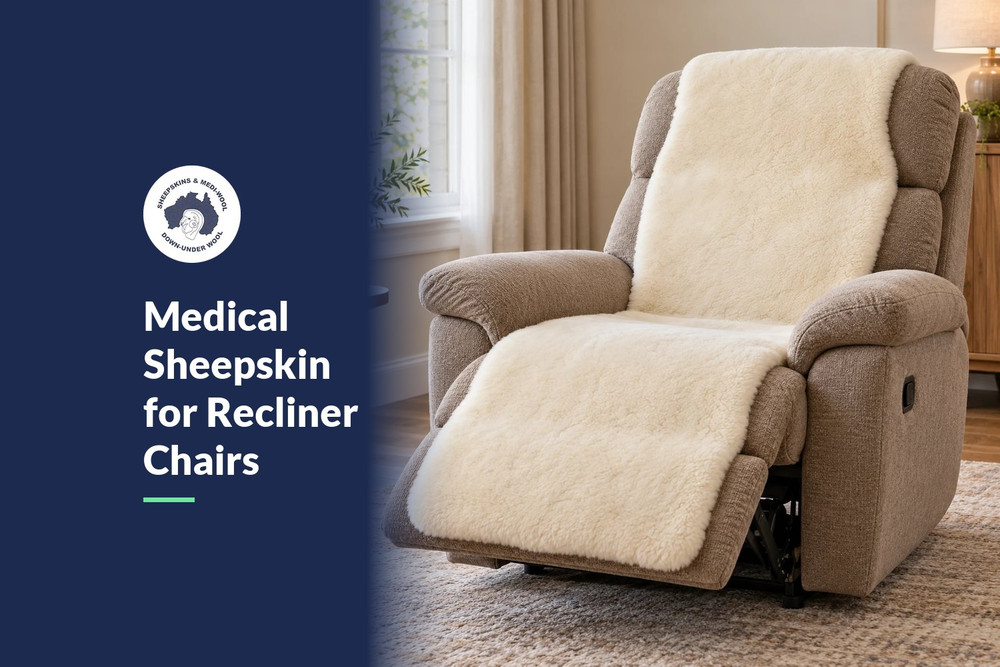
Sitting still for long also calls for weight shifts every 15 to 20 minutes, according to MedlinePlus. Read more in wheelchair pressure sore prevention and medical sheepskin for recliner chairs, or compare seat products on our compare wheelchair products page.
Should you buy a bed sore prevention package?
A package is worth it if you are setting up a bed for the first time, because it covers the body, the feet and the washing in one order. Our bedsore prevention packages include:
- HiTemp package (M104A): Australian Medical Sheepskin, Pressure Care Assistant for the feet, and Woolskin.
- XD package (M104XD): XD1900 Overlay, Pressure Care Assistant and Woolskin, all machine wash and dry.
- Superior XD package (M200XD): the 30" x 60" whole-body Superior Overlay XD with Woolskin.
- Deluxe package (M107): Superior Overlay XD, wool pillow cover and Woolskin, for head-to-toe cover.
How do you wash bed sore prevention products?
Wash wool and sheepskin products in a sheepskin wash, on a gentle cycle, and never over-dry them; wool does best with about 15% moisture left in it. We recommend Woolskin, developed by the Australian tanning industry, which cleans, conditions and disinfects. Ordinary household detergents can permanently damage the leather of washable sheepskins. Medical sheepskins sold as HiTemp can take hot water; the Healthcare Lambskin needs cool to warm water. Full steps are in how to clean and wash sheepskin.

Bed sore prevention products FAQs
Is sheepskin good for bed sores?
Yes, medical grade sheepskin is good for preventing bed sores. A 2015 Cochrane review found medical grade sheepskins are associated with fewer pressure ulcers, and in a 2004 trial of 441 hospital patients, 9.6% on sheepskin developed new ulcers against 16.6% with standard care. Decorative rugs are not made or tested for this.
What is the best material to prevent bed sores?
Medical grade sheepskin is the overlay material with the clearest trial evidence: dense Merino wool on a washable hide that spreads pressure, absorbs moisture and reduces shear. High-density wool pads such as Pressure Smart XD1900 are made to the same AS4480.1 properties. For the mattress itself, Cochrane found higher-specification foam better than standard foam.
What do hospitals use to prevent bed sores?
Hospitals rely on pressure-relieving mattresses and cushions together with regular repositioning and skin checks, the same steps Mayo Clinic and the NHS recommend. Medical sheepskin has been tested in hospital too: the 2004 trial was run at a Melbourne teaching hospital.
What can I put on the bed to prevent bed sores?
Put a medical sheepskin or dense wool overlay on top of the sheet, under the shoulders, back and buttocks, and a wool pad at the foot of the bed for the heels. The skin should touch the wool directly.
Are doughnut cushions good for bed sores?
No. Mayo Clinic advises against doughnut cushions, because they focus pressure on the tissue around the hole. Use a flat cushion or a wool seat pad instead.
What cream prevents bed sores?
Mayo Clinic suggests moisture barrier creams to protect skin from urine and stool. Ask the nurse or doctor which one suits the person, and never put creams on broken skin without their advice.
Do I still need to turn someone who has a sheepskin?
Yes. Products reduce pressure, friction and moisture, but they don't replace turning. Mayo Clinic advises changing position every two hours in bed.
The short version
Choose bed sore prevention products by the body part they protect: a medical sheepskin or dense wool overlay for the bed (urine resistant if needed), a heel pad or foot-of-bed wool strip for the feet, small protectors for elbows, hands and head, and a wool seat pad and arm pads for the wheelchair. Wash them in Woolskin and keep a spare. Not sure where to start? See our medical sheepskin range, or contact us: we've been helping caregivers choose since 1988.