
A lambskin for pressure sores is a soft, dense sheepskin placed under someone who spends long hours in bed or a chair, to cushion the skin, keep it drier and reduce rubbing. It can help prevent pressure sores, but it is not a cure and not a replacement for regular position changes. The strongest evidence comes from a 2004 trial of 441 hospital patients, and that trial tested an Australian Medical Sheepskin made to the AS4480.1 standard, not just any lambskin. Down-Under Wool, a family business, has supplied lambskins and medical sheepskins to hospitals and families since 1988, and this page explains honestly what a lambskin or lambswool pad can and cannot do for pressure sores.

Does lambskin help with pressure sores?
A medical-grade sheepskin helps prevent pressure sores; there is no good evidence that any lambskin heals one. Pressure sores, also called bed sores or pressure ulcers, are injuries to the skin and the tissue under it caused by prolonged pressure, most often over the heels, ankles, hips and tailbone, as Mayo Clinic describes them. A thick, springy wool pile spreads the load over a larger area of skin, lets air reach the skin and draws moisture away from it. Even general care advice reflects this: MedlinePlus notes, in its guide to preventing pressure injuries, that natural sheepskin pads are helpful to reduce pressure on the skin of wheelchair users.
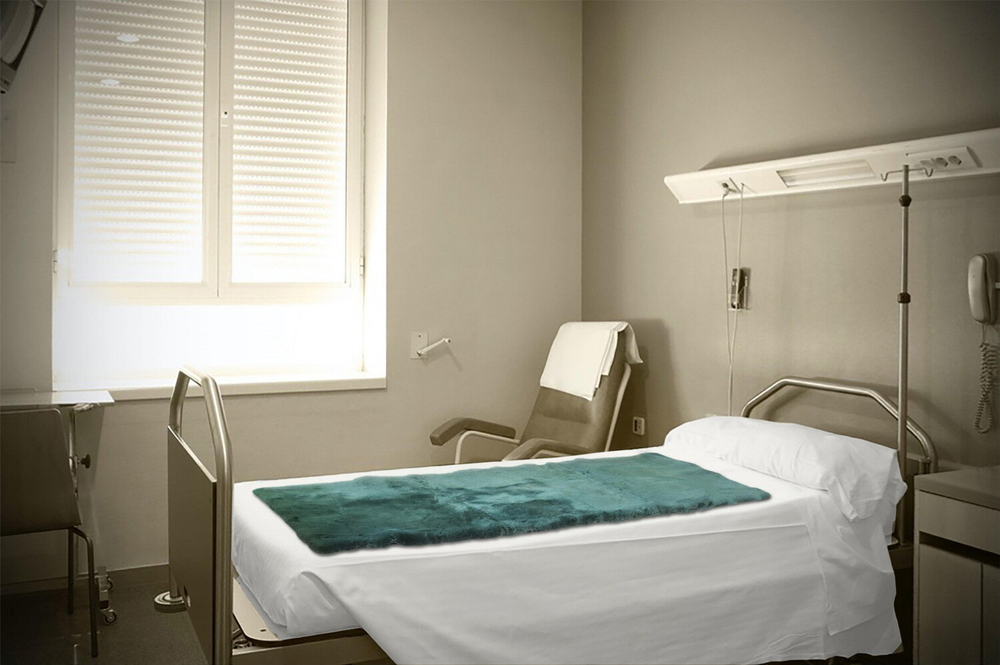
The trials behind that are specific, though. A Cochrane review of support surfaces pooled three trials and concluded that "Australian standard medical sheepskins" prevent pressure ulcers. The sheepskins in those trials were medical sheepskins, not decorative rugs or every product sold as a lambskin.
What does the research actually show?
The research shows that Australian standard medical sheepskins reduced new pressure ulcers in the clinical trials that tested them. The best-known trial is Jolley et al., 2004, in the Medical Journal of Australia:
- Who: 441 adult patients at a Melbourne teaching hospital, all assessed as low to moderate risk of pressure ulcers.
- What: half were given an Australian Medical Sheepskin mattress overlay for their whole stay; half received usual care.
- Result: 9.6% of the sheepskin group developed a new pressure ulcer, against 16.6% with usual care.
Three honest caveats. First, the trial was open label, so staff knew who had a sheepskin. Second, the patients were at low to moderate risk, so the results don't show that a sheepskin alone protects someone at very high risk. Third, and most important for anyone shopping, the result applies to medical sheepskins made to the Australian standard AS4480.1. A soft lambskin from a homeware store, or even a good healthcare lambskin, was not what was tested. Our page on bedsore prevention research collects the wider work.
Healthcare lambskin vs AS4480.1 medical sheepskin
A healthcare lambskin is a soft, dense, washable lambskin for comfort, while an AS4480.1 medical sheepskin is made and stamped to an Australian medical standard and built for repeated hot washing and urine resistance. We sell both, and the difference matters:
| Healthcare Lambskin (M101) | AS4480.1 medical sheepskin (M102, M102C) | |
|---|---|---|
| Standard | No medical standard stated | Made to AS4480.1; stamp on the leather backing |
| Wool | Very dense 30 mm champagne Merino pile | Dense green Merino pile (30 mm on M102C) |
| Size | About 30 x 40 in | About 38 x 24-26 in (M102); 24 x 36 in (M102C) |
| Washing | Cool or lukewarm water; hot water may shrink it | HiTemp wash; warranted for at least 50 washes in Woolskin |
| Urine resistant | No; can be permanently damaged by urine and feces | Yes (UR) |
| Covered by the trials | No | Yes, this is the type tested |
| Best for | Continent users; comfort on a chair, recliner, sofa or wheelchair | Bed or chair for people at risk of pressure sores, including incontinent users |
If the person is incontinent, choose a urine-resistant Australian Medical Sheepskin (M102) or the rectangular M102C; the Healthcare Lambskin is not recommended for them. For more on the standard, read what to look for in an AS4480.1 sheepskin, and for the difference between the words themselves, see sheepskin vs lambskin.

Is lambswool good for bed sores?
Lambswool can help as part of bed sore prevention when it is a dense wool pad or a medical sheepskin the person lies directly on, but loose lambswool is not a bed sore product. The word covers three different things:
- A lambskin: the whole tanned hide with the wool attached, as described above.
- A wool pile pad: Merino wool knitted into a backing, such as our Pressure Smart XD1900 Overlay or the Hospital Wool Fleece Bed Pad. These are real wool and easier to wash and dry than a sheepskin, but they are not sheepskins, so the sheepskin trials don't test them directly.
- Loose lambswool: small handfuls of wool fiber used between the toes or under a tight spot in a shoe. That is lambs wool for feet, a footcare product, not a bed sore surface.
What a lambskin can't do
A lambskin can't replace turning, relieve pressure completely, or treat an existing sore. Be realistic about these limits:
- It doesn't replace position changes. MedlinePlus advises changing position every 1 to 2 hours in bed and shifting weight every 15 to 20 minutes in a wheelchair, whatever the person lies on.
- It isn't a pressure-relieving mattress. People at high risk may need the specially designed mattresses and cushions the NHS describes; ask the nurse or doctor. Our guide to the best mattress topper for bed sores compares the options.
- It doesn't heal an open sore. If there is broken skin, a blister or a wound, ask a nurse or doctor how to care for it.
- It works best without layers on top. Our product notes say protection is best when the skin is in direct contact with the wool, so avoid covering it with sheets and pads.
How to use a lambskin for pressure sore prevention
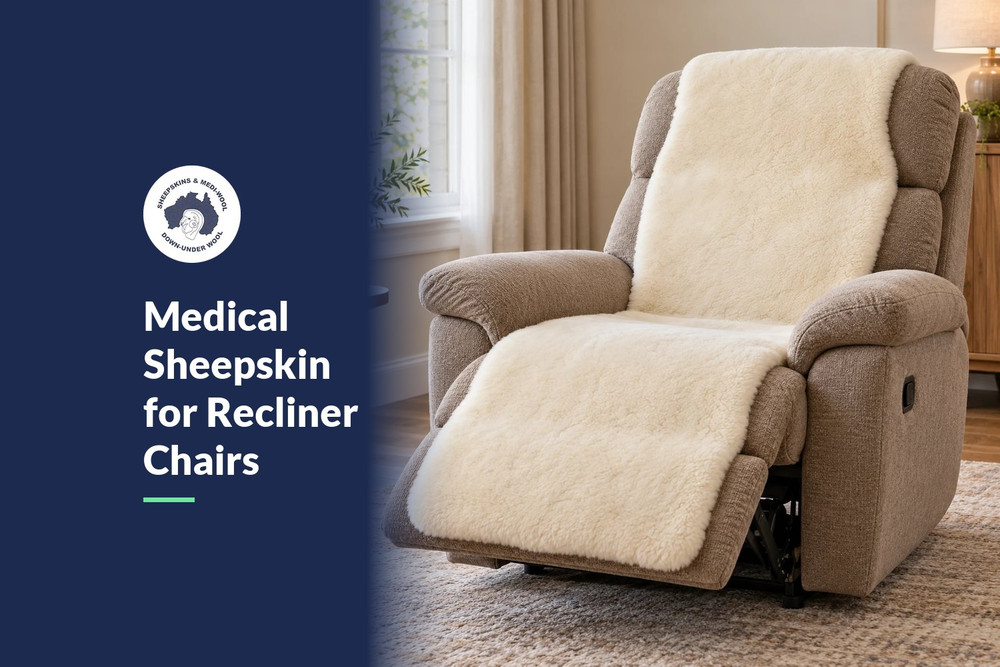
Use a lambskin wool side up, directly under the areas most at risk, and keep it clean, dry and fluffed. In bed, place it under the shoulders, back and buttocks; in a chair, over the seat and back. Many caregivers keep two or three so one is in use while another dries. Heels need their own protection; see heel protectors for bed sores. Step-by-step placement for each area is in our guide on how to use sheepskin for bed sores, and washing is covered in how to wash sheepskin.
What about other health claims made for sheepskin?
Other health claims you may see for sheepskin, such as lowering blood pressure, improving circulation, easing back pain, preventing disease or killing bacteria, are not supported by good evidence, and we don't make them. An earlier version of this page did; we have removed them. On allergy, a 2017 review in Acta Dermato-Venereologica found wool fiber has not been shown to be an allergen, and that itch from wool comes from coarse fibers (about 30 microns and thicker), not from an allergy. That is a narrower claim than "hypoallergenic," and it is the one we stand by.
Lambskin for pressure sores FAQs
Is sheepskin good for bed sores?
A medical sheepskin is good for preventing bed sores: in a trial of 441 hospital patients, those on an Australian Medical Sheepskin developed new pressure ulcers at 9.6% against 16.6% with usual care. It is not a treatment for an existing sore.
Is a lambskin the same as a medical sheepskin?
No. Lambskin is sheepskin from a young sheep, and the word is used loosely for any soft sheepskin. A medical sheepskin is made and stamped to the AS4480.1 standard, can be washed hot and resists urine.
Can you use a lambskin if the person is incontinent?
Only if it is urine resistant. An ordinary lambskin, including our Healthcare Lambskin, can be permanently damaged by urine and feces; choose a HiTemp UR medical sheepskin or a urine-resistant wool pad, and read our guide to bed sore prevention in incontinent patients.
Does a lambskin heal a pressure sore?
No. There is no good evidence that any sheepskin heals a pressure sore. If the skin is broken or there is a wound, ask a nurse or doctor how to care for it; a sheepskin can still add comfort around it if they agree.
Should you put a sheet over the lambskin?
Ideally not. Protection is best when the skin is in direct contact with the wool, which spreads pressure and draws moisture away, so let the person lie directly on it where you can.
How do you know a sheepskin is a real medical sheepskin?
Look for the AS4480.1 stamp on the leather backing. Many green sheepskins sold online are not authentic medical sheepskins; no stamp means it probably lacks the properties the standard sets out.
The short version
A lambskin can help prevent pressure sores by cushioning the skin, reducing rubbing and keeping it drier, and the trial evidence is for AS4480.1 medical sheepskin, not every lambskin. A healthcare lambskin is a comfortable choice for a continent person in a chair or bed; for someone at higher risk or incontinent, choose a stamped, urine-resistant medical sheepskin. Neither replaces turning, a suitable mattress or a nurse's advice. Questions? Contact us; we have been answering them since 1988.